IndiVillage Logo

Human-in-the-loop QA | Secure workflows | Scalable managed teams

Generative AI Data Services for Better, Safer, More Reliable Models

Generative AI systems need more than large models. They need high-quality human feedback, carefully structured training data, and rigorous evaluation workflows that help models become more accurate, useful, and aligned with real-world expectations.

IndiVillage Tech supports AI teams with human-in-the-loop data operations for generative AI, including LLM evaluation, prompt-response review, RLHF support, supervised fine-tuning data, multilingual annotation, content moderation, safety review, and model output validation.

From early-stage model improvement to production evaluation, we help teams build the human feedback layer required to make generative AI systems more reliable at scale.

Generative AI Data Services

Generative AI Data Services We Support

LLM Evaluation and Response Review

LLM Evaluation and Response Review

We help evaluate model outputs across dimensions such as accuracy, relevance, completeness, helpfulness, tone, instruction-following, factual consistency, safety, and user intent alignment. This can include reviewing single responses, comparing multiple model outputs, ranking responses, identifying hallucinations, flagging unsafe content, and validating whether the answer meets task-specific criteria. For AI teams, LLM evaluation is not only about finding errors. It is about understanding where model behaviour breaks down and what kind of data or feedback is needed to improve it.

RLHF and Human Feedback Workflows

RLHF and Human Feedback Workflows

Reinforcement Learning from Human Feedback uses human judgement to help models learn what better outputs look like. AWS describes RLHF as a technique that incorporates human feedback into the reward function so models can perform in ways more aligned with human goals, needs, and preferences. IndiVillage supports RLHF-style workflows through prompt-response review, preference ranking, output comparison, quality scoring, safety flagging, and feedback capture. We can help teams define evaluation rubrics, calibrate reviewers, manage large-scale feedback tasks, and maintain consistency across batches.

Supervised Fine-Tuning Data

Supervised Fine-Tuning Data

Generative AI models often need fine-tuning to perform well in specific domains, formats, tones, or workflows. Competitors like Sama position supervised fine-tuning around tailoring model behaviour for tone, terminology, writing style, factual knowledge, and task-specific performance. IndiVillage supports the creation and review of supervised fine-tuning datasets, including instruction-response pairs, domain-specific examples, classification outputs, structured summaries, rewriting tasks, and response formatting examples. The goal is to help models learn the expected behaviour for a particular use case, not just generate plausible text.

Prompt and Response Annotation

Prompt and Response Annotation

Prompt quality directly affects model behaviour. We support annotation and review of prompts, responses, task instructions, and user-query datasets to help AI teams improve model training and evaluation. This can include tagging prompt intent, identifying ambiguity, categorizing task types, reviewing response quality, marking hallucinations, checking format compliance, and flagging unsafe or low-quality outputs. For enterprise Gen AI systems, this layer is especially important because real users rarely write perfect prompts. Models need to handle unclear, incomplete, complex, and domain-specific instructions.

Safety, Trust, and Content Moderation Review

Safety, Trust, and Content Moderation Review

Generative AI systems must be evaluated not only for usefulness, but also for safety. Model outputs may need to be reviewed for bias, toxicity, harmful instructions, misinformation, policy violations, personal data exposure, sensitive content, or brand risk. IndiVillage supports human review workflows that help teams identify unsafe or misaligned outputs before they affect users. This is especially relevant for Gen AI applications in customer support, healthcare, finance, education, public platforms, enterprise knowledge systems, and user-generated content environments.

Multilingual and Locale-Sensitive Annotation

Multilingual and Locale-Sensitive Annotation

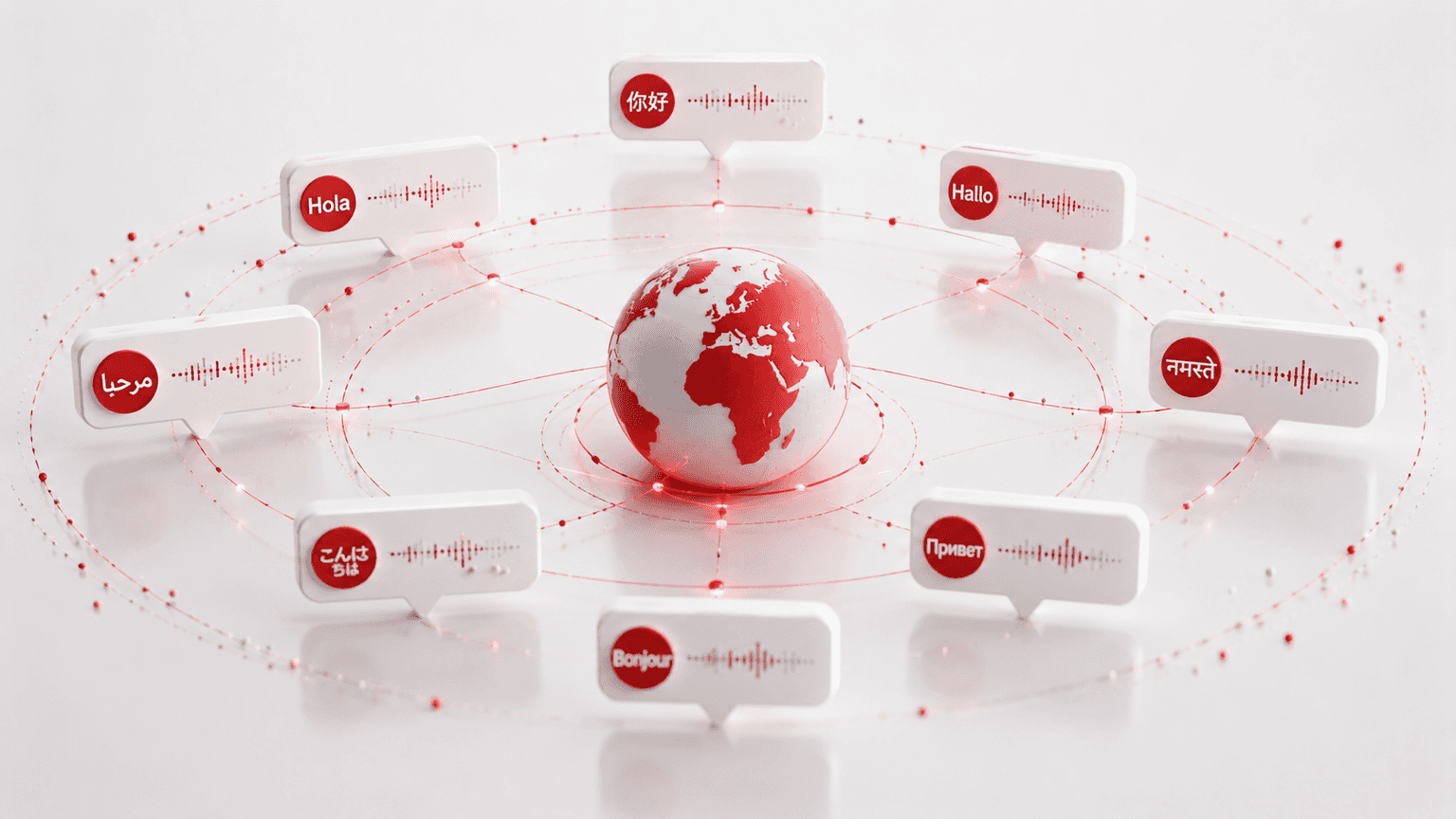
Language quality is not only about translation. A response that works in one language, region, or cultural context may not work in another. IndiVillage supports multilingual and locale-sensitive data workflows for Gen AI systems, including transcription review, translation validation, intent annotation, response evaluation, sentiment review, and content quality checks across languages. This helps AI teams improve model behaviour for users who speak differently, ask differently, and interpret responses differently.

Domain-Specific Data Review

Domain-Specific Data Review

Some Gen AI applications require deeper subject understanding. A general reviewer may be able to judge grammar or tone, but not domain accuracy. Depending on project requirements, IndiVillage can support domain-oriented review workflows for sectors such as healthcare, retail, e-commerce, finance, mobility, agriculture, education, and customer operations. This helps teams evaluate whether model outputs are not only fluent, but useful and reliable within the context where they will be deployed.


Built for the Human Feedback Layer of Generative AI

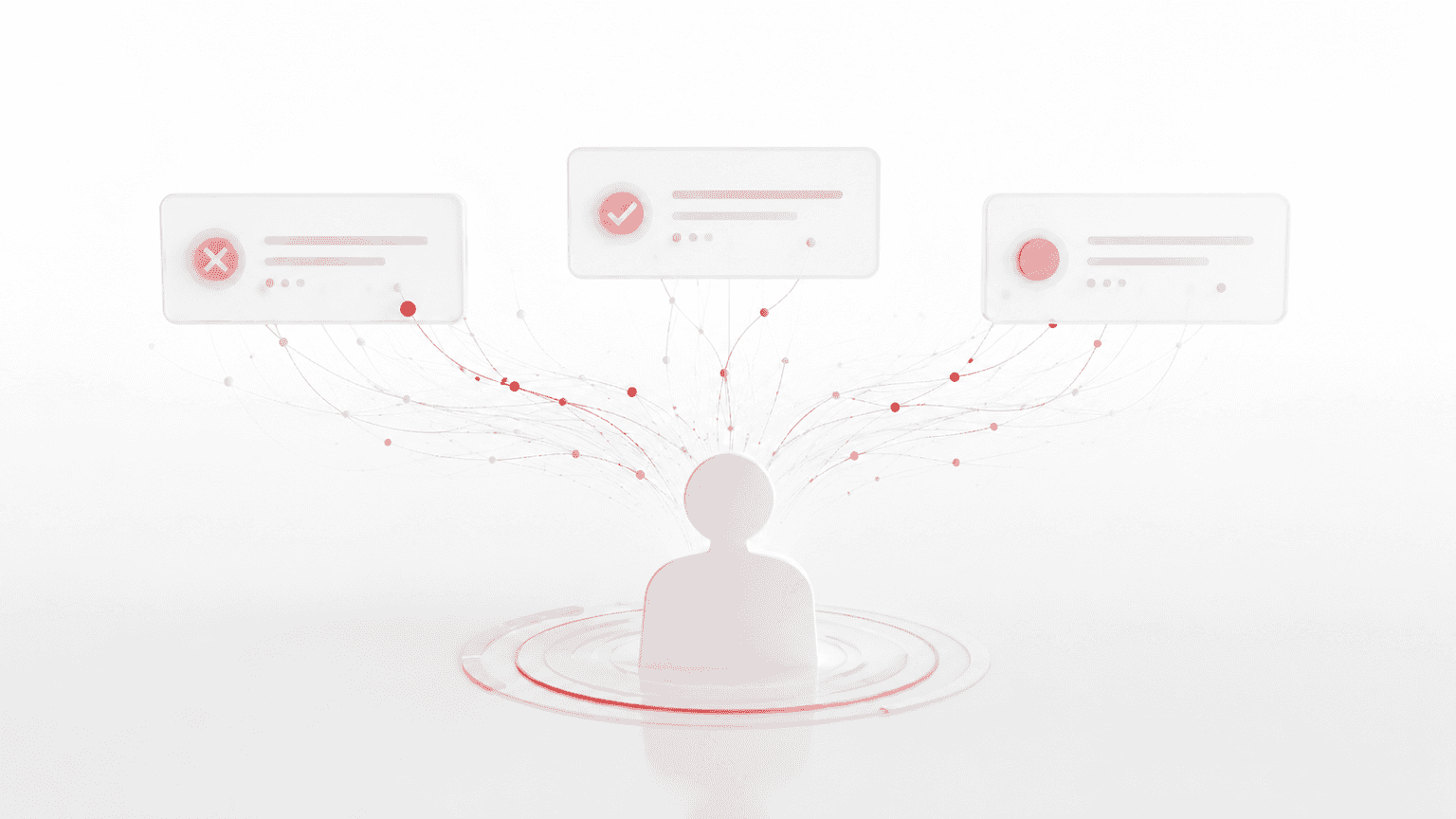
Generative AI data operations require more than assigning review tasks to a crowd. They need clear guidelines, reviewer calibration, quality checks, escalation rules, feedback loops, and structured delivery. Without that, human feedback can become inconsistent, noisy, or difficult to use.

Built for the Human Feedback Layer of Generative AI

A strong Gen AI data workflow should answer:

1What makes one response better than another?
2How should reviewers handle partially correct outputs?
3What counts as hallucination?
4How should tone, helpfulness, and safety be scored?
5How should domain-specific errors be escalated?
6How will reviewer disagreement be resolved?
7How will feedback be converted into model improvement?

At IndiVillage Tech, we build managed workflows around these questions so AI teams can collect human feedback that is consistent, reviewable, and usable.

Need Human Feedback for LLM Training or Evaluation?

Share a sample prompt-response task with us. We’ll help assess the review workflow, quality criteria, reviewer calibration needs, and delivery approach required for your Gen AI use case.

Our Generative AI Data Workflow

Use Case and Model Behaviour Review

01

Use Case and Model Behaviour Review

We begin by understanding what the model is expected to do. Is it answering customer queries, summarizing documents, generating product descriptions, reviewing content, supporting internal knowledge search, or assisting domain experts? The use case defines the data workflow.

Task and Rubric Design

02

Task and Rubric Design

We help define the task structure and review criteria. This may include scoring dimensions such as accuracy, relevance, completeness, tone, safety, factuality, instruction-following, and format compliance. Good rubrics reduce ambiguity and improve consistency across reviewers.

Reviewer Training and Calibration

03

Reviewer Training and Calibration

Before scaling, reviewers are trained on sample tasks and calibrated against expected outputs. This helps ensure that human feedback is not dependent on individual interpretation alone. Calibration is especially important for Gen AI because two responses may both sound fluent, but only one may be accurate, safe, and aligned with user intent.

Production Review and Annotation

04

Production Review and Annotation

Once the workflow is aligned, trained teams begin reviewing prompts, responses, model outputs, fine-tuning examples, or evaluation datasets through the client’s preferred platform or process. IndiVillage can work within existing tools, taxonomies, rubrics, and project environments.

Multi-Layer QA

05

Multi-Layer QA

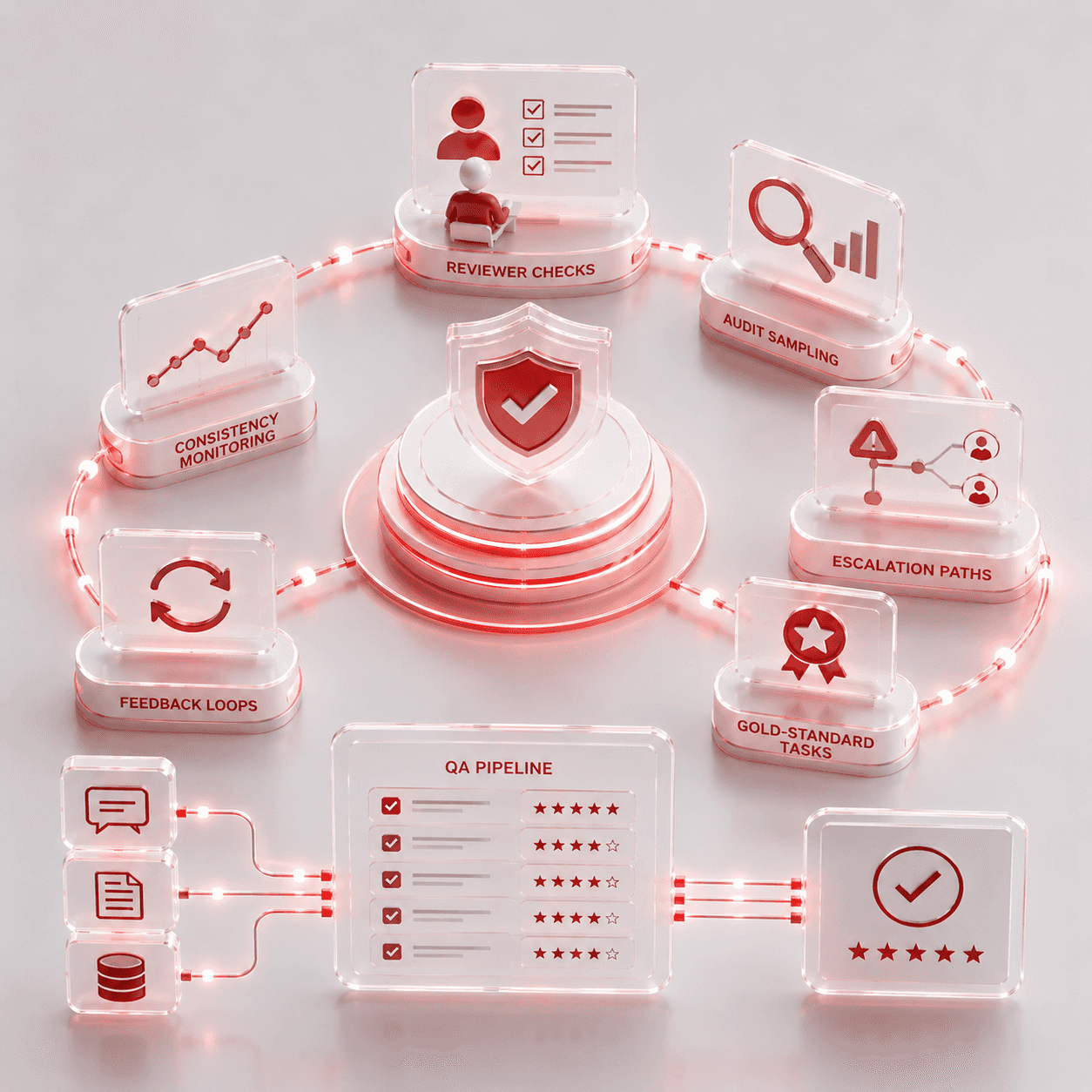
QA is built into the workflow through reviewer checks, audit sampling, escalation paths, gold-standard tasks, feedback loops, and consistency monitoring. This helps reduce noisy feedback and improves the reliability of delivered data.

Reporting and Iteration

06

Reporting and Iteration

Gen AI workflows evolve quickly. As models improve, evaluation criteria often change. We support ongoing feedback, taxonomy refinement, rubric updates, and workflow iteration so the data operation stays aligned with the model roadmap.

What We Help Gen AI Teams Improve

Accuracy

We help identify incorrect, incomplete, misleading, or unsupported outputs so teams can improve model reliability.

Helpfulness

We review whether outputs actually answer the user's question, follow the instruction, and provide useful information in the expected format.

Safety

We help flag unsafe, harmful, biased, sensitive, or policy-violating content across model outputs.

Factual Consistency

We support hallucination review, source-grounding checks, and validation against provided context or reference material.

Tone and Brand Alignment

We help evaluate whether outputs match the expected tone, style, format, and audience for enterprise or customer-facing applications.

Multilingual Performance

We support language and locale-sensitive evaluation so Gen AI systems can perform more consistently across markets and users.

Use Cases for Generative AI Data Services

Foundation Model Training and Alignment

Foundation Model Training and Alignment

AI teams building or adapting foundation models need human feedback to improve instruction-following, safety, helpfulness, and response quality.

Enterprise AI Assistants

Enterprise AI Assistants

Internal copilots, knowledge assistants, and customer support bots need evaluation workflows to ensure answers are accurate, grounded, and aligned with company policies.

E-commerce and Retail Gen AI

E-commerce and Retail Gen AI

Product content generation, catalog enrichment, review summarization, recommendation support, and customer query automation require strong quality checks for factuality, tone, and relevance.

Healthcare and Life Sciences AI

Healthcare and Life Sciences AI

Gen AI workflows in healthcare require careful review for accuracy, completeness, safety, and domain sensitivity.

Voice and Conversational AI

Voice and Conversational AI

Chatbots, voice assistants, and conversational systems need prompt-response review, intent validation, dialogue evaluation, and safety checks.

Content Moderation and Trust & Safety

Content Moderation and Trust & Safety

Generative systems that interact with user-generated content need human review to identify unsafe, sensitive, harmful, or policy-violating outputs.

Why IndiVillage Tech for Gen AI Data Operations?

Human-in-the-Loop Review at Scale

Human-in-the-Loop Review at Scale

We support managed human review workflows that help AI teams collect feedback, validate outputs, and improve model behaviour at scale.

Structured QA and Reviewer Calibration

Structured QA and Reviewer Calibration

Our workflows are built around clear guidelines, calibration, multi-pass review, and feedback loops, reducing inconsistency across large review tasks.

Tool-Agnostic Delivery

Tool-Agnostic Delivery

We work within your preferred annotation platform, evaluation workflow, rubric, taxonomy, or project environment.

Cost-Effective Managed Teams

Cost-Effective Managed Teams

Generative AI data workflows can become expensive when quality is inconsistent and rework increases. IndiVillage focuses on structured delivery that balances quality, speed, and cost.

Secure and Accountable Operations

Secure and Accountable Operations

We support controlled access, NDA-led onboarding, secure data handling, and process documentation for sensitive enterprise AI workflows.

Social Impact Through Digital Livelihoods

Social Impact Through Digital Livelihoods

IndiVillage combines enterprise-grade data operations with an impact sourcing model, creating distributed digital livelihoods while supporting global AI teams.

Generative AI Needs Better Human Feedback

Generative AI Needs Better Human Feedback, Not Just More Data

The Gen AI market is moving quickly, but the core challenge remains the same: models need better feedback to become more useful, reliable, and safe.

As AI labs and enterprises push toward more capable systems, the demand for human training data and expert review continues to grow. Reuters reported that Turing, which supplies human experts to train AI models, tripled revenue to $300 million, reflecting rising demand for specialized human input as AI companies face limits in available training data.

The opportunity is clear. High-quality human feedback is becoming a core part of the AI infrastructure stack. But not all feedback is equally useful.

For Gen AI teams, the quality of human review depends on the clarity of the rubric, the calibration of reviewers, the strength of QA, the consistency of workflows, and the ability to adapt as model requirements change. That is where IndiVillage can help.

Frequently Asked Questions

Quick answers to help you make smarter, faster decisions with confidence

What are generative AI data services?+

Generative AI data services support the training, fine-tuning, evaluation, and improvement of Gen AI models through human feedback, annotation, prompt-response review, supervised fine-tuning data, RLHF workflows, safety review, and model output validation.

What is LLM evaluation?+

LLM evaluation is the process of reviewing large language model outputs for quality dimensions such as accuracy, relevance, helpfulness, completeness, safety, tone, factuality, and instruction-following.

Does IndiVillage support RLHF workflows?+

Yes. IndiVillage supports RLHF-style workflows such as response ranking, prompt-response review, preference comparison, quality scoring, safety flagging, and human feedback collection.

What is supervised fine-tuning data?+

Supervised fine-tuning data includes curated examples that teach a model how to behave for specific tasks, domains, formats, tones, or workflows. This can include instruction-response pairs, domain-specific examples, summaries, classifications, or rewriting tasks.

Can IndiVillage review model outputs for hallucinations?+

Yes. We support hallucination review, factual consistency checks, grounding validation, and error tagging based on client-provided criteria and reference material.

Can you support multilingual Gen AI data workflows?+

Yes. IndiVillage can support multilingual annotation, response review, intent validation, transcription QA, translation review, and locale-sensitive evaluation depending on project requirements.

Can you work within our existing Gen AI evaluation platform?+

Yes. IndiVillage follows a tool-agnostic delivery model and can work within your existing annotation, evaluation, data review, or model feedback platform.

How do you maintain quality in Gen AI review tasks?+

We use task guidelines, reviewer calibration, multi-layer QA, audit sampling, feedback loops, and escalation rules to maintain consistency and reduce noisy human feedback.

What industries can use Gen AI data services?+

Gen AI data services are useful across industries including healthcare, finance, retail, e-commerce, mobility, education, customer support, agriculture, content platforms, and enterprise knowledge systems.

How do we start a Gen AI data project?+

You can share a sample task, prompt-response dataset, model output set, evaluation rubric, or use case. IndiVillage can help scope the workflow, team structure, QA process, and delivery model.

Talk to us

Tell us about your AI data requirements and our team will help map the right workflow.

Loading form...