
IndiVillage Logo

Case Study

Annotation-to-Model Pipeline Built for Agriculture

Beck's Hybrids turned to IndiVillage to build computer vision models for grain quality, kernel segmentation, and ear height detection at agricultural scale.

Annotation-to-Model Pipeline Built for Agriculture

BECK'S HYBRIDS

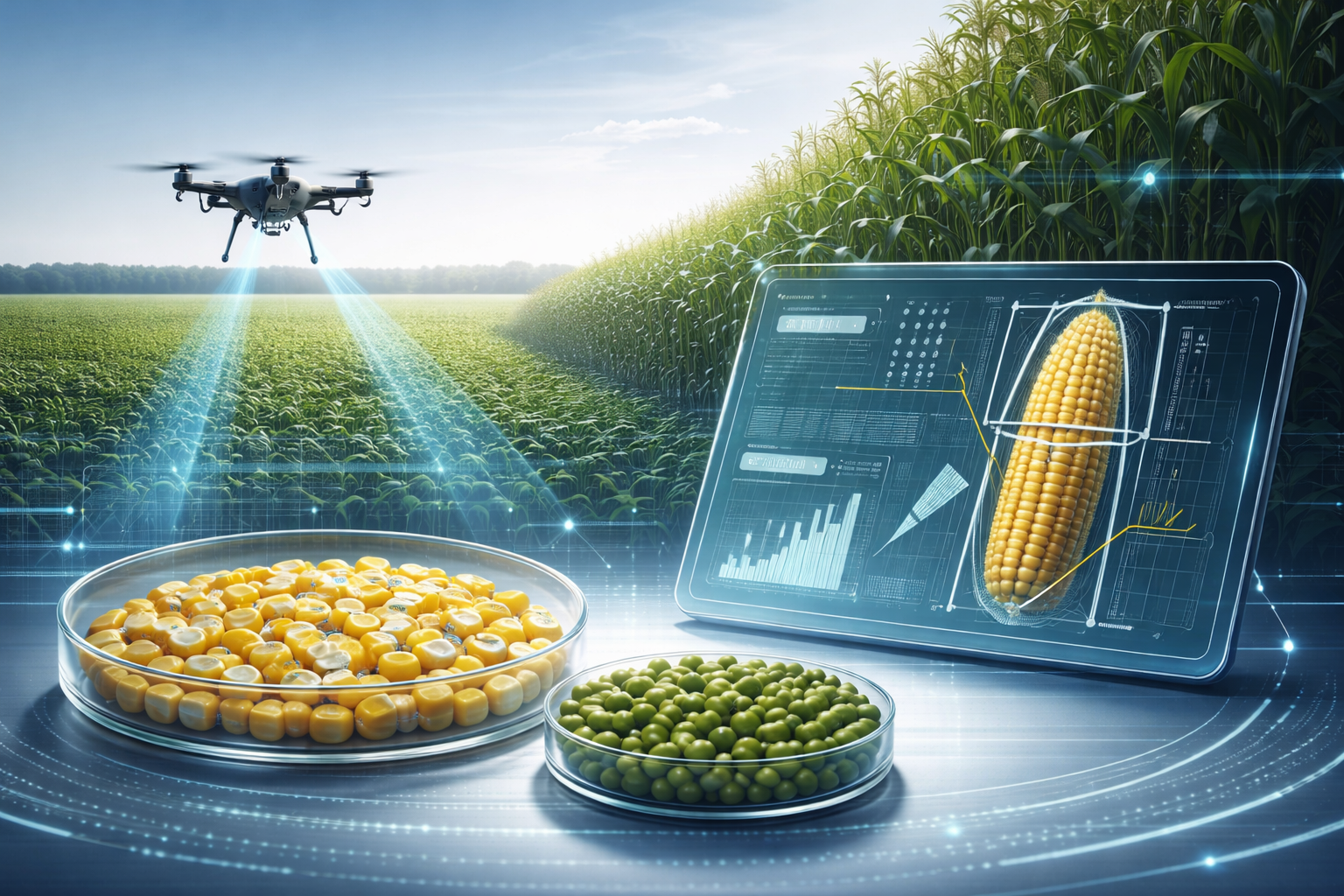
Beck's Hybrids, one of America's largest family-owned seed companies, is investing in computer vision to transform how it evaluates grain quality and crop performance at scale. With up to 500,000 test plots generating vast quantities of imagery each harvest season, Beck's turned to IndiVillage to build the AI models that will power the next generation of its breeding and evaluation programme.

BECK'S HYBRIDS

500,000

plots generating imagery annually

3 workstreams

kernel segmentation and ear height detection

Model-in-the-loop

methodology for rapid development

Half a Million Plots, Every Kernel Counts

Challenge

Half a Million Plots, Every Kernel Counts

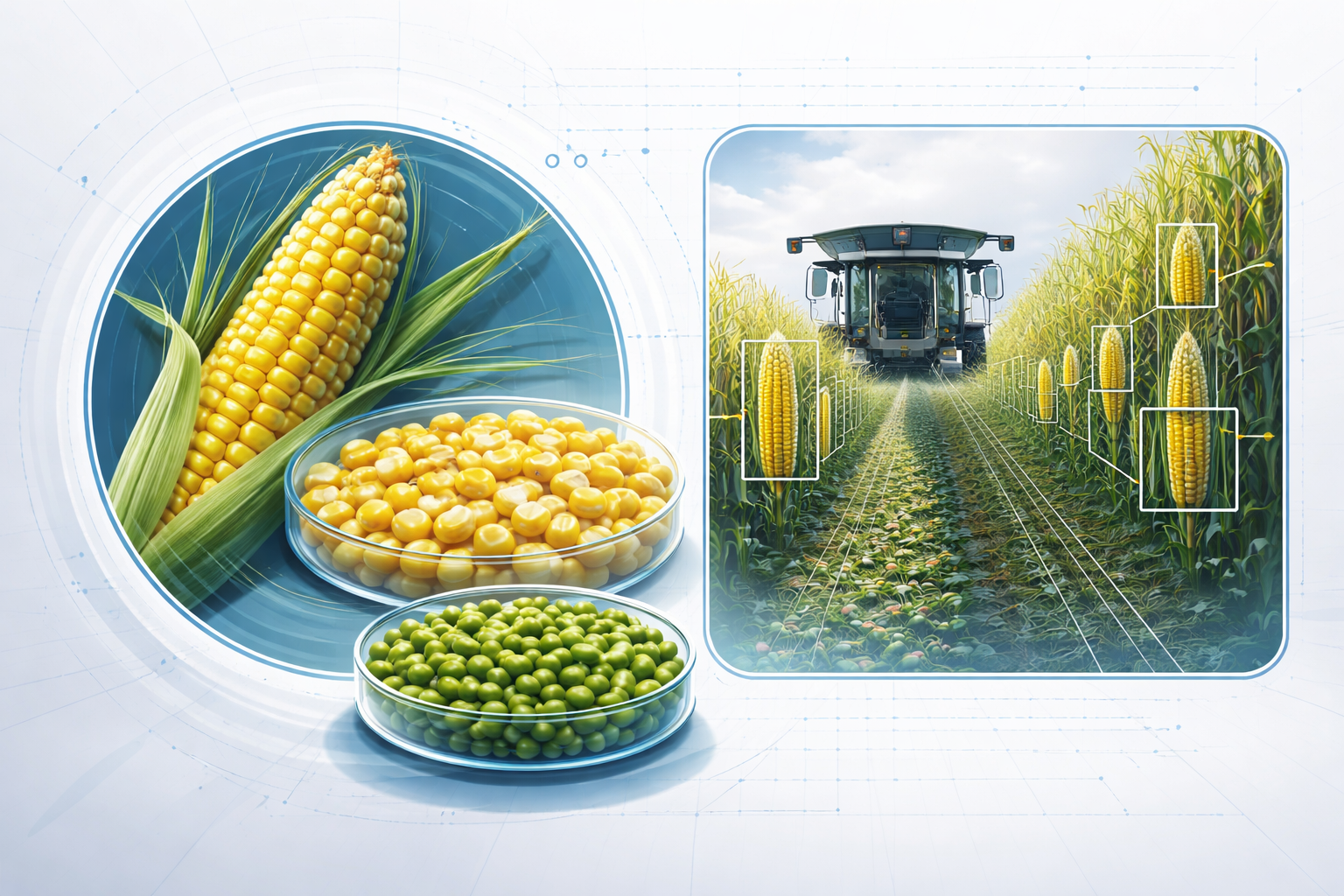
Beck's Hybrids needed computer vision solutions for two distinct but equally demanding tasks. The first - kernel analysis - required instance segmentation models capable of identifying individual kernels in grain samples, measuring size, shape, and quality characteristics at pixel-level precision across corn and soybean varieties. With 15-20 kernels per image and up to 500,000 plots per season, the scale was enormous.

The second task - ear height detection - presented a different kind of challenge. Forward-facing combine imagery captured during harvest contains significant visual noise: variable lighting, colour shifts, and dense background clutter. The model needed to detect corn ears reliably while suppressing false positives, and determine ear orientation (up or down) to measure stalk connection height for harvestability assessment. Both solutions had to integrate with Beck's proprietary software environment, and both had to be production-ready before the August 2026 harvest season.
Annotation-to-Model Pipeline Built for Agriculture

Solution

Annotation-to-Model Pipeline Built for Agriculture

IndiVillage proposed a model-in-the-loop approach across three parallel proof-of-concept workstreams. For kernel segmentation, the team annotated thousands of images with pixel-level instance segmentation masks, then trained models using architectures such as Mask R-CNN and YOLO-based segmentation, optimised for tight mask boundaries in the controlled imaging environment of kernels pressed flat against glass.

For ear height detection, IndiVillage deployed object detection models - YOLOv8 and Faster R-CNN - tuned for high precision with confidence thresholding aligned to Beck's 0.5-0.6 operating range. Annotation teams with direct agricultural experience labelled sample imagery across varying field conditions, with each correction cycle feeding back into model retraining. This semi-automated pipeline progressively reduced manual effort while improving generalisation across the full range of lighting and field variability Beck's encounters in production.

From Proof of Concept to Harvest-Ready

Results

From Proof of Concept to Harvest-Ready

The proof of concept confirmed a viable path to production-grade models across both workstreams, with IndiVillage's agricultural annotation expertise proving particularly valuable in handling the edge cases and domain-specific nuance that general-purpose annotation providers typically miss. The controlled kernel imaging environment allowed rapid model convergence, while the more complex ear detection task demonstrated strong performance against Beck's precision requirements.

The partnership is now advancing toward production scale, with IndiVillage expanding training datasets through model-assisted annotation and human QA cycles. The target is delivery of production-grade model weights - integrated with Beck's proprietary software - ahead of the 2026 harvest season, enabling automated quality assessment across hundreds of thousands of test plots.