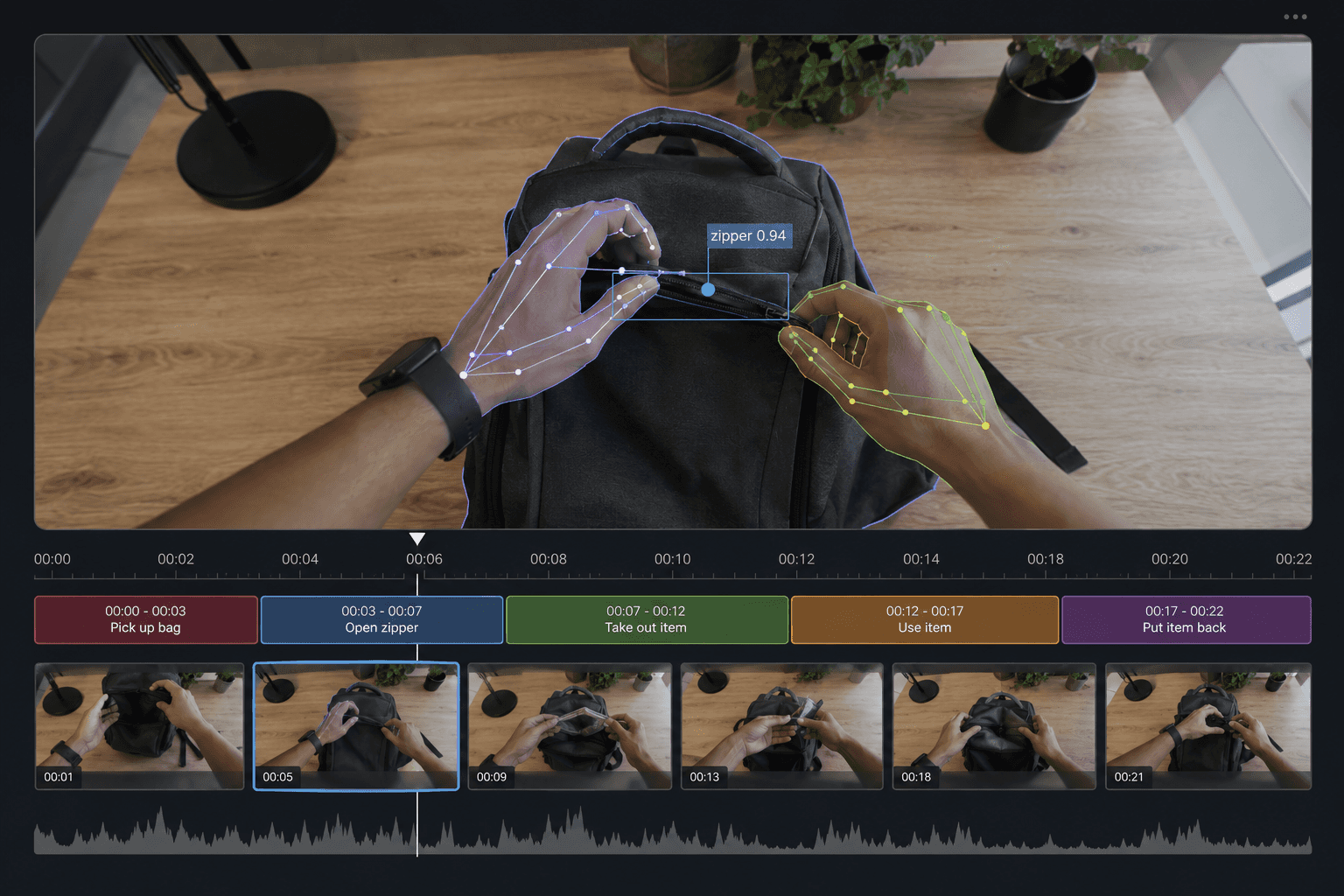
Action Segmentation
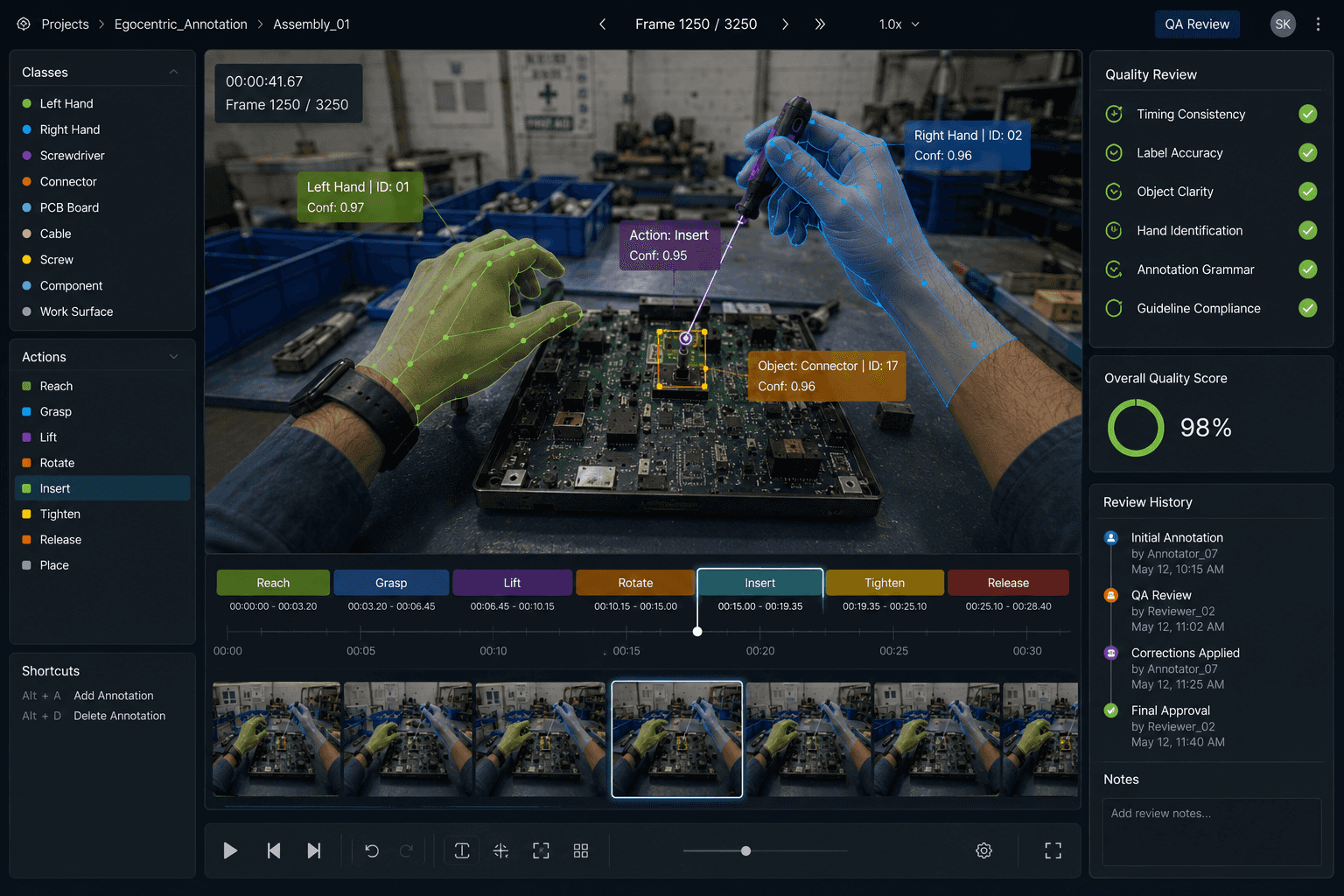
We divide egocentric video into timed action segments so each physical task is represented clearly across the timeline. Every segment is structured to capture what is happening, when it begins, and when it ends.

Data Annotation & Labeling
IndiVillage Tech helps AI teams convert first-person video into structured, high-quality training data for robotics, embodied AI, and human activity understanding.
From action segmentation to hand-object interaction labeling, our teams bring the temporal precision and consistency needed to help AI systems understand how people perform real physical tasks.
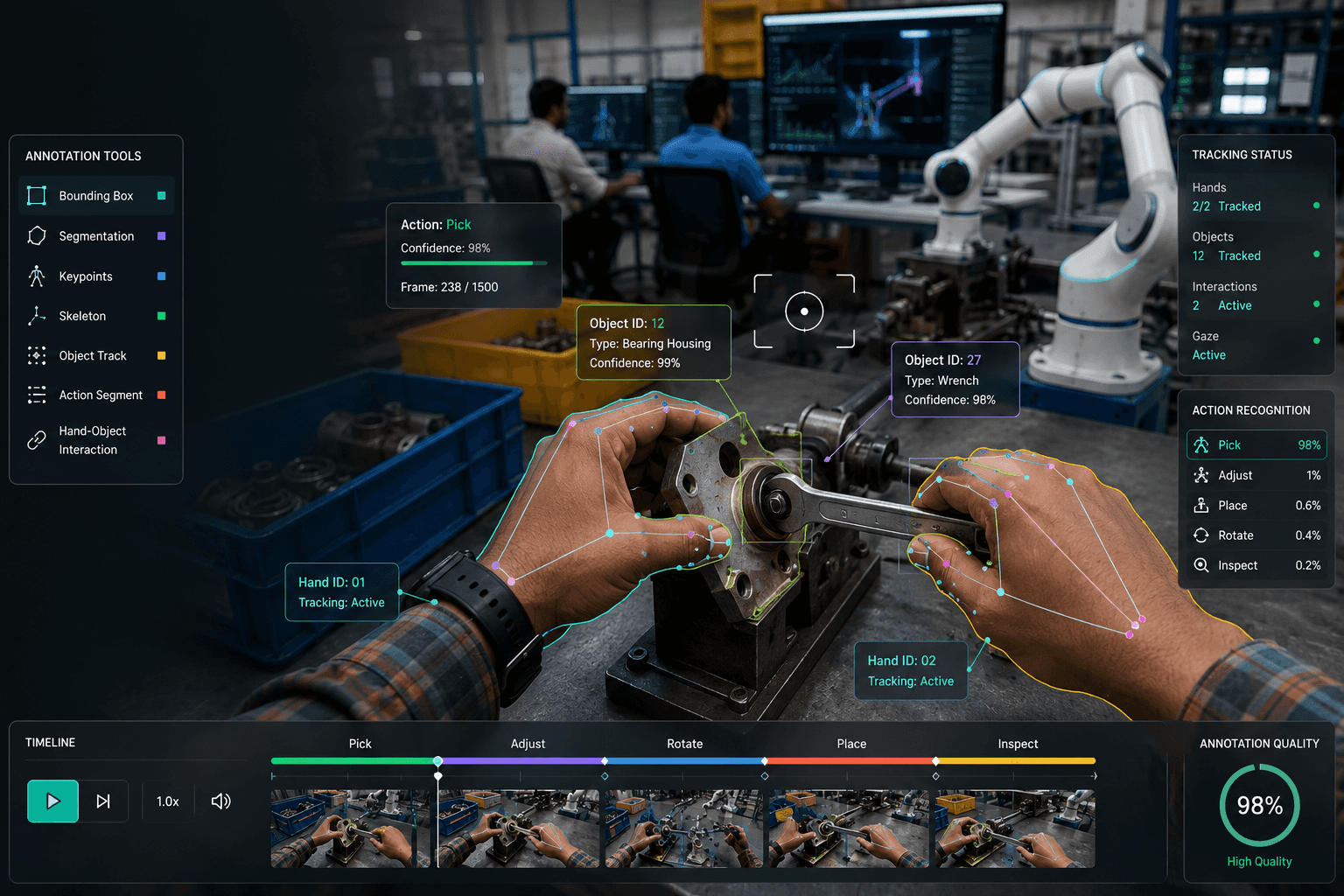
Egocentric video captures the world from the perspective of the person performing the task. This makes it valuable for robotics and embodied AI, but also difficult to annotate well.
Egocentric footage often includes camera movement, hand occlusions, fast actions, and task sequences that are difficult to separate cleanly. One hand may stabilize an object while the other performs the task, and objects may be picked up, placed, turned, folded, wiped, inserted, released, or passed between hands in a matter of seconds.
That is why egocentric video annotation requires more than standard video labeling. It requires careful segmentation, precise hand-object labels, and a workflow that can handle real-world complexity.
At IndiVillage Tech, we help robotics and embodied AI teams turn raw first-person video into clean, consistent, model-ready datasets.
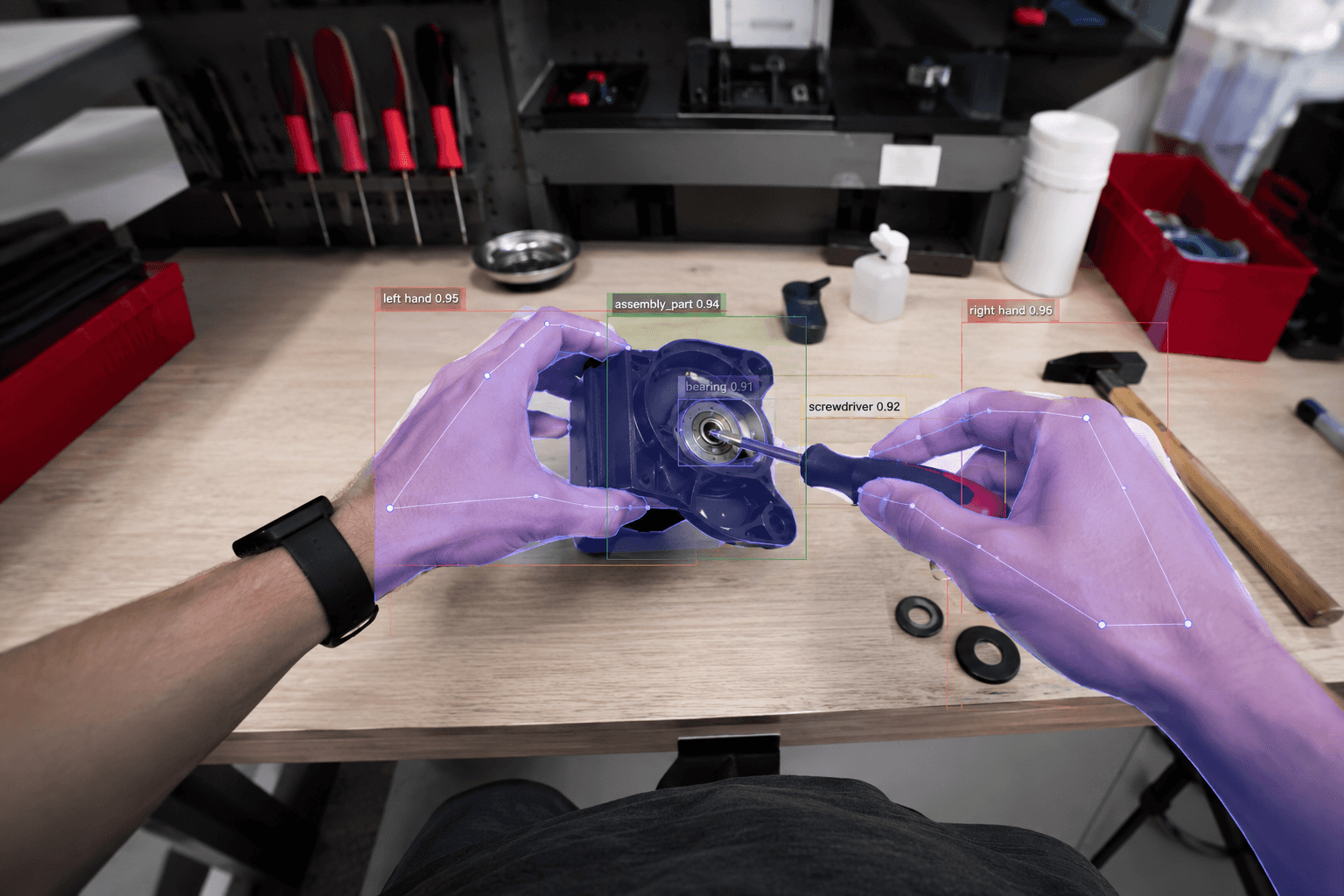
IndiVillage Tech supports first-person video labeling across action segmentation, hand-object interaction labeling, temporal tagging, two-handed actions, object-use annotation, and edge case handling. Each workflow is designed to capture physical activity with the timing, context, and consistency required for robotics and embodied AI datasets.
We divide egocentric video into timed action segments so each physical task is represented clearly across the timeline. Every segment is structured to capture what is happening, when it begins, and when it ends.
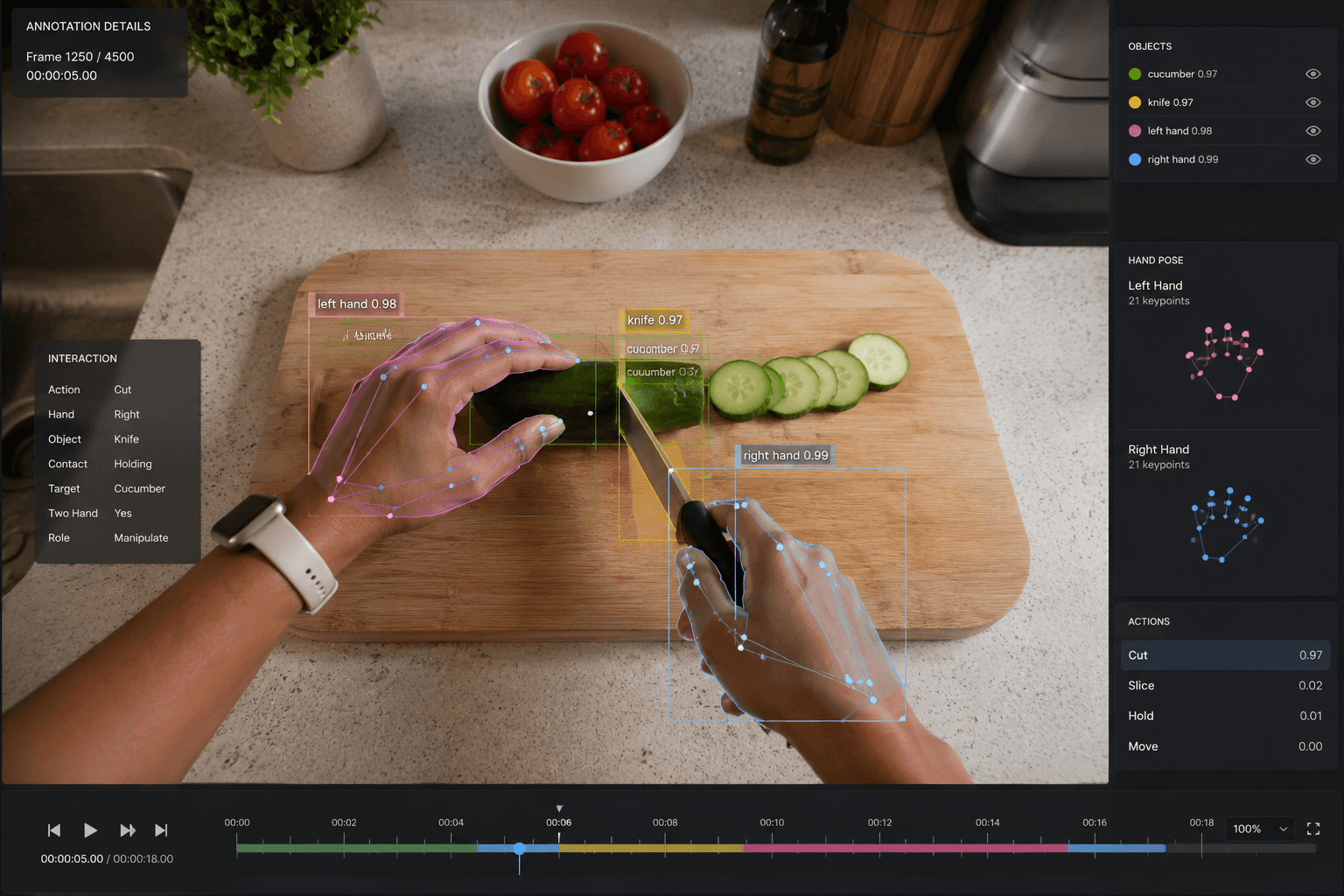
We label the physical interaction between the person's hands and the objects in view, including which hand is involved, what object is being used, and what action is taking place.
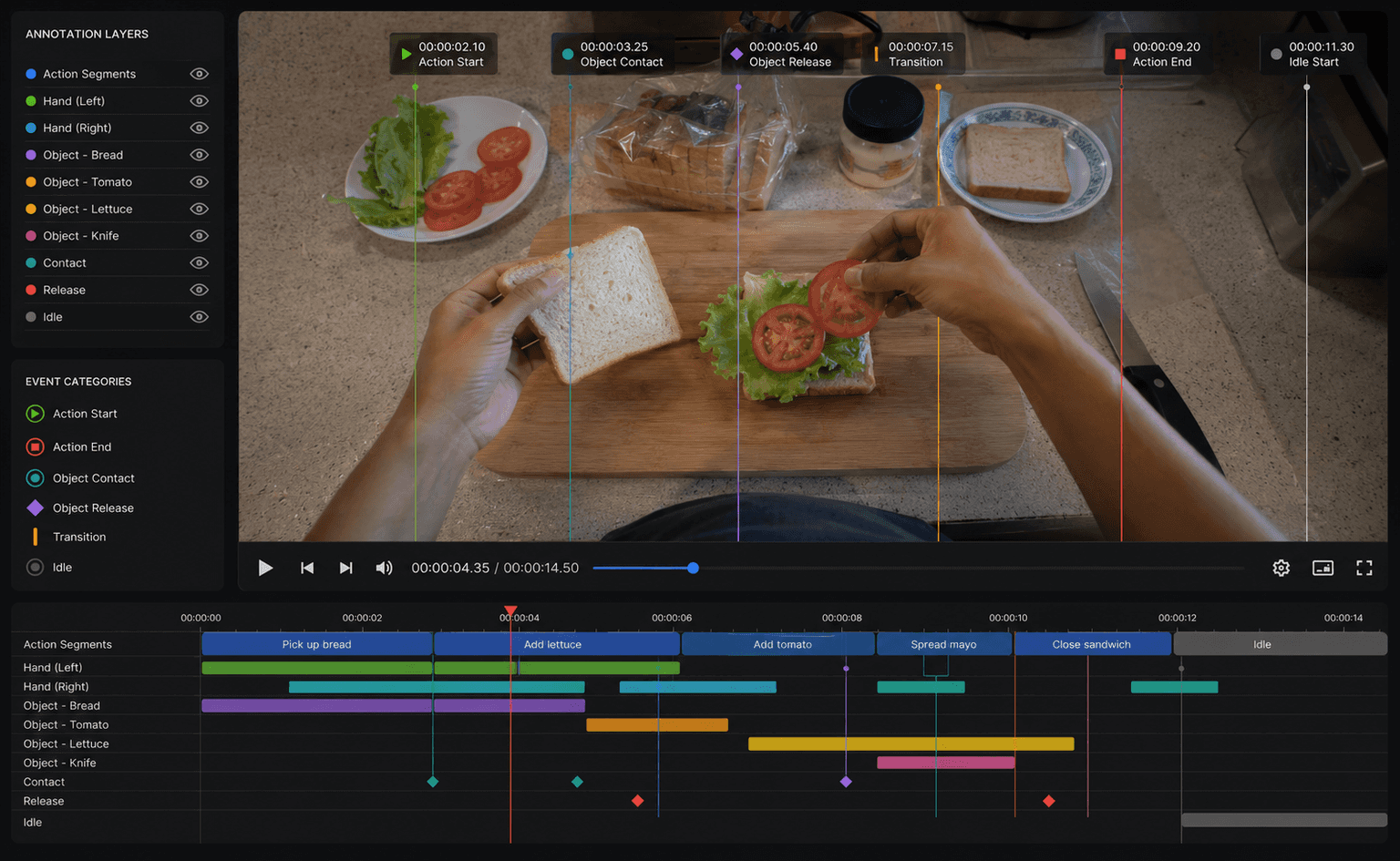
We support timestamped annotation workflows where timing matters, such as action start and end points, object contact, release, repetitive motion, idle periods, and transitions between tasks.
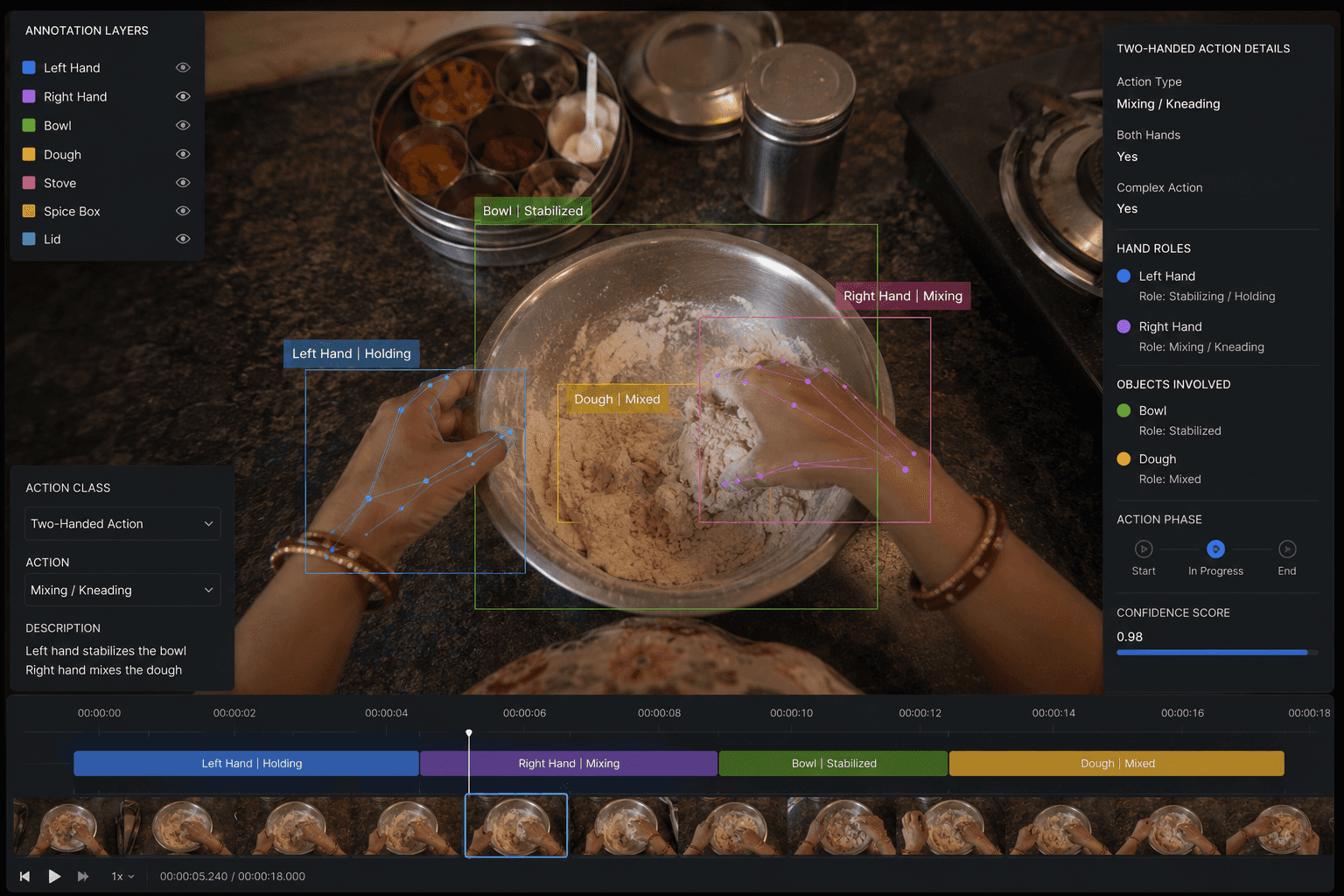
We annotate complex actions where both hands are involved, including cases where each hand has a distinct role: holding, stabilizing, placing, turning, wiping, folding, gripping, cutting, or fastening.
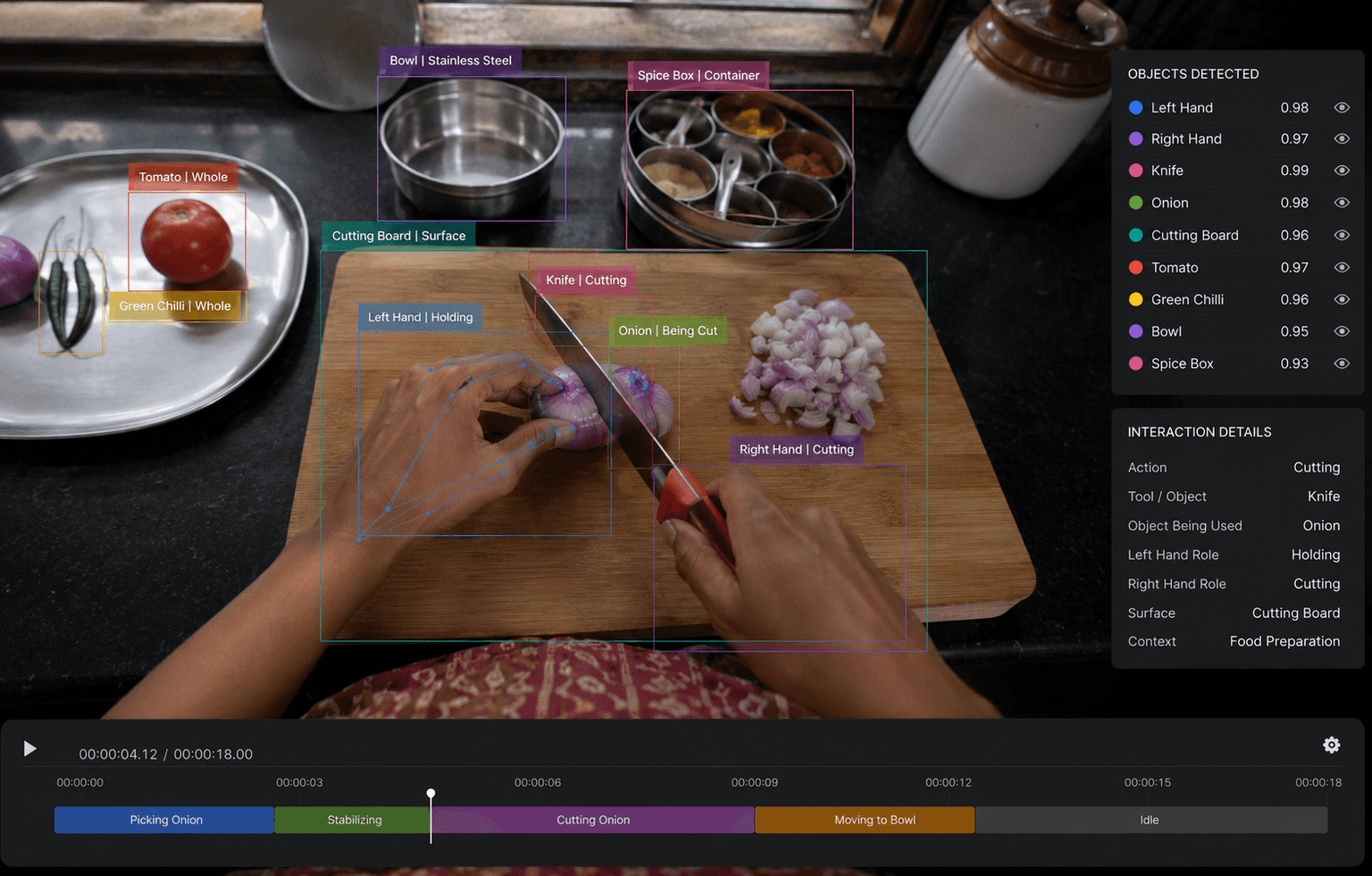
We label interactions involving tools, utensils, devices, materials, and everyday objects so models can better understand how objects are used in context.
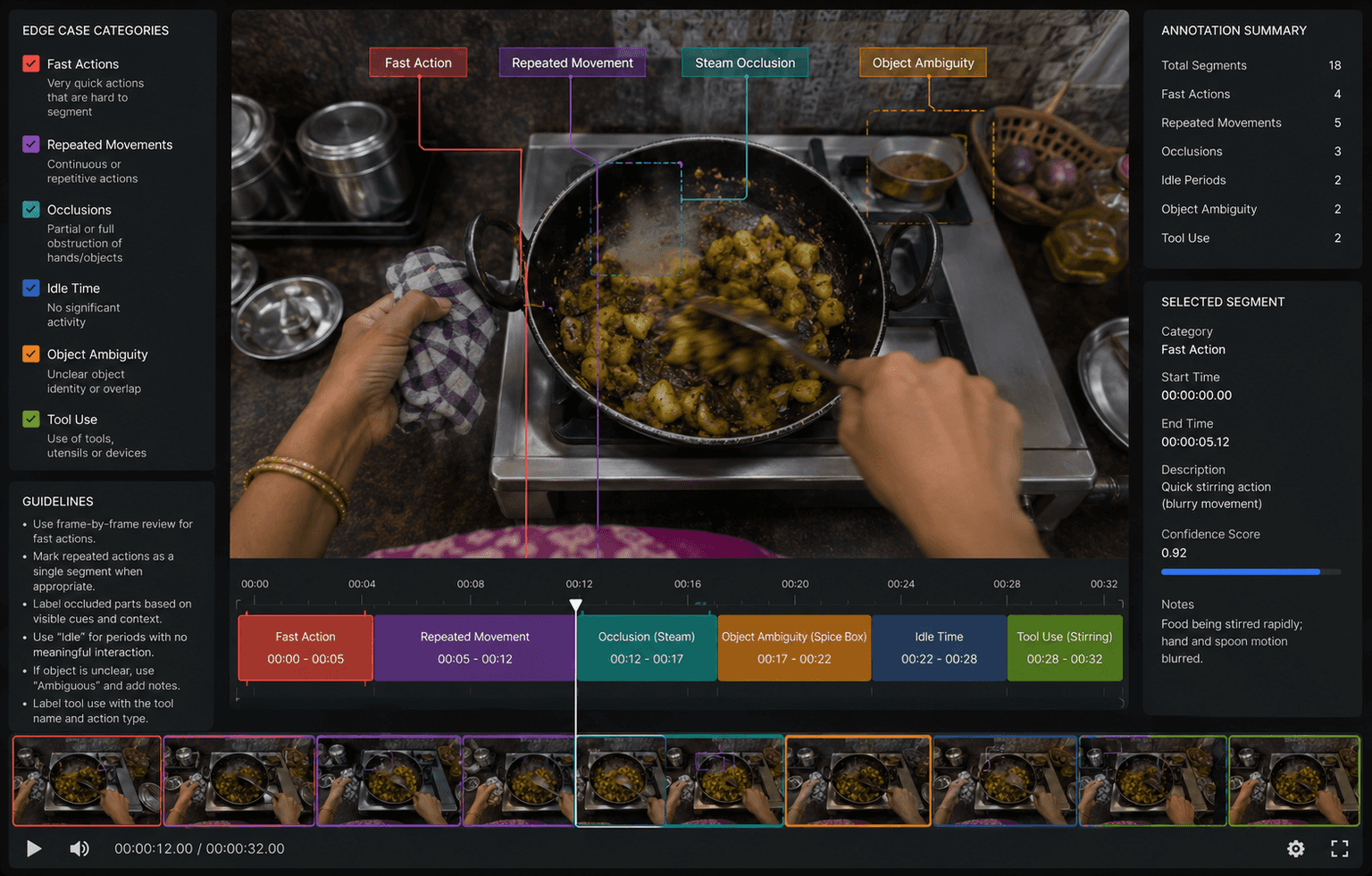
We apply clear project guidelines for fast actions, repeated movements, occlusions, idle time, object ambiguity, tool use, and task sequences that are difficult to separate cleanly.
Egocentric video datasets are especially useful for AI systems that need to learn from human behavior in real-world environments. IndiVillage Tech supports egocentric video annotation across robotics, embodied AI, human activity recognition, and task-understanding use cases.
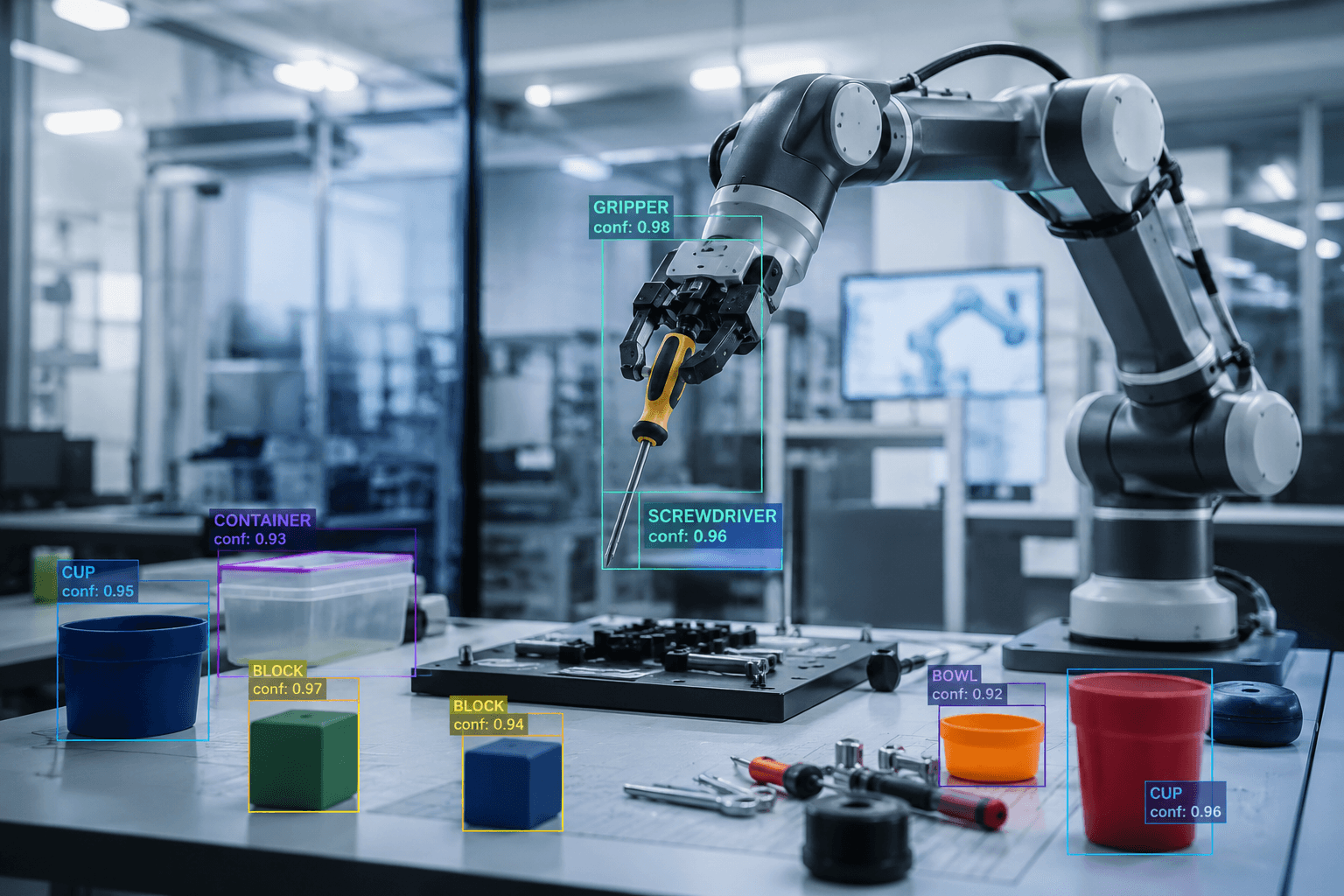
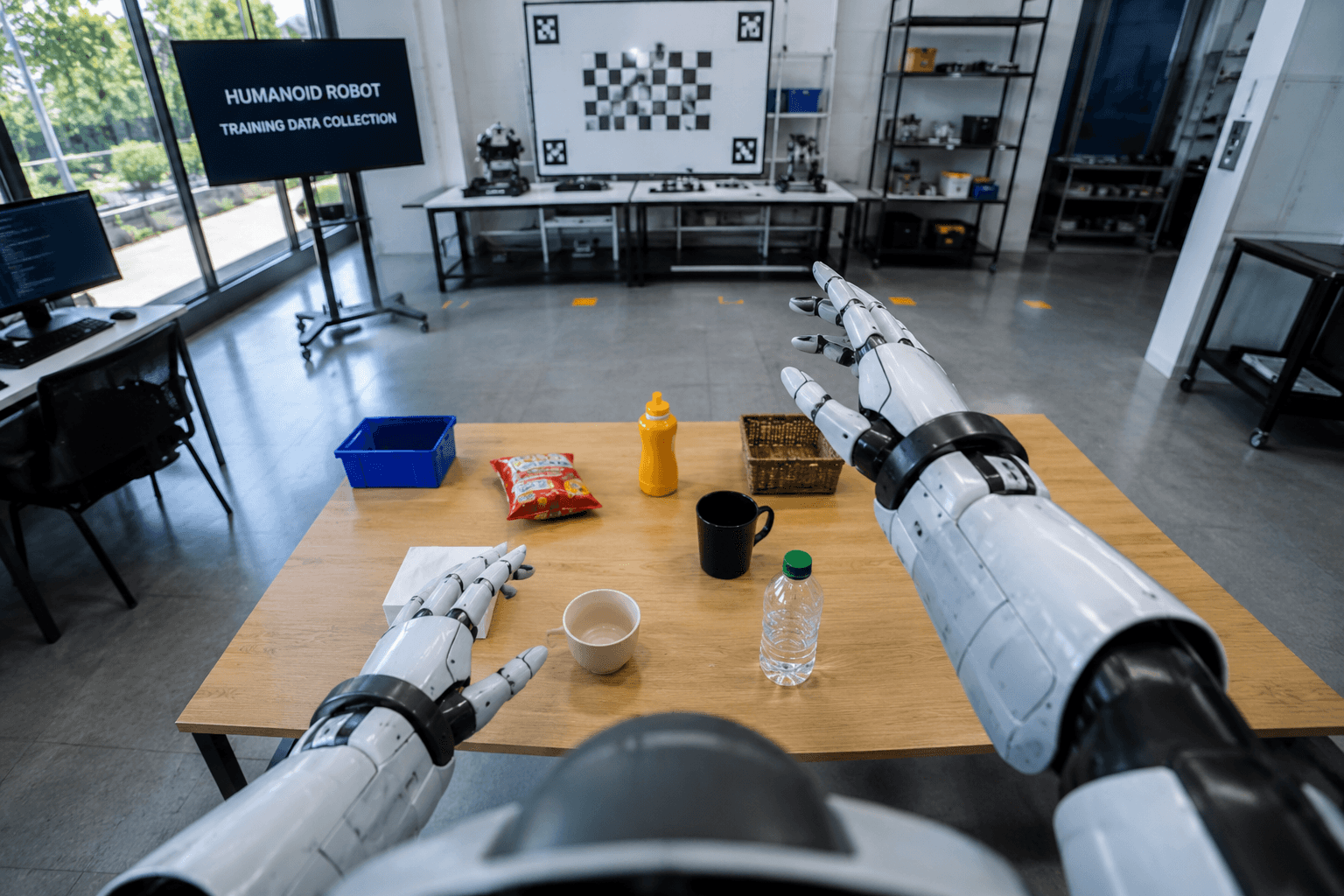
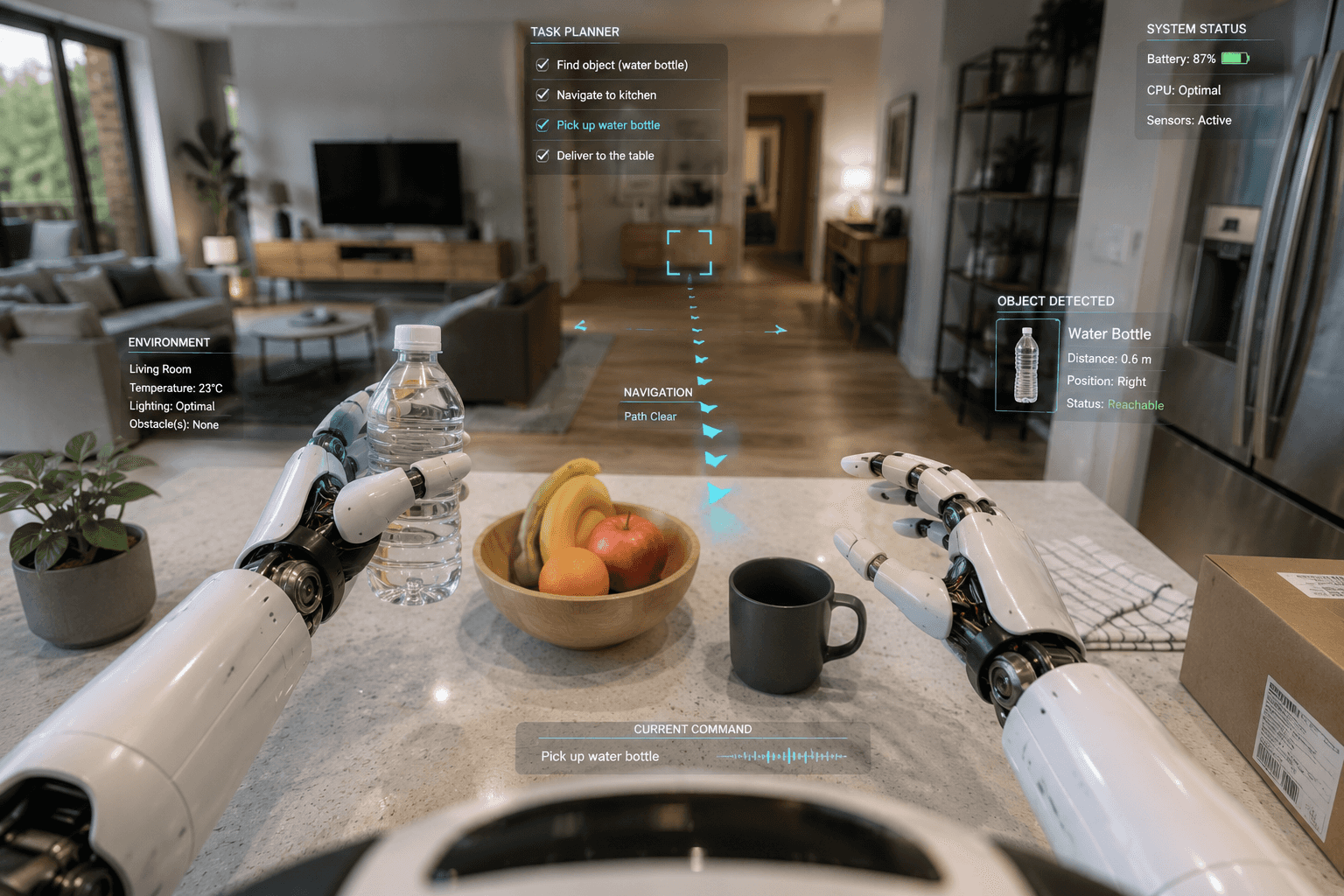
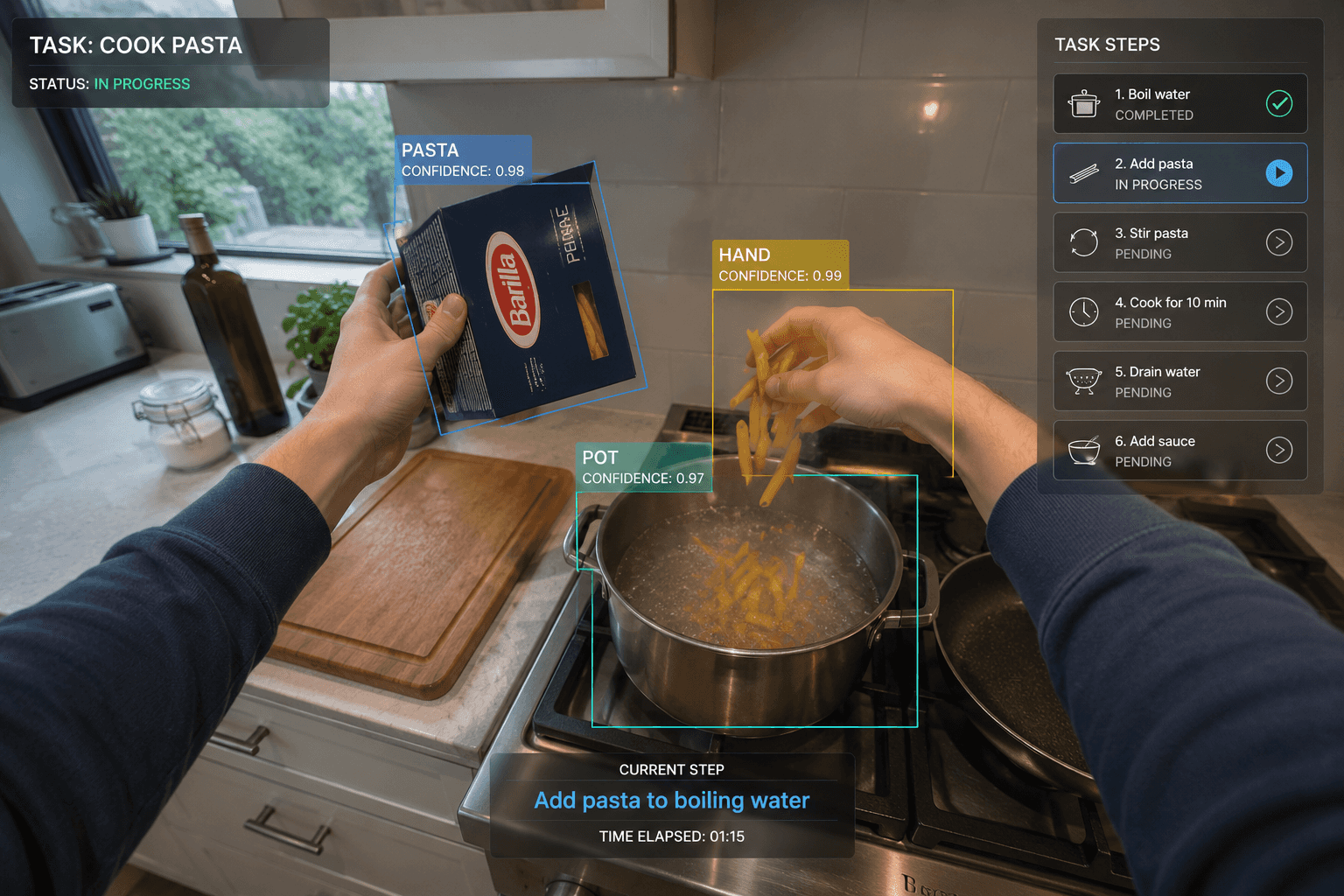
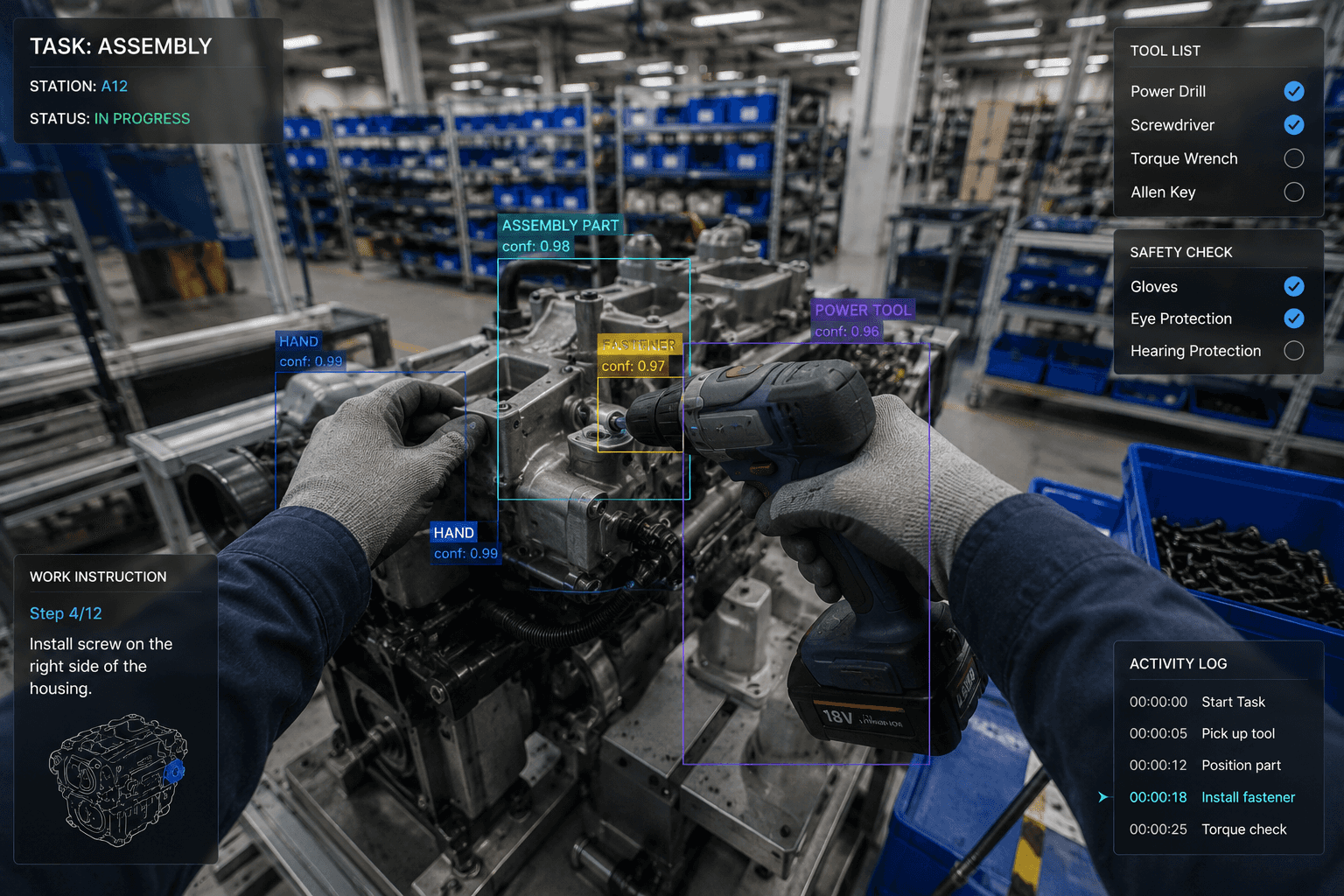
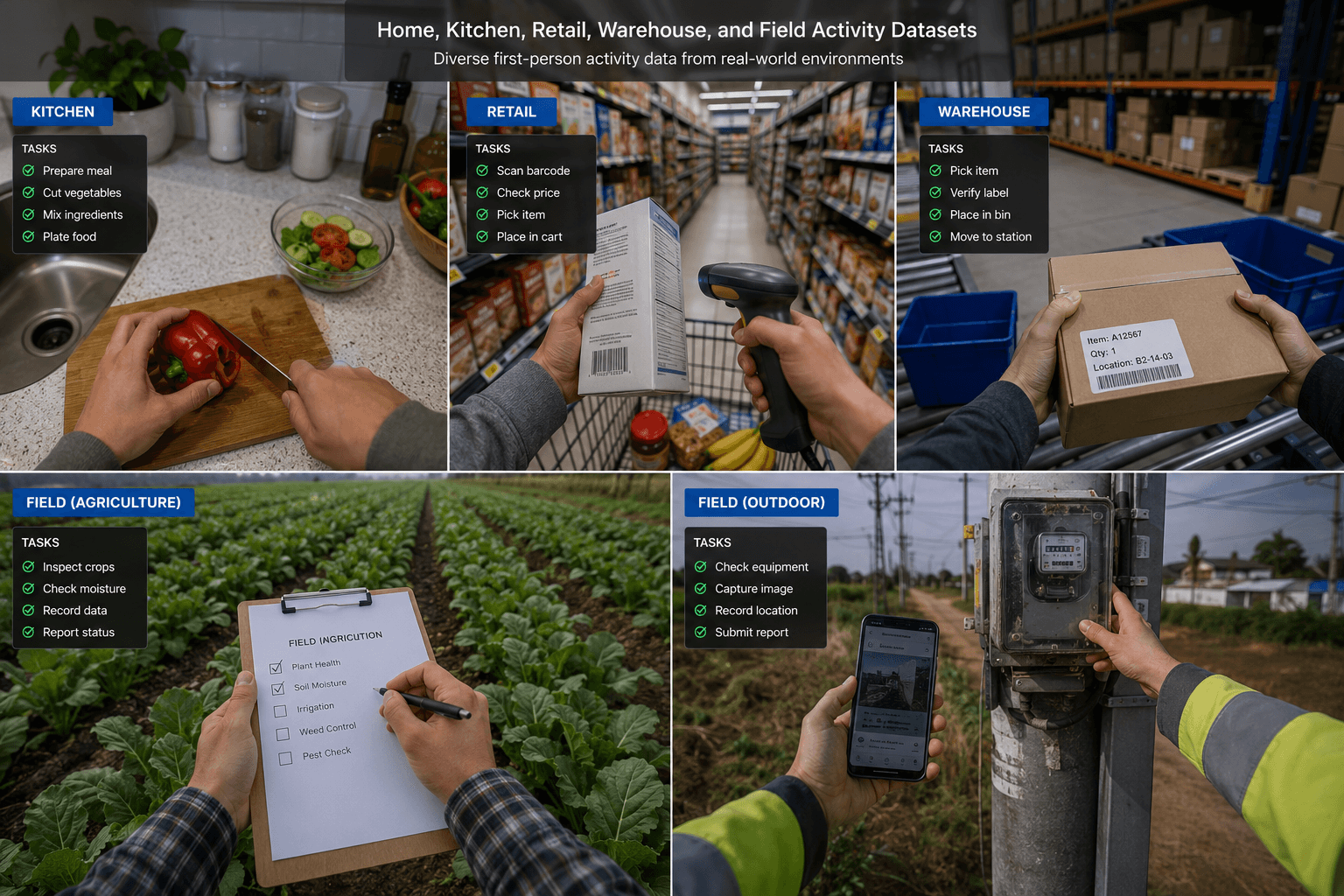

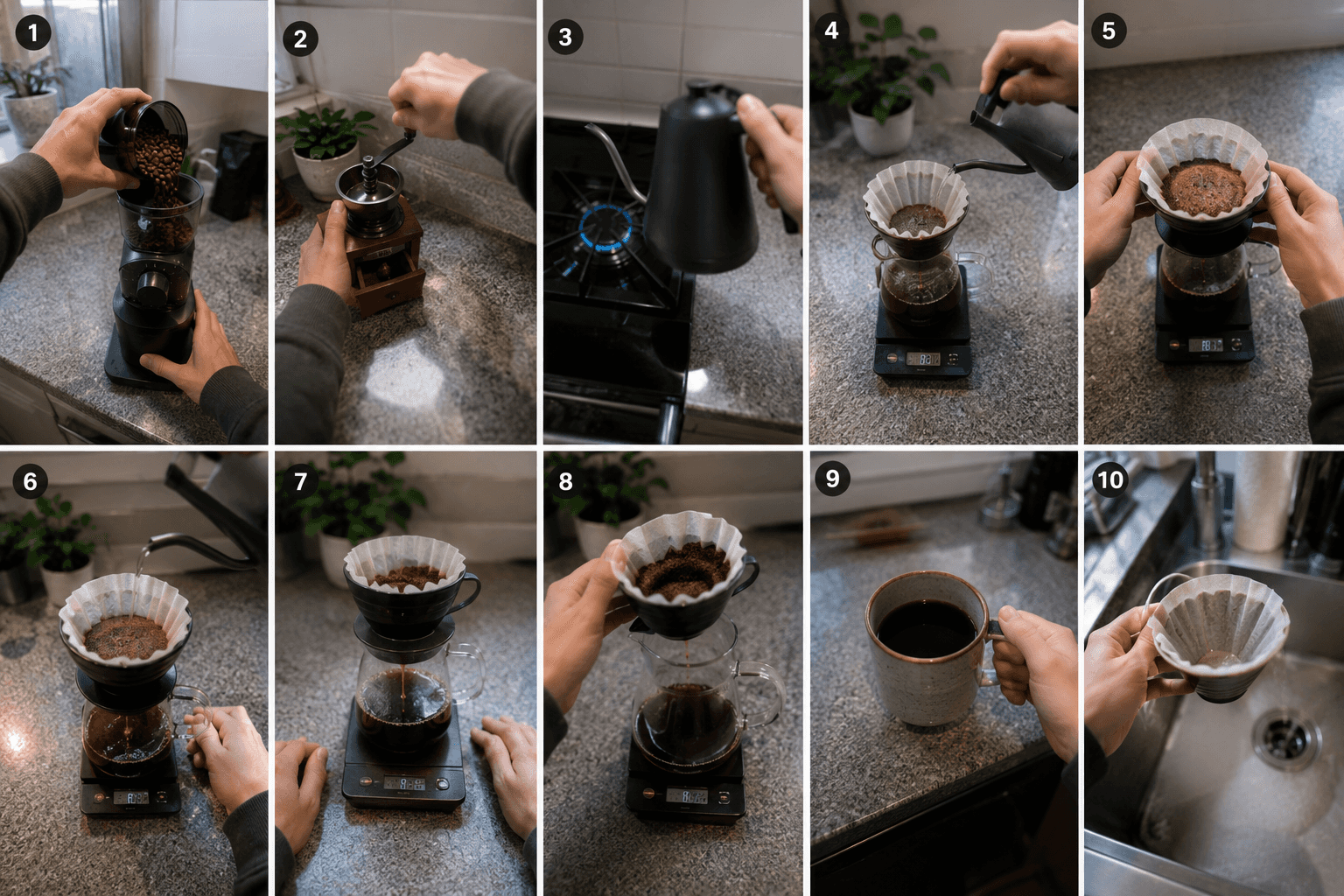
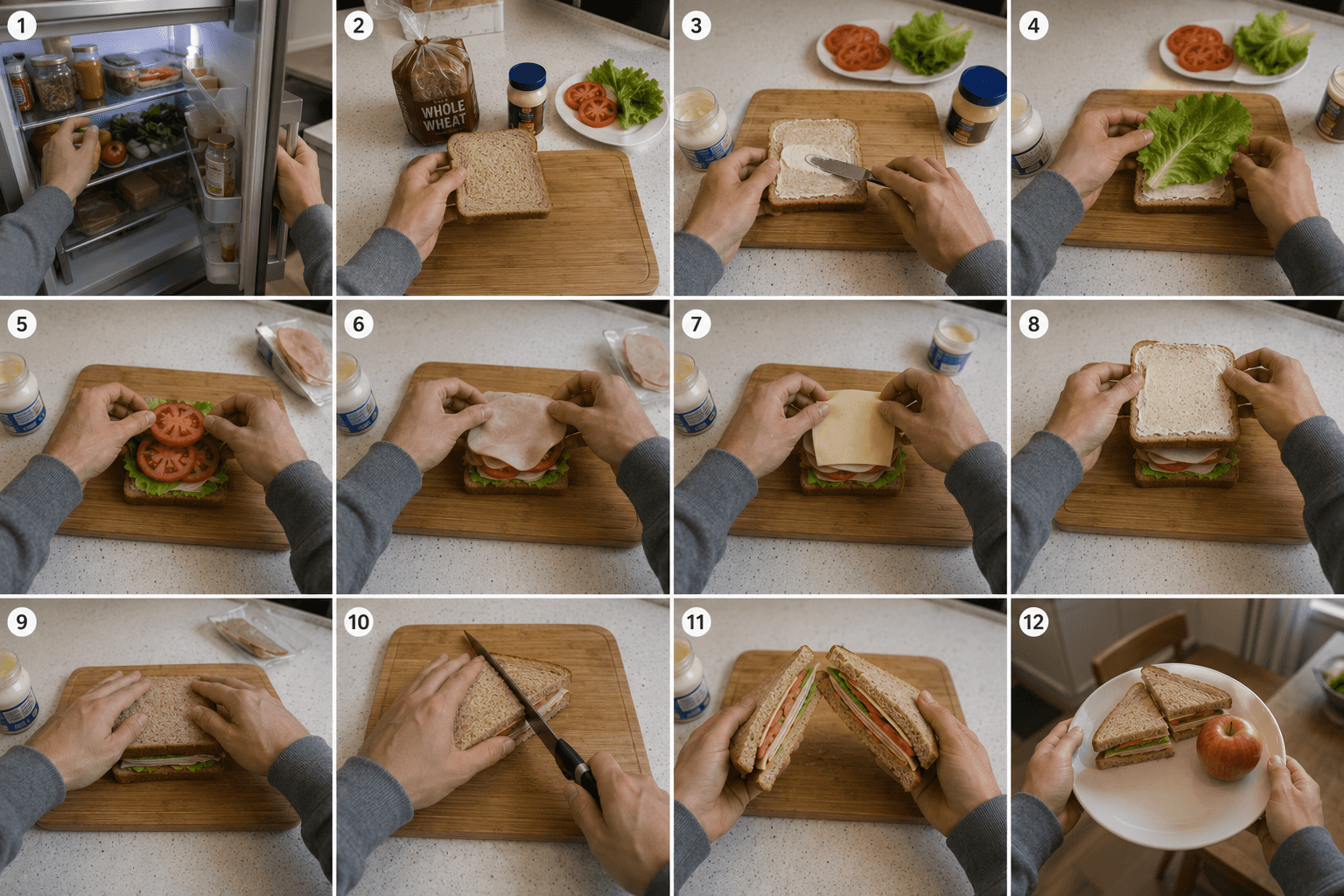
Whether your team is training models to understand how people assemble, clean, cook, repair, stock, sort, inspect, operate, or manipulate objects, IndiVillage Tech can help turn first-person video into usable training datasets.
01
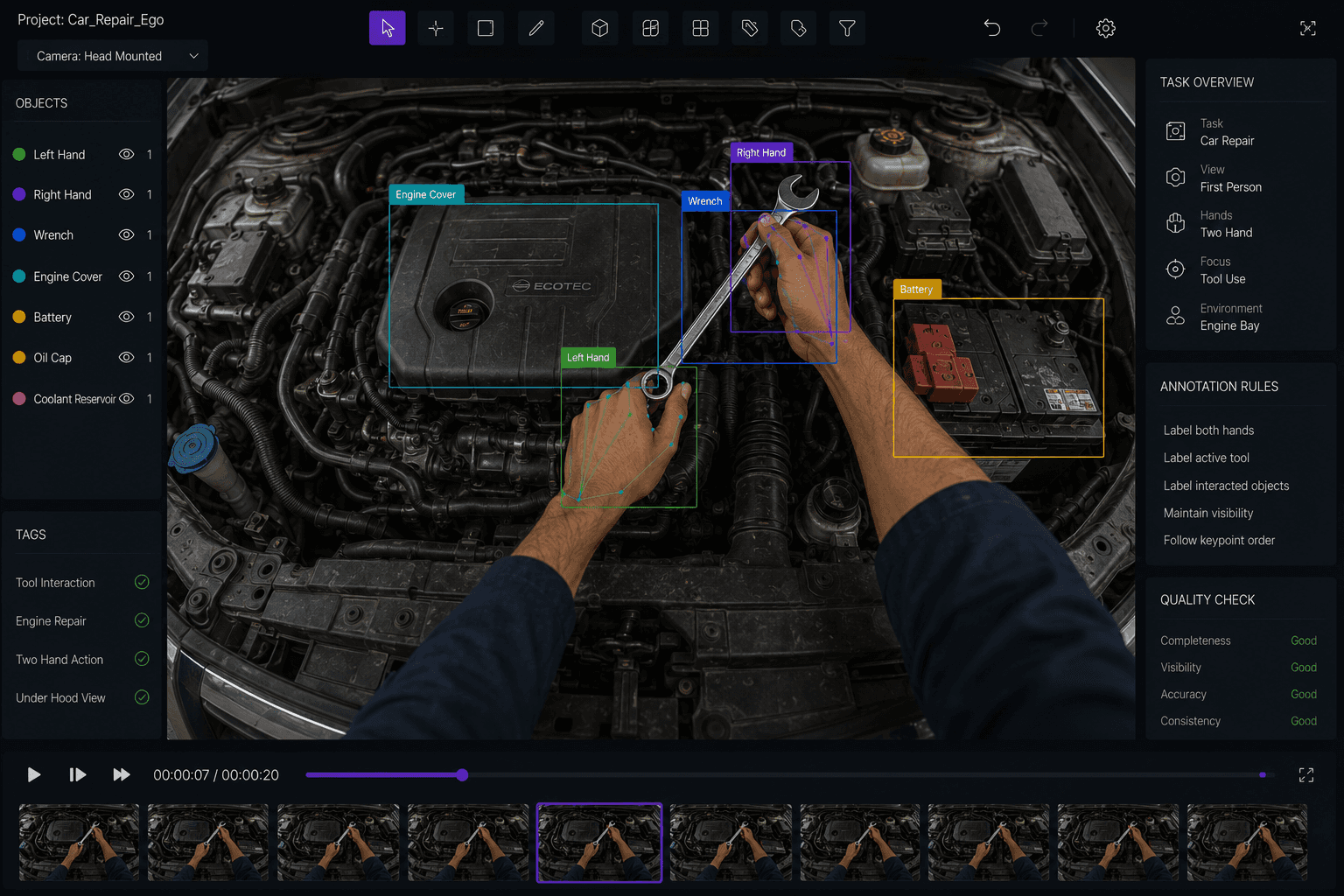
Before annotation begins, our teams study the task, object types, hand roles, camera perspective, and project-specific labeling rules. This helps annotators understand the full action sequence, rather than treating each frame in isolation.
02
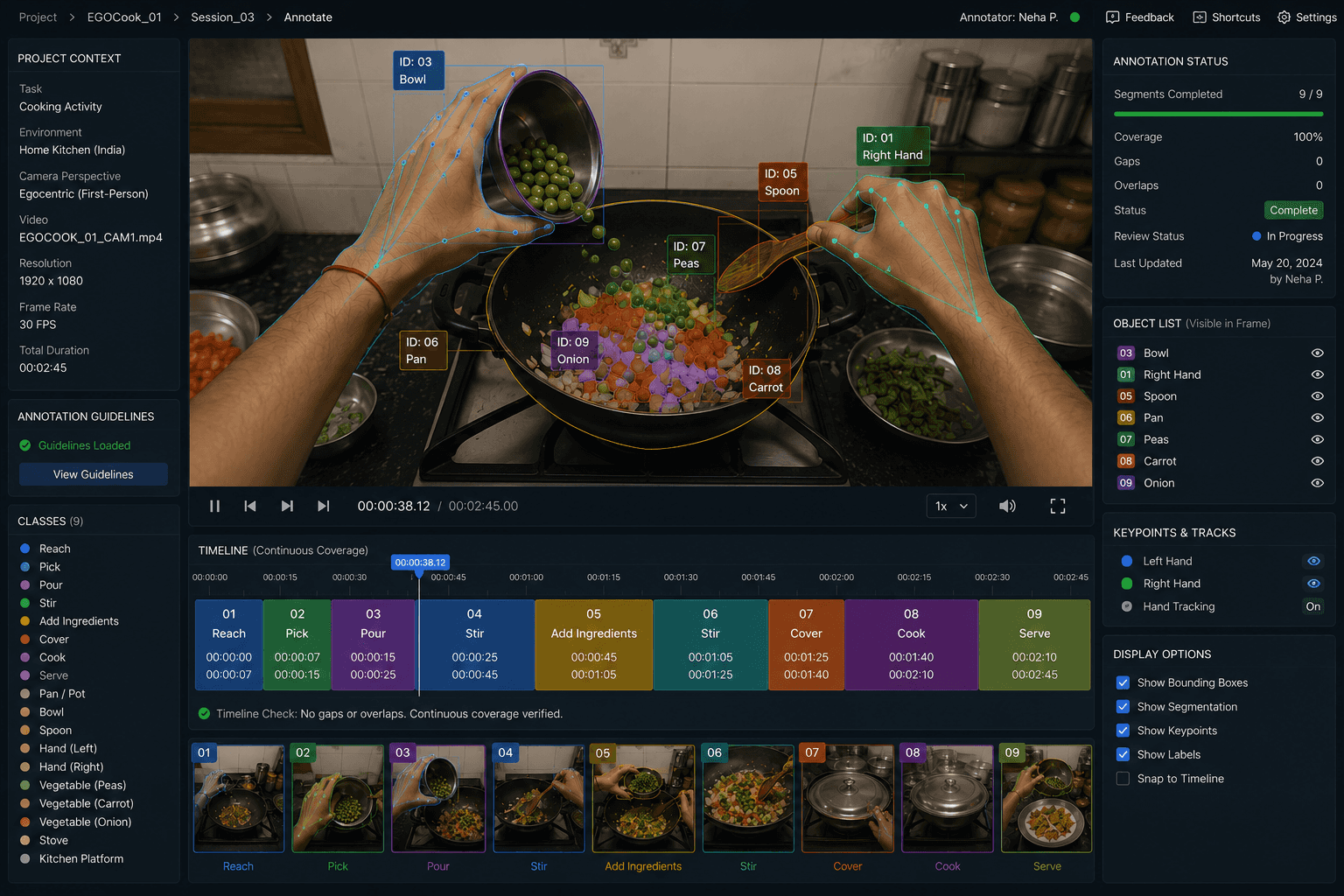
We divide each video into continuous action segments, ensuring the timeline is fully covered without gaps or overlaps. This gives AI teams a structured view of how physical activity unfolds over time.
03
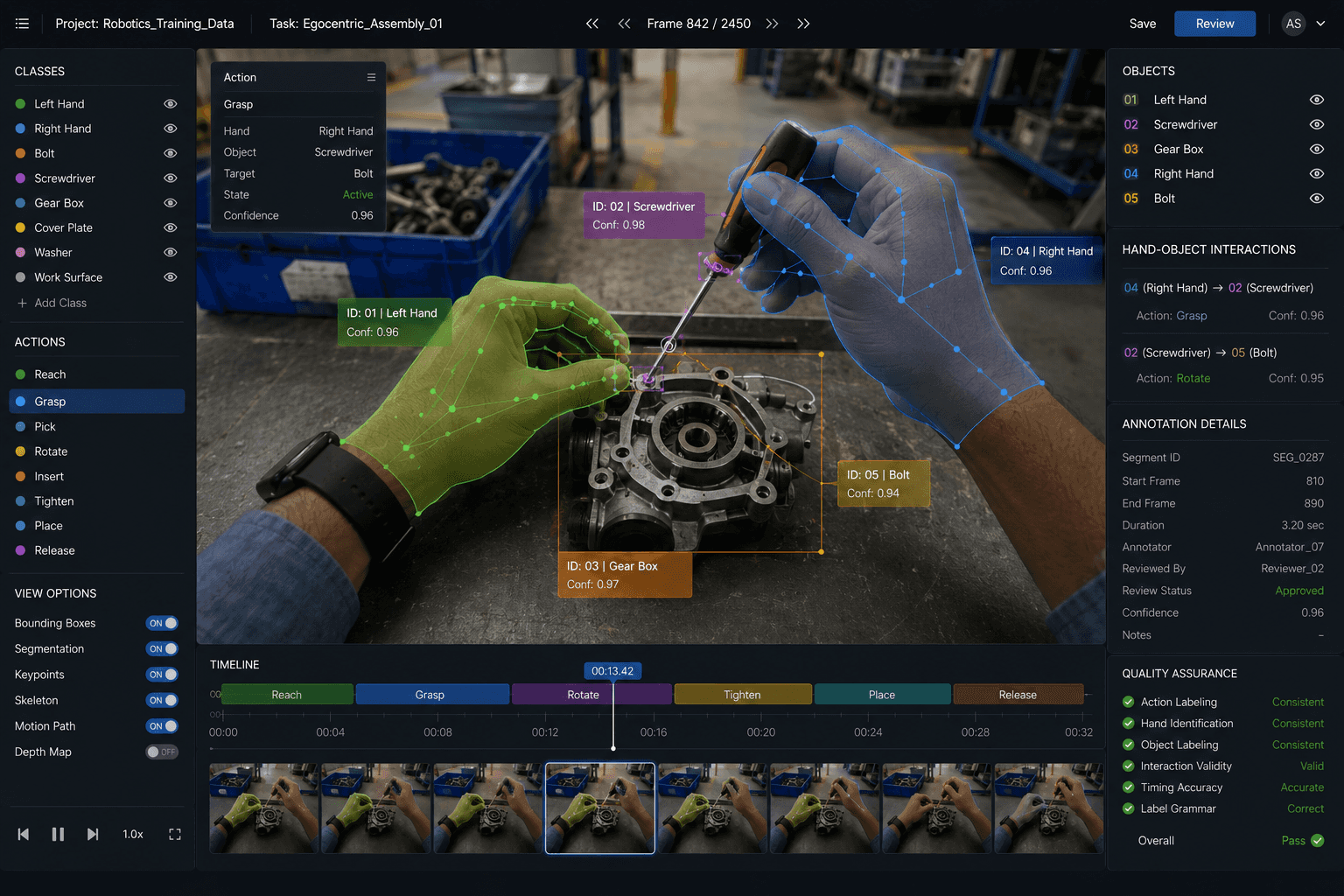
Each segment is labeled based on observable physical action. Our teams focus on what can be seen in the video: the hand involved, the object being handled, and the specific action performed.
04
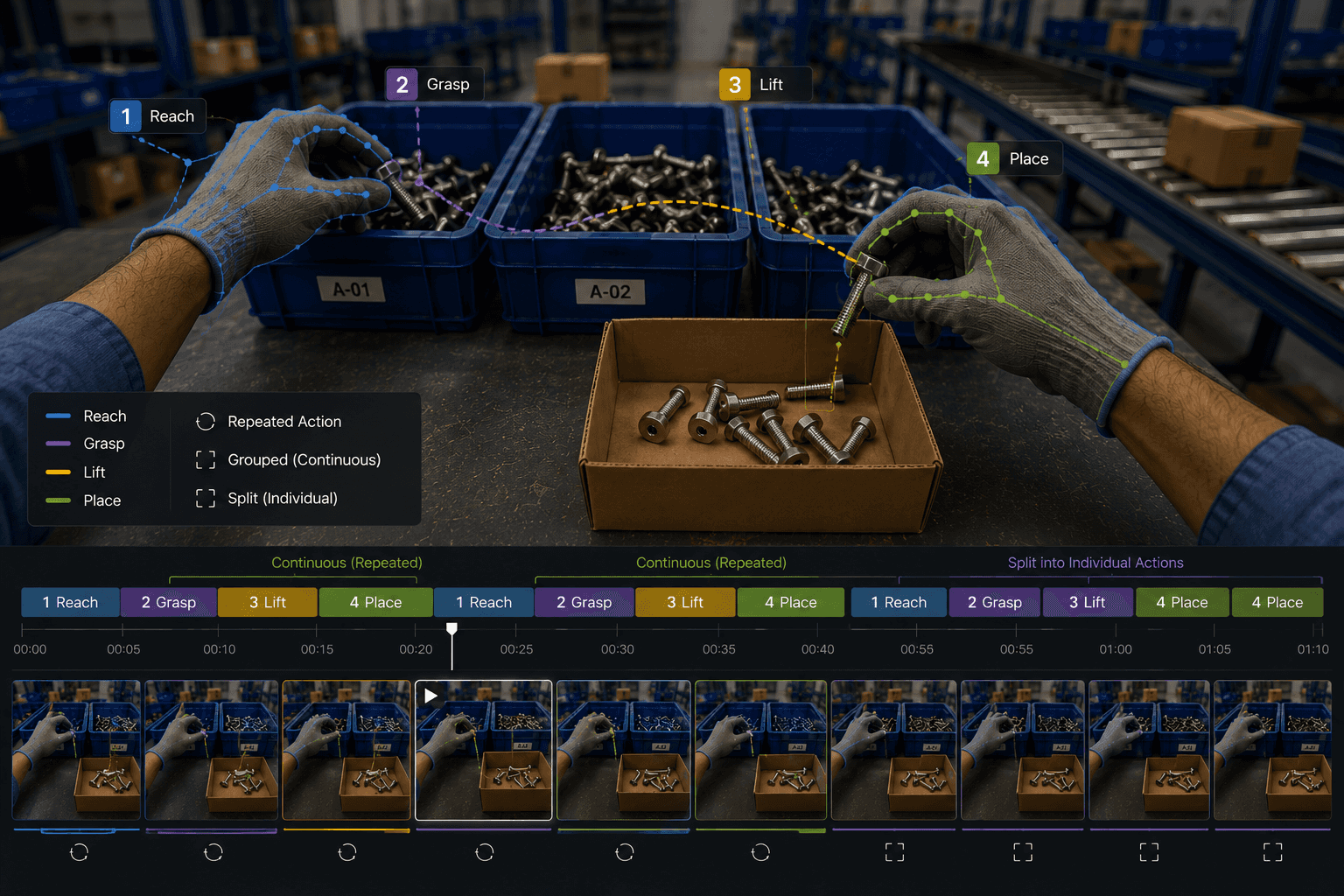
Egocentric videos often include repeated actions such as wiping, scrubbing, folding, sorting, hammering, placing, or lifting. We apply project-specific rules to decide when actions should be split, grouped, or treated as continuous motion.
05
Our QA process checks for timing consistency, label accuracy, object clarity, hand identification, naming conventions, and adherence to project guidelines. Feedback loops help improve consistency over time.
For egocentric video annotation, quality cannot be treated as a final review step alone. It has to be built into the workflow from the beginning. IndiVillage Tech uses structured processes designed around:









This helps teams scale video labeling while maintaining the consistency and usability of the training data.
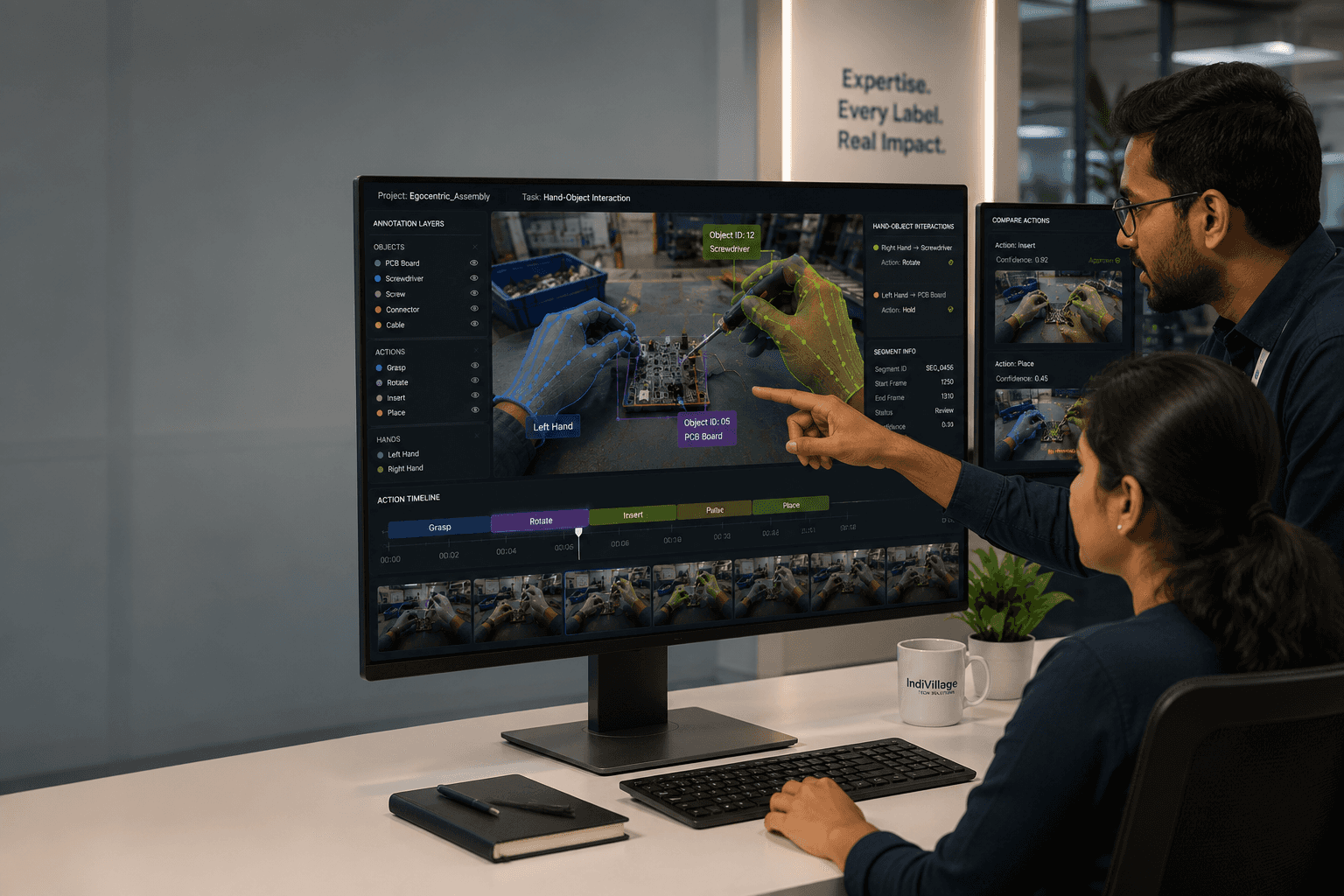
Our teams are trained to distinguish between object labels, action labels, and hand-object interaction labels. This is especially important in egocentric video, where small differences in motion, timing, or hand role can change the meaning of a segment.
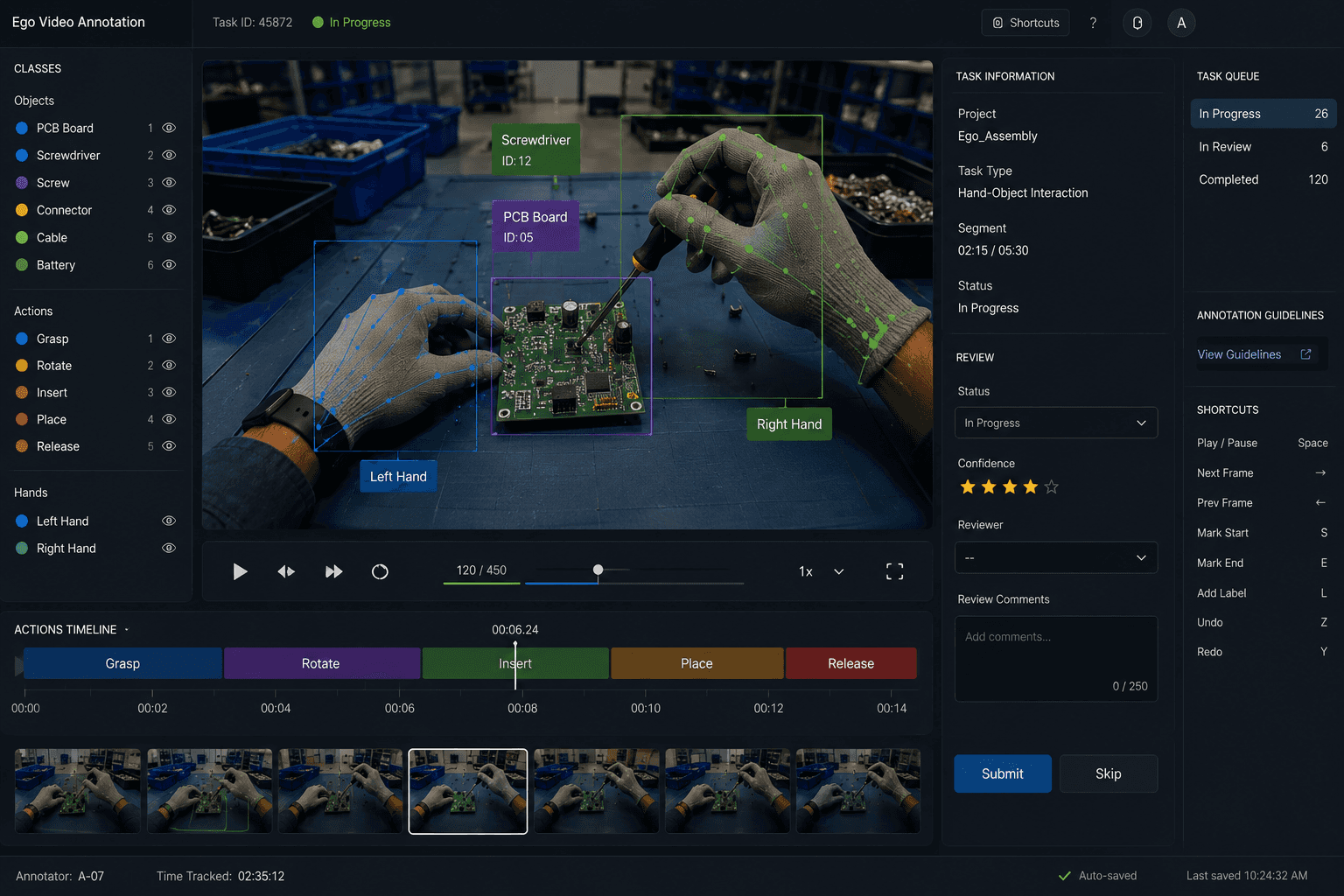
We work within your preferred annotation platform, ontology, and project setup. Whether your team already has detailed guidelines or needs support operationalizing them, we can adapt to your requirements.
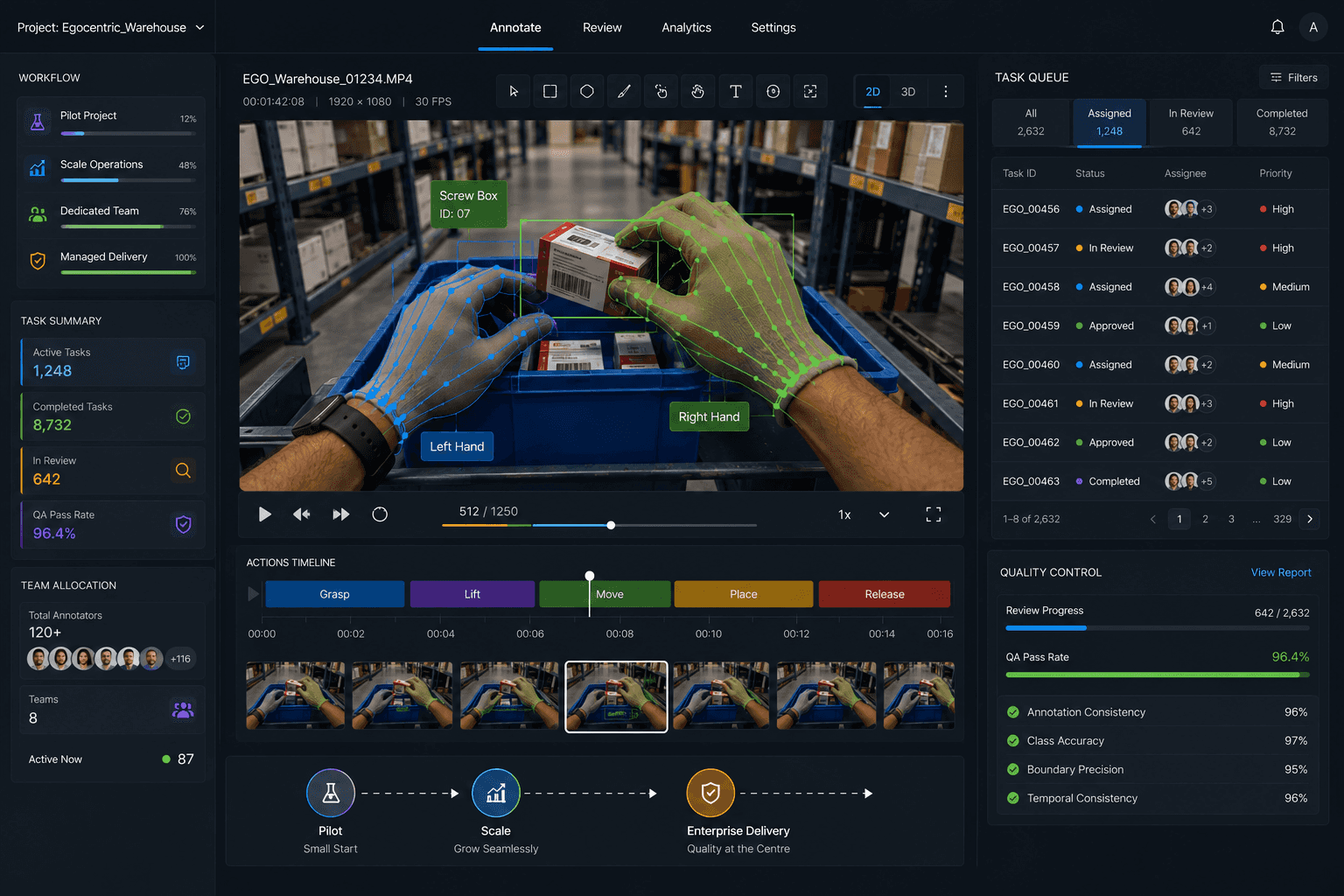
We support pilot projects, dedicated annotation teams, and managed delivery models that help AI teams scale efficiently while keeping quality at the center.
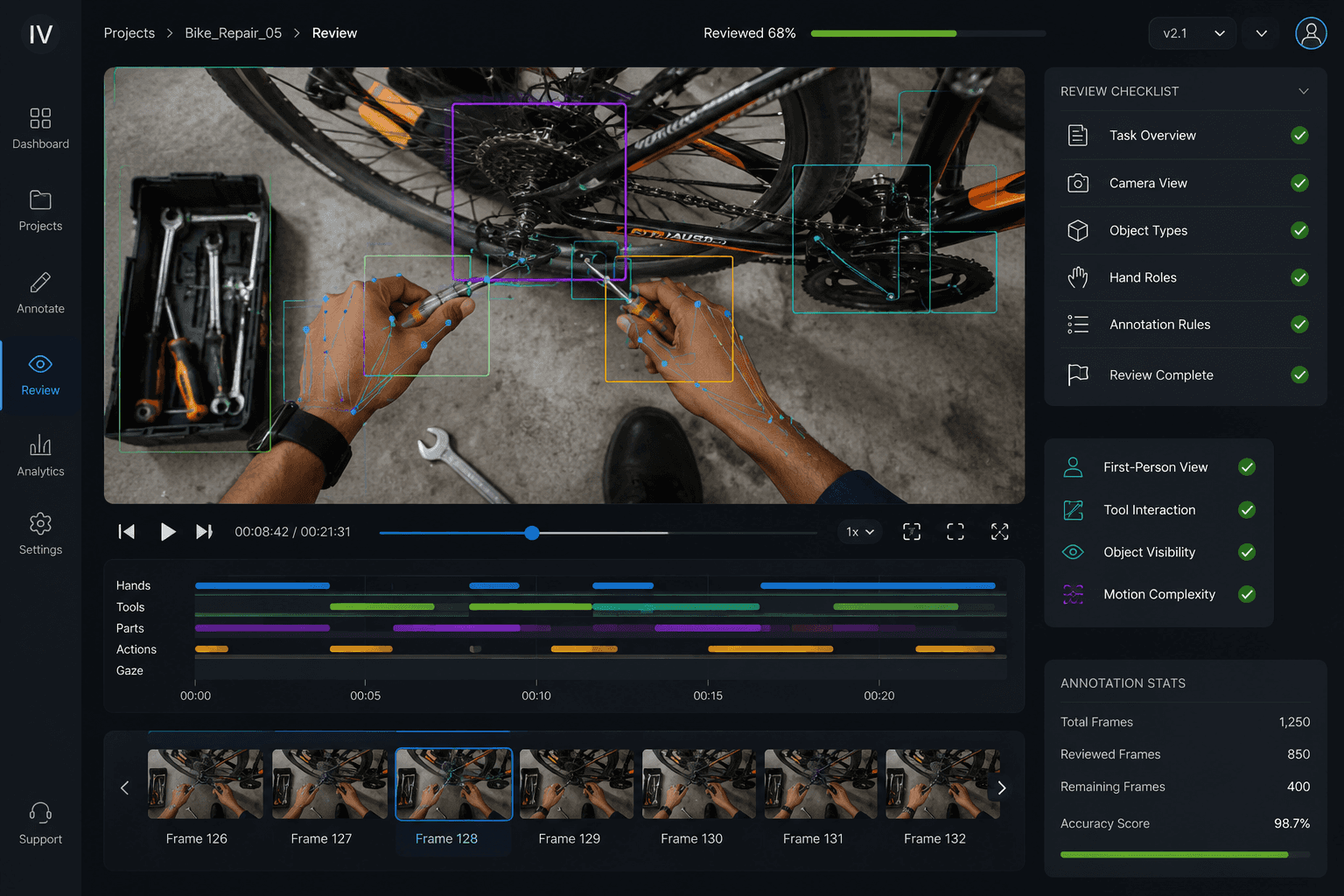
Our approach is built around accuracy, consistency, and review, not speed alone. We help reduce rework by training teams thoroughly, applying clear QA processes, and aligning outputs to your model development needs.
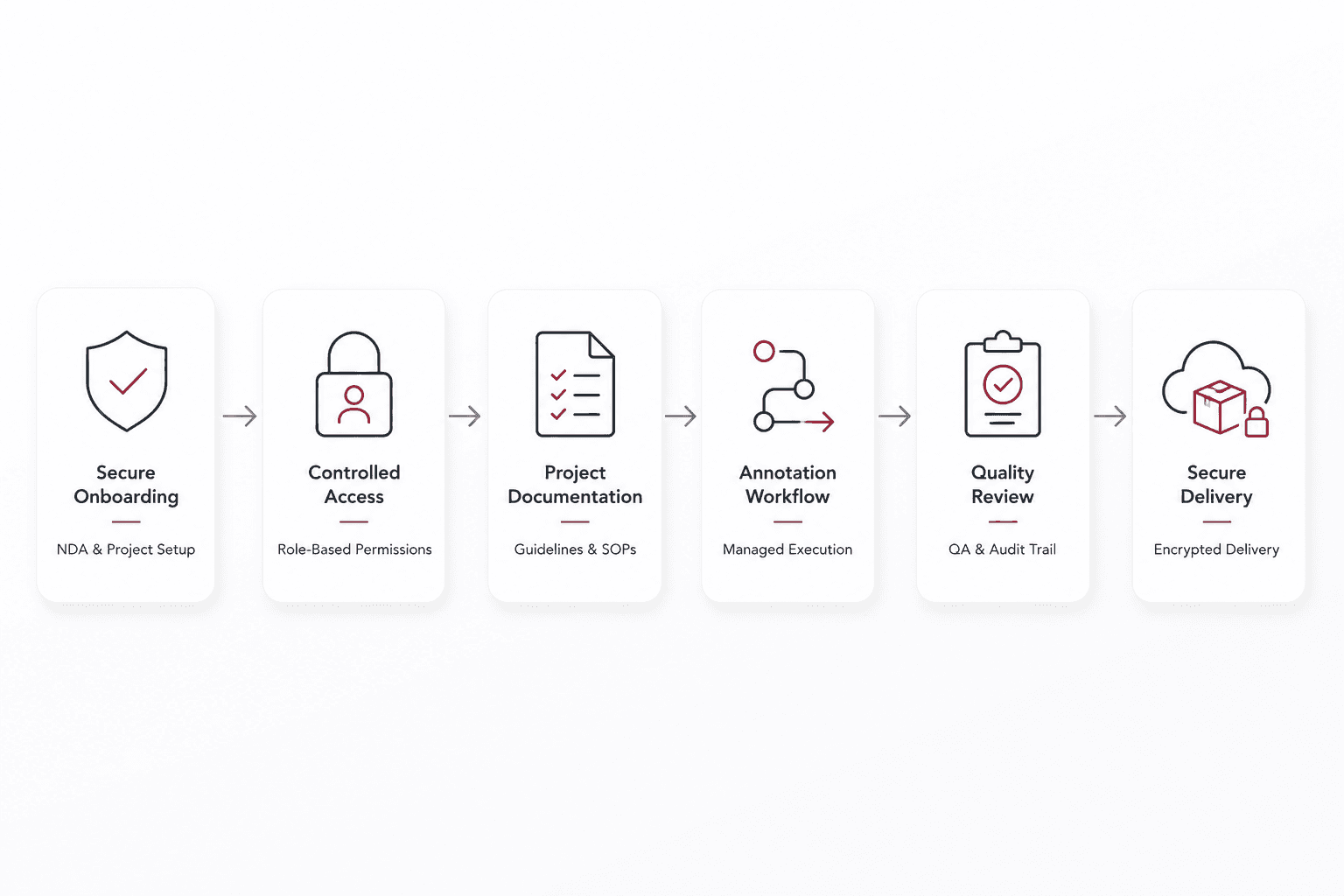
We support secure onboarding, controlled access, documentation, and accountable project management for AI teams handling sensitive or proprietary video datasets.
Egocentric video annotation sits at the intersection of computer vision, human activity understanding, and robotics data operations. It involves detailed temporal decisions, frequent edge cases, and close attention to how physical actions unfold.
IndiVillage Tech helps robotics and embodied AI teams move from raw first-person video to structured datasets that are easier to train, easier to review, and better aligned with real-world deployment.

Quick answers to help you make smarter, faster decisions with confidence
Egocentric video annotation is the process of labeling first-person video footage so AI systems can understand physical actions from the person's point of view. It captures what the person is doing, which hand is involved, and what object is being handled.
Regular video annotation often focuses on objects, people, or scenes. Egocentric video annotation focuses on action: how hands move, how objects are used, and how a task unfolds over time.
Action segmentation breaks a continuous video into timed segments that represent specific physical actions. This helps AI teams understand when an action begins, when it ends, and how one step leads into the next.
Hand-object interaction labels describe how a person's hand engages with an object. For example, the label may show whether the left hand is holding an item, the right hand is turning a tool, or both hands are folding an object.
Egocentric video shows physical tasks from the human point of view. This makes it useful for training AI systems that need to understand movement, tool use, object handling, task flow, and real-world human behavior.
Yes. IndiVillage Tech can annotate tasks where both hands work together, as well as tasks where each hand performs a different role, such as holding, stabilizing, placing, turning, wiping, or folding.
Fast and repetitive actions need clear segmentation rules. Our teams follow project guidelines to decide when actions should be split, grouped, or treated as continuous motion, while keeping labels consistent across the dataset.
Yes. IndiVillage Tech works within your preferred annotation platform, ontology, labeling rules, and QA requirements. We can also help translate detailed guidelines into consistent annotation processes for trained teams.
Quality is managed through annotator training, calibration, multi-pass review, QA checks, and feedback loops. This is especially important for egocentric video, where small differences in timing, hand roles, or object labels can affect dataset usability.
Yes. IndiVillage Tech can support pilot batches, calibration rounds, and dedicated teams before scaling to larger egocentric video annotation programs. This helps align quality expectations, delivery timelines, and cost before full production.
Tell us about your AI data requirements and our team will help map the right workflow.