Image Annotation Services for Computer Vision and AI Training
Oct 13, 2026 | 23 min read
IndiVillage provides image annotation services that transform raw visual datasets into structured, validated ground truth for computer vision and Artificial Intelligence (AI) training.
The process begins with the model objective. From there, annotation requirements are translated into classes, object definitions, spatial boundaries, attributes, and edge-case rules. Images are then labeled against this specification and reviewed through structured Quality Assurance (QA) before being accepted for model training or evaluation.
Our annotation services are designed around five requirements that matter in production: quality, consistency, scalability, data security, and alignment with the computer vision task.
Image Annotation Services Built for Your Model Requirements
The right image annotation method depends on what a computer vision model needs to predict.
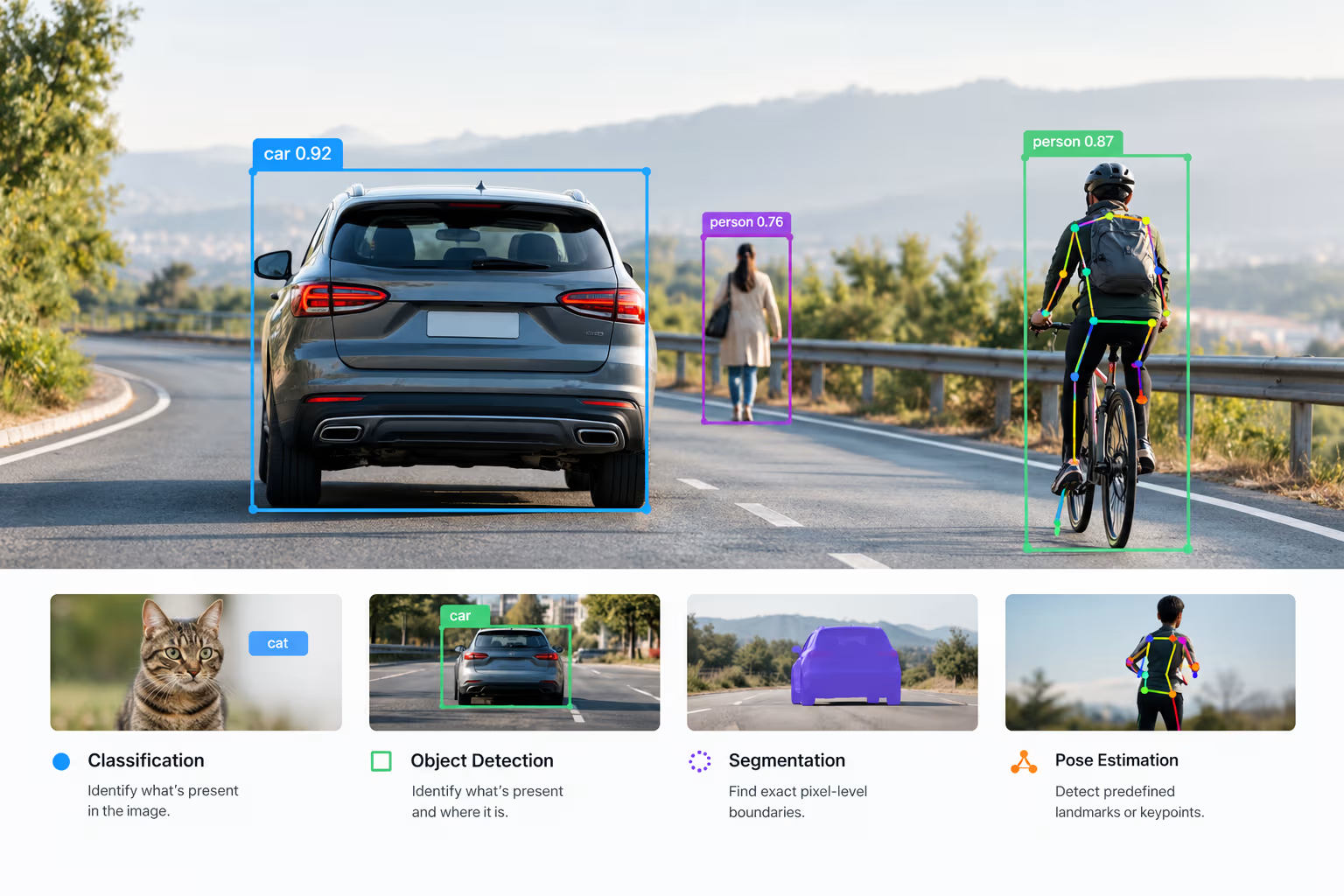
A classification model may only need to know whether an object or condition is present. An object-detection system needs both a class and a location. A segmentation model requires exact pixel-level boundaries, while a pose-estimation system depends on predefined landmarks or keypoints.
For this reason, image annotation should not begin with a generic labeling template. It should begin with the model objective.
IndiVillage works with project-specific requirements to translate classes, objects, boundaries, attributes, and edge cases into a structured annotation specification. The workflow can then be designed around the required level of precision, production volume, review methodology, and delivery environment.
This approach aligns with IndiVillage's broader focus on production-grade AI data operations supported by structured QA, domain-trained teams, and secure delivery.For a broader explanation of how visual labels become ground truth, see ourguide to computer vision data annotation.
What Image Annotation Services Do We Provide?
The appropriate annotation technique is determined by the information the computer vision system needs to learn.
Annotation method
Typical model task
Typical output
Bounding boxes
Object detection and localization
Rectangular region around an object with a class label
Polygon annotation
Detailed object localization
Multi-point outline following an irregular object
Semantic segmentation
Pixel-level class understanding
Every relevant pixel assigned to a class
Instance segmentation
Individual object segmentation
Separate pixel mask for each object instance
Keypoints and landmarks
Pose, structure, and landmark estimation
Defined coordinates on an object
Image classification
Category recognition
One or more labels assigned to an image
Attribute tagging
Fine-grained object understanding
Properties such as state, visibility, orientation, or condition
Bounding Box Annotation
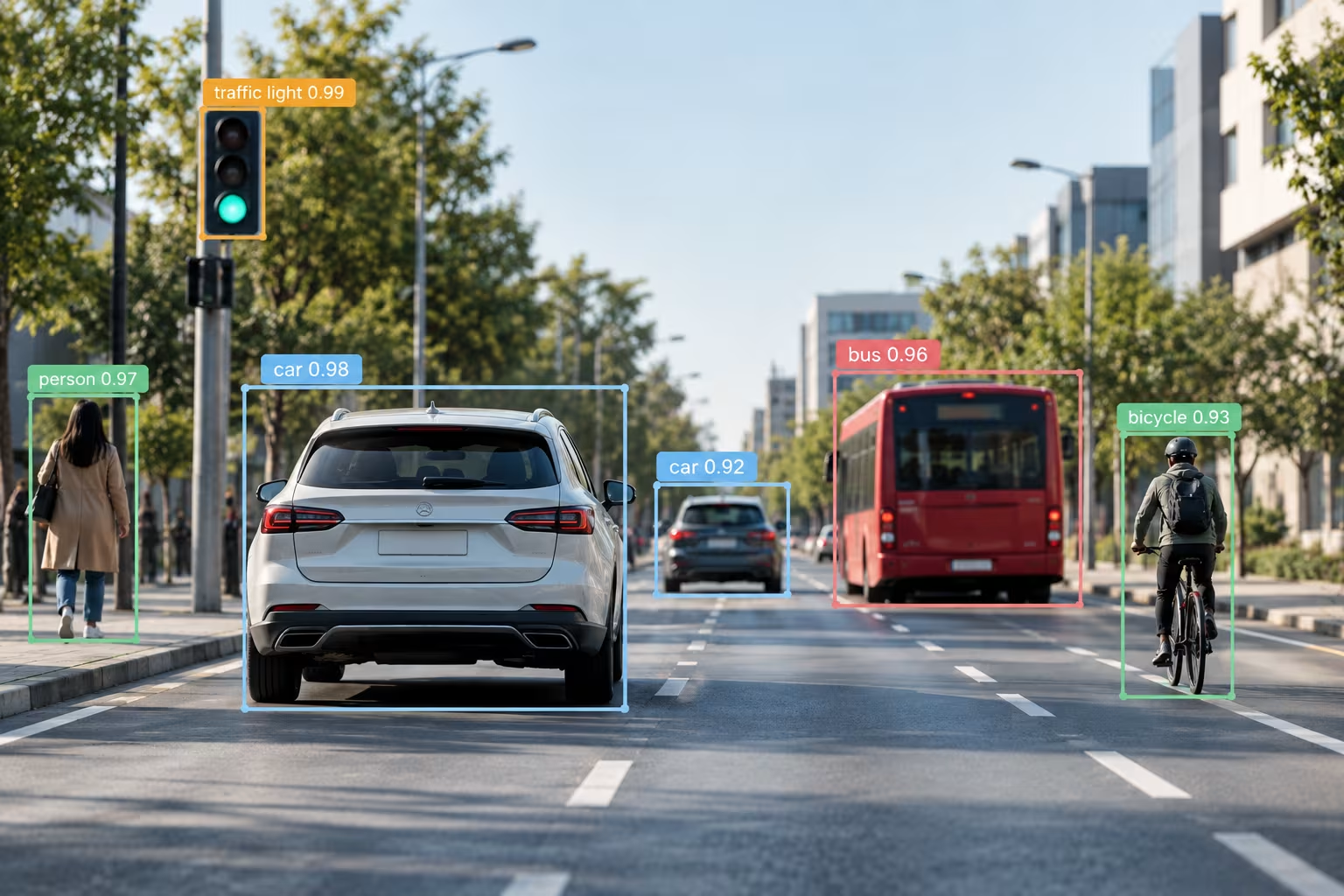
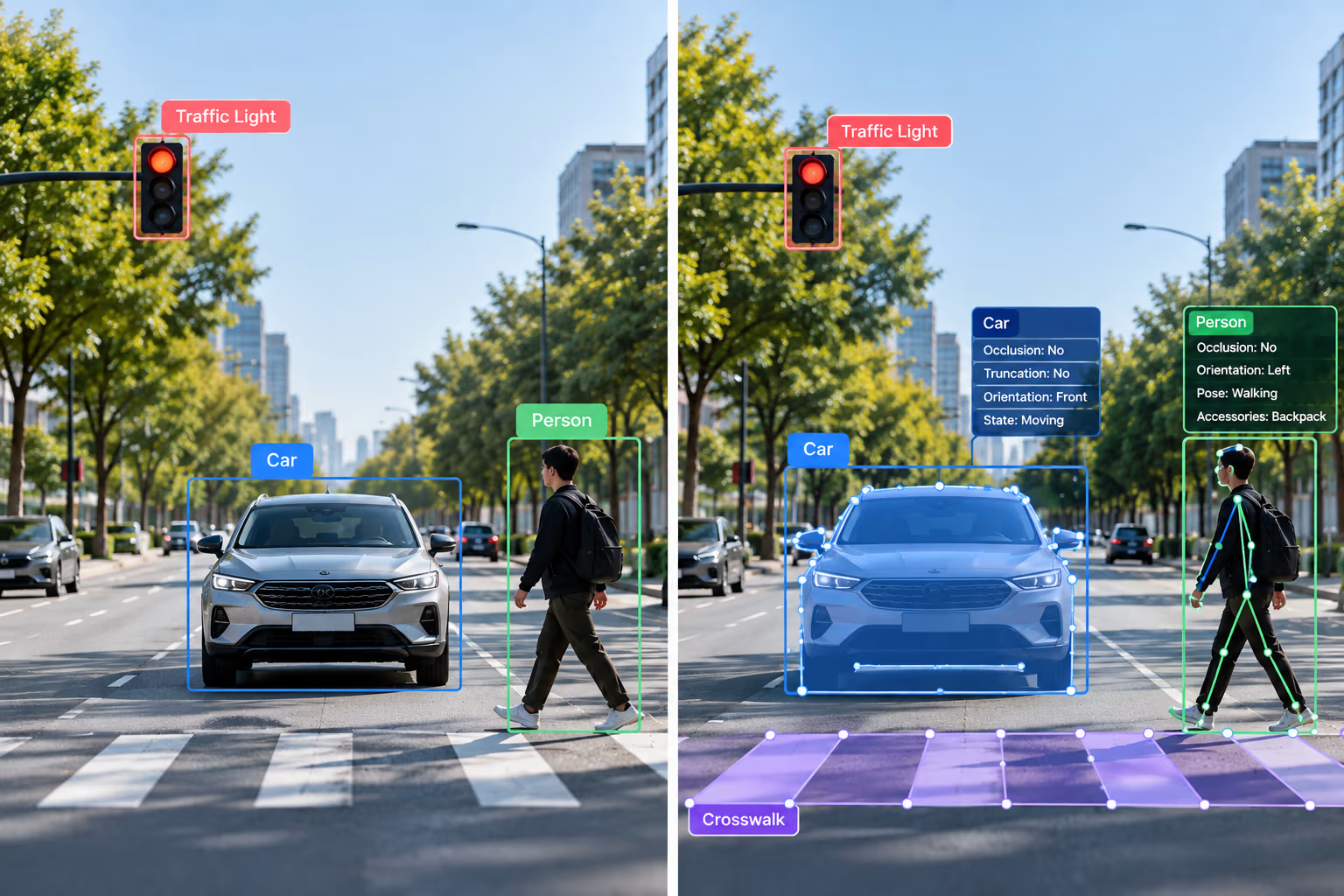
Bounding box annotation places a rectangular region around an object and assigns the relevant class. It is commonly used for computer vision tasks that require the model to identify what an object is and where it appears.
Depending on the use case, annotations may also contain attributes such as visibility, occlusion, truncation, orientation, or object state.
The definition of a correct box should be established before production. A specification may require the box to fit closely around the visible object, include partially occluded regions according to a defined rule, or exclude certain object parts. These decisions should follow the model objective rather than an arbitrary annotation convention.
Bounding boxes are often appropriate when precise pixel-level boundaries are unnecessary. They can provide useful spatial supervision while requiring less annotation effort than more detailed geometric techniques.
Polygon Annotation
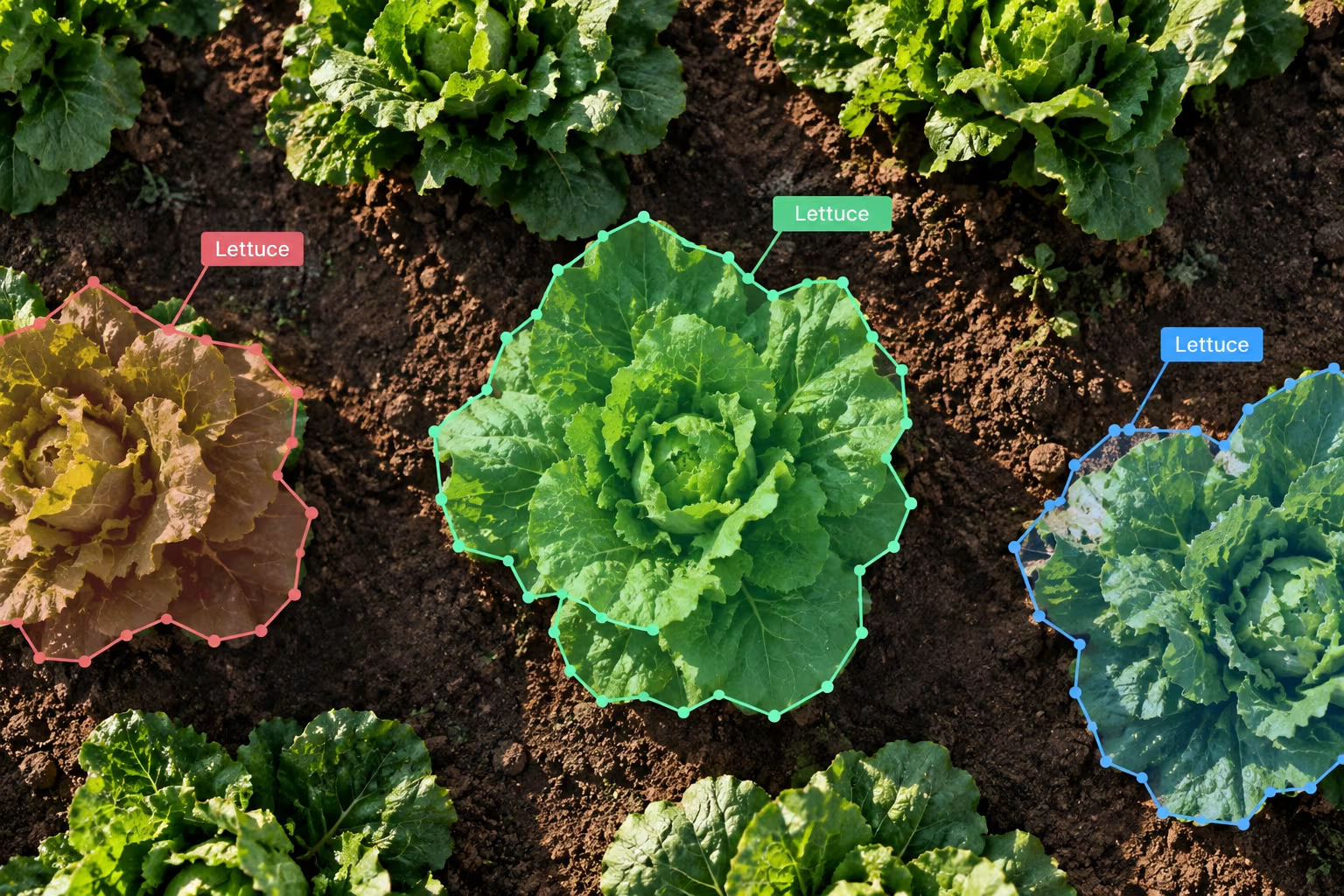
Polygon annotation uses multiple connected points to trace an object's shape more closely than a rectangular box.
It can be suitable for irregular objects, complex boundaries, overlapping regions, agricultural features, or other cases where the background contained within a box would reduce the usefulness of the spatial label.
However, additional geometric precision also increases annotation effort. A polygon is therefore not inherently superior to a bounding box.
The correct choice depends on the required model output. If approximate localization is sufficient, a box may provide the necessary ground truth more efficiently. If boundary shape is important to the task, a polygon can capture spatial information that a rectangle cannot represent adequately.
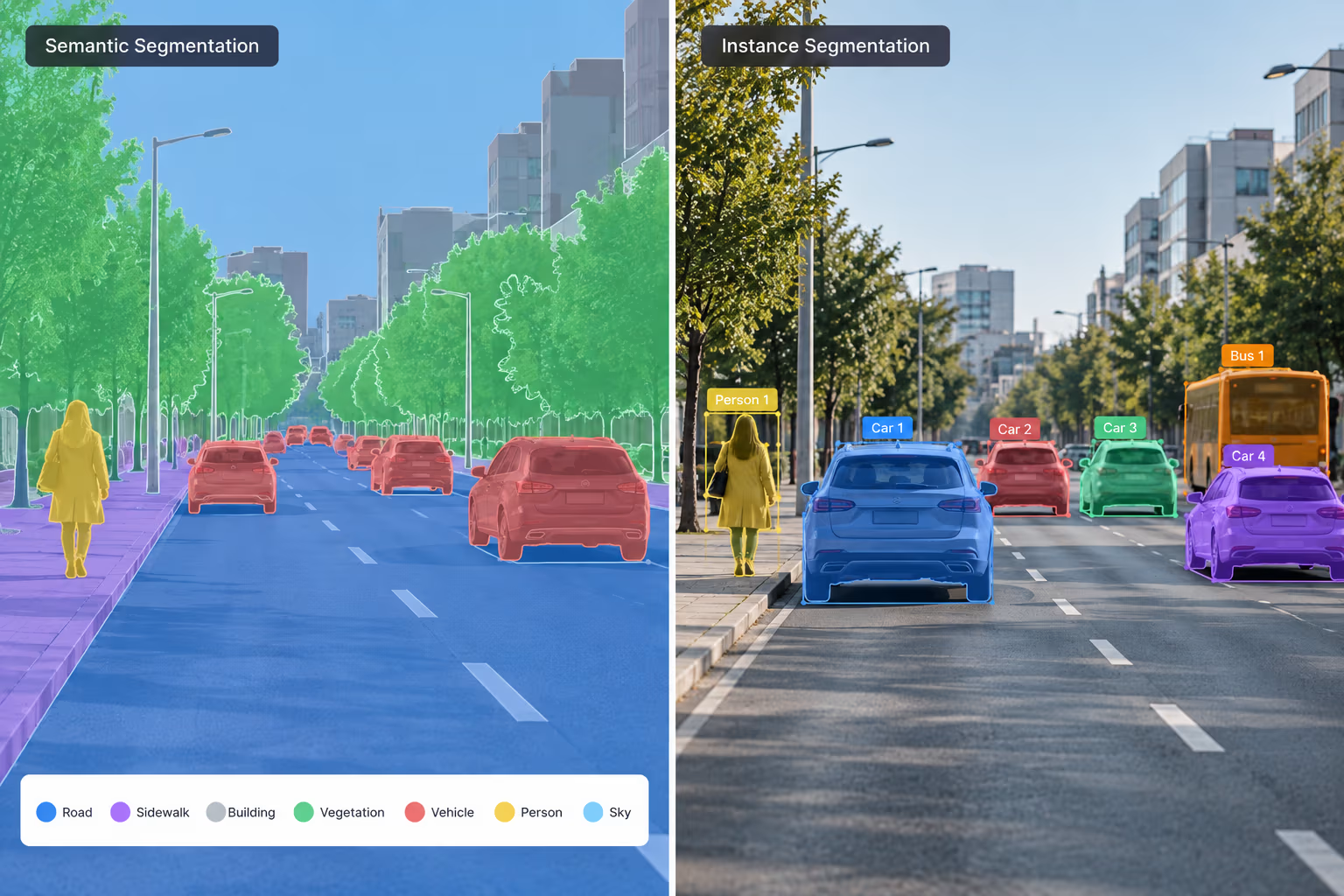
Semantic segmentation assigns pixels to classes. If an image contains several areas of vegetation, for example, every relevant vegetation pixel may receive the same class regardless of how many distinct plants appear.
Instance segmentation goes further by separating individual objects belonging to the same class. If five objects of the same category appear in one image, each instance receives its own mask.
The distinction matters because the two methods support different model objectives. Semantic segmentation can help a system understand the composition of a scene, while instance segmentation provides information about both category and individual object identity.
Segmentation usually requires greater annotation effort than rectangular localization, so its use should be justified by the level of boundary precision required downstream.
Keypoint and Landmark Annotation
Keypoint annotation places predefined points at important locations on an object.
Depending on the application, these may represent:
body joints
facial landmarks
anatomical points
structural features
plant growth locations
object components
movement-related reference points
Consistency is particularly important because the final output may be only a coordinate. Annotators therefore need clear definitions for where each point belongs, how visibility is assessed, what to do when the target is occluded, and how ambiguous locations should be handled.
For pose estimation or structural analysis, even small differences in keypoint interpretation can change the ground truth supplied to the model.
Image Classification and Attribute Tagging
Image classification assigns one or more categories to an entire image rather than identifying the position of an object.
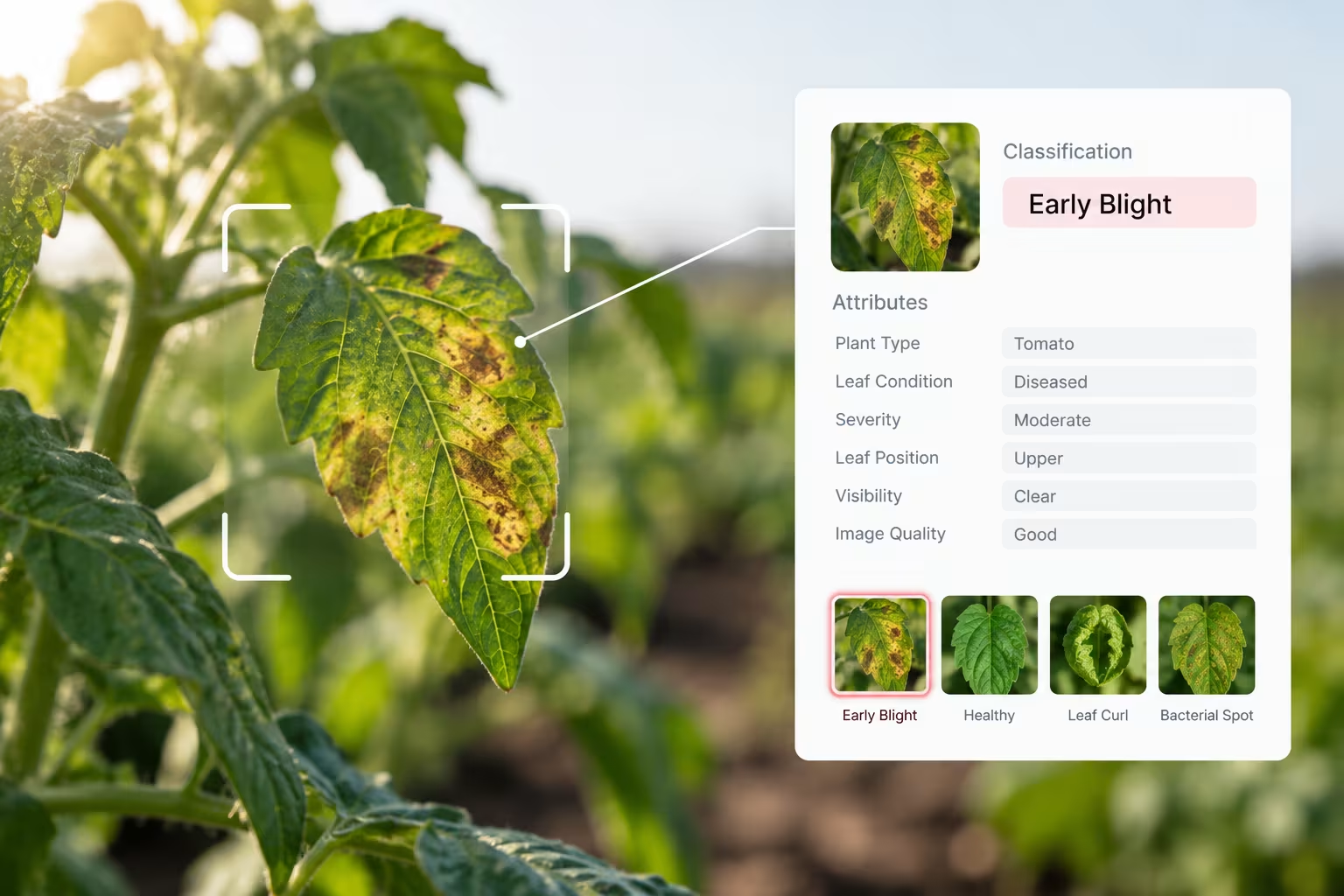
A single-label task might classify an agricultural image as containing a specific pest species. A multi-label task may allow several relevant categories to coexist within the same image.
Attribute tagging can add further structured information where required. An object may need to be classified not only by type but also by characteristics such as condition, state, visibility, direction, or another project-specific property.
Classification is most appropriate when the computer vision task requires category recognition rather than detailed spatial localization.
Which Image Annotation Method Does Your Model Need?
The decision should begin with one question:
What must the model predict?
A practical mapping is:
Category recognition → Image classification
Object location → Bounding boxes
Detailed irregular location → Polygons
Exact boundaries → Segmentation
Pose or structure → Keypoints
The second stage is to evaluate the visual dataset itself.
Object size
Small or distant objects can be difficult to represent consistently. If an object occupies only a few pixels, a detailed polygon may add annotation effort without providing reliable additional information.
Overlap and occlusion
When objects overlap heavily, rectangular boxes may contain substantial information from neighboring instances. Depending on the model objective, polygons or instance segmentation may provide a more useful representation.
Image quality
Blur, glare, compression, unusual camera angles, poor lighting, and low resolution can affect how reliably a label can be assigned. The specification should define when the available visual evidence is insufficient.
Acceptable localization error
A model that only needs approximate object localization has different ground-truth requirements from one that must identify precise boundaries.
Annotation effort
Greater detail generally requires more time and review. Annotation design should balance production effort with the information genuinely required by the downstream task.
Evaluation method
The annotation should also support the metric against which the model will eventually be evaluated. If boundary precision is central to evaluation, the ground truth needs to reflect that level of geometric detail.
The most detailed annotation is not automatically the most useful. The objective is to select the minimum ground-truth representation that accurately supports the model decision.
Our Image Annotation Process
Production-quality image annotation requires more than labeling images and inspecting the output at the end.
Quality needs to be designed into the workflow before production begins.
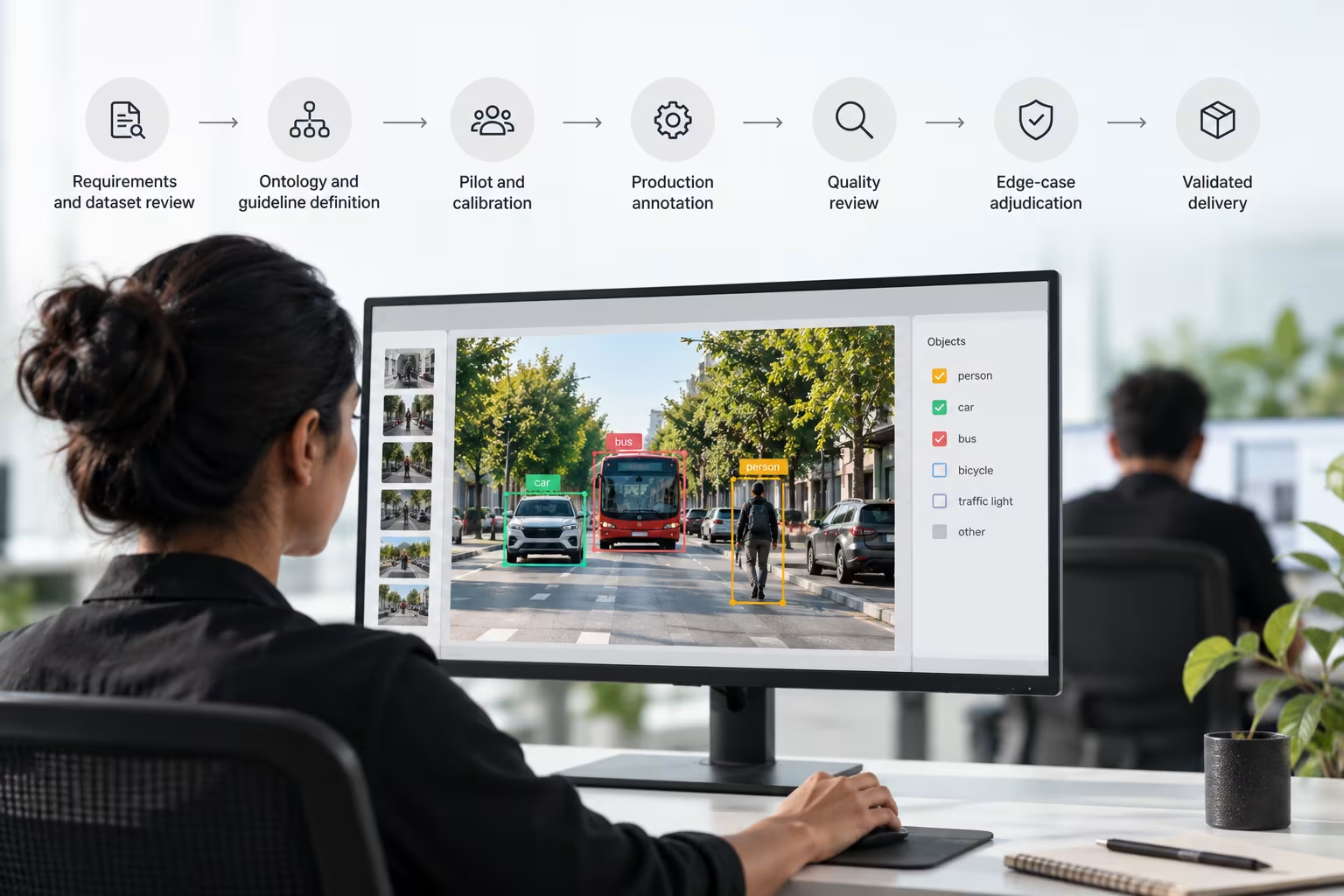
A typical process moves through:
Requirements and dataset review → ontology and guideline definition → pilot and calibration → production annotation → quality review → edge-case adjudication → validated delivery
1. Define the Ontology and Annotation Guidelines
The first stage translates the model objective into a labeling specification.
An ontology defines the concepts and relationships represented in the dataset. Depending on the project, this can include:
classes and subclasses
object attributes
relationships
visibility states
boundary conventions
object conditions
The annotation guidelines then explain how those concepts should be applied to individual images.
Guidelines may define:
inclusion and exclusion criteria
object boundaries
treatment of partial objects
occlusion and truncation
overlapping instances
minimum visibility
ambiguous categories
class naming
project-specific attributes
positive and negative examples
escalation rules
Semantic decisions that require business or specialist knowledge should be validated by the client or an appropriate domain expert rather than inferred independently by annotators.
The objective is to turn subjective visual interpretation into repeatable annotation decisions.
2. Pilot and Calibrate the Annotation Team
Before full production begins, a representative dataset should be annotated and reviewed.
The pilot should include both normal images and difficult examples. This allows the project team to determine whether annotators and reviewers are interpreting the specification consistently.
Disagreements can expose:
unclear class definitions
missing edge-case rules
inconsistent boundaries
ambiguity around partial objects
gaps in the ontology
conflicting examples
The specification can then be refined before those inconsistencies are repeated across a larger dataset.
Calibration also establishes acceptance criteria for production and helps align annotators and reviewers around the same interpretation of quality.
There is no single pilot size that is suitable for every image annotation project. The appropriate calibration set depends on dataset diversity, task complexity, class structure, and the number of important edge cases.
3. Production Annotation With Human or AI Assistance
Once the team has been calibrated, annotation moves into production.
Projects may use fully manual workflows or incorporate AI-assisted methods where appropriate.
Model-assisted annotation can generate preliminary classes, boxes, polygons, or masks for human review. This may reduce repetitive effort when the preliminary model performs reliably on the relevant data.
Machine-generated labels, however, should not automatically be accepted as ground truth.
Human annotators must validate and correct pre-labels according to the approved specification. The usefulness of automation depends on factors such as:
task complexity
model confidence
visual ambiguity
class frequency
cost of an incorrect annotation
frequency of edge cases
The objective is not to maximize automation. It is to use the appropriate combination of human interpretation and machine assistance while preserving ground-truth quality.
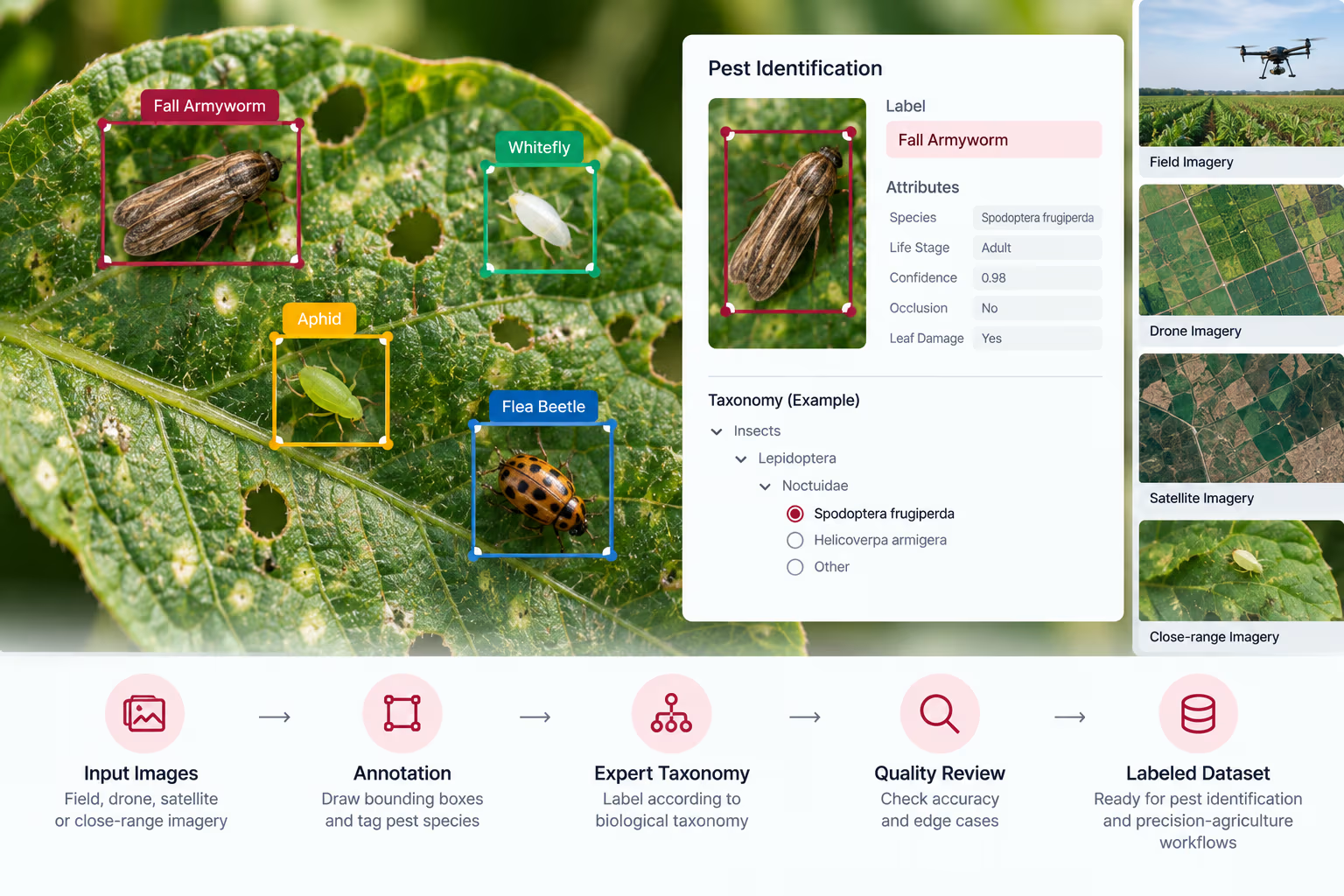
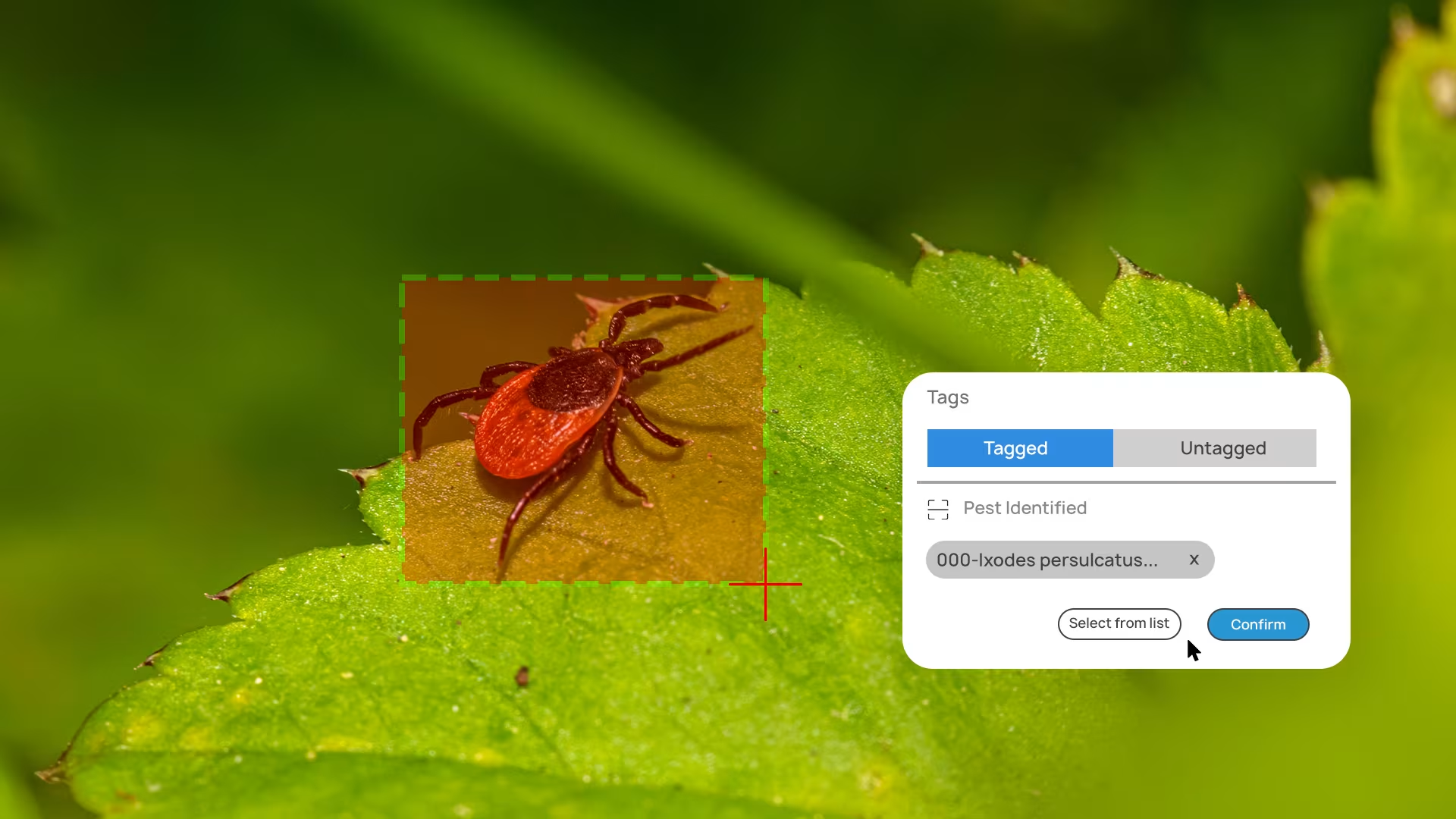
IndiVillage has applied hybrid workflows in production. In its work with FMC, trained annotators performed bounding-box labeling and pest-species tagging using an expert-defined taxonomy, supported by AI-assisted review as part of the annotation pipeline.
4. Multi-Layer Quality Assurance
Quality Assurance should test whether annotations satisfy the agreed specification before they are accepted for delivery.
Depending on the project, the review process can include:
automated schema validation
annotator self-review
dedicated reviewer inspection
batch sampling
completeness checks
class validation
geometric checks
disagreement resolution
domain-expert escalation
client review of unresolved semantic cases
Acceptance criteria should be established before production begins.
This is important because a generic statement such as “99% accuracy” provides limited information unless the measurement methodology is defined. A classification project, bounding-box project, and segmentation project may all require different ways of determining whether an annotation is acceptable.
Recurring errors should also inform the annotation workflow. When the same ambiguity appears repeatedly, the appropriate response is not simply to correct each instance. The guideline should be clarified so subsequent batches are handled consistently.
How Do We Measure Image Annotation Quality?
Image annotation quality can be evaluated across several dimensions.
Correctness
The label represents the intended object, class, boundary, point, or attribute according to the specification.
Completeness
All objects or regions that should be annotated are present.
Consistency
Equivalent examples are handled according to the same rules across annotators, reviewers, batches, and dataset versions.
Boundary precision
Spatial annotations meet the geometric requirements of the model task.
Ontology adherence
Labels follow the approved classes, attributes, relationships, and conventions.
The specific metric should then correspond to the annotation method.
Possible measures include:
Expert-reference agreement Annotations are compared with labels created or approved by a specialist.
Inter-annotator agreement Multiple annotators are compared to determine whether the same specification produces consistent decisions.
Intersection over Union (IoU) The geometric overlap between two bounding boxes or masks is measured.
Missing-object rate The proportion of required instances omitted from the annotation.
Class-error rate The frequency with which objects are assigned an incorrect category.
Audit pass rate The percentage of reviewed outputs that satisfy predefined acceptance criteria.
Rework rate The portion of delivered or reviewed annotations requiring correction.
These are annotation-quality measures. They should not be confused with model-performance metrics such as precision, recall, or model accuracy.
A model's performance score alone cannot establish that its reference annotations are correct.
How Do We Handle Ambiguous Images and Edge Cases?
Annotators should not be required to guess when an image falls outside the established rules.
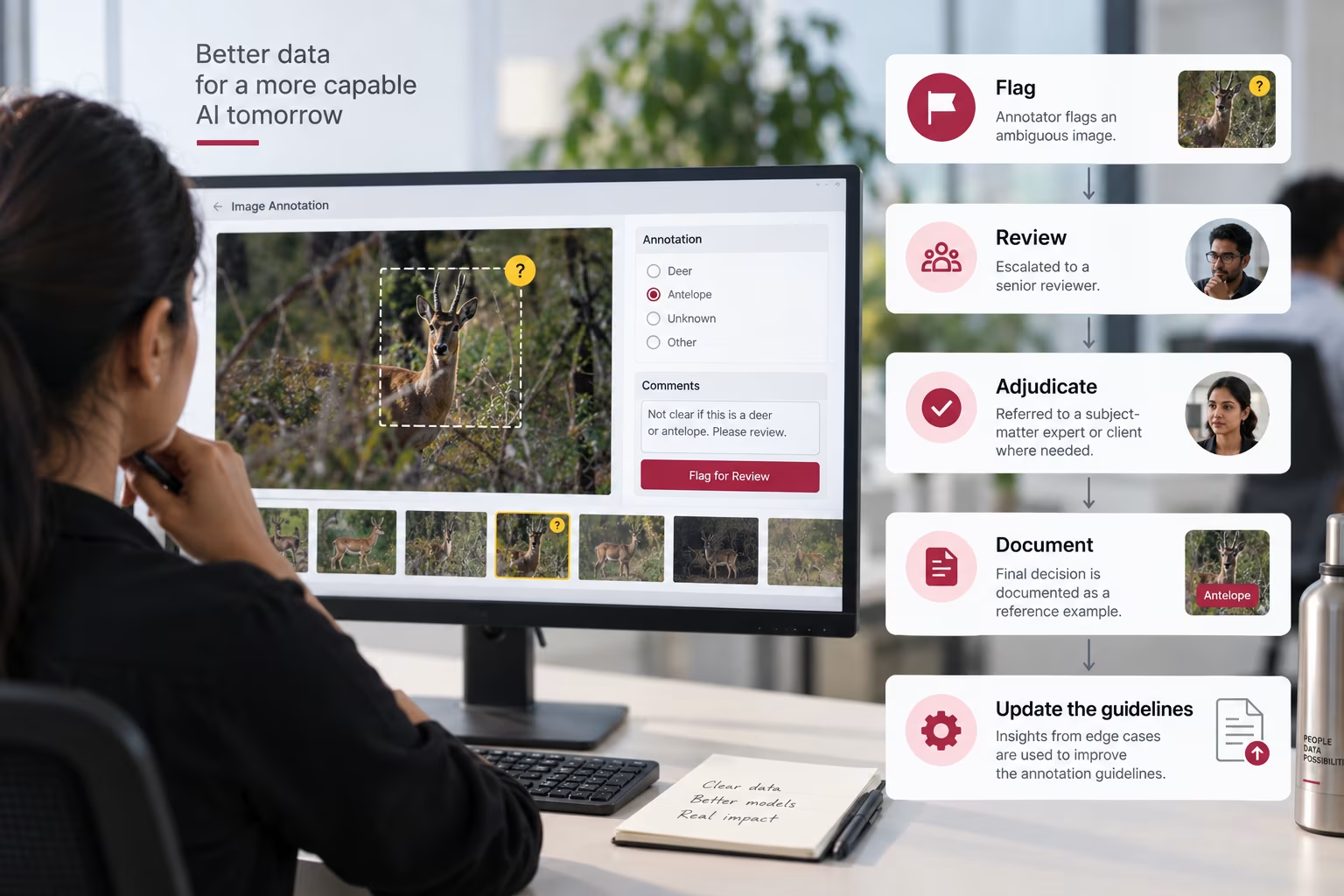
A structured edge-case process can follow:
Flag → Review → Adjudicate → Document → Update the guidelines
An ambiguous example may first be escalated to a senior reviewer. Where the correct interpretation requires domain or business knowledge, the case can then be referred to a subject-matter expert or the client.
Once a decision has been made, the ruling should become a documented example that can be reused when similar cases appear.
This prevents individual assumptions from becoming inconsistent ground truth.
It also allows the annotation specification to improve as production reveals cases that were difficult to anticipate during initial planning.
Image Annotation for Different Computer Vision Use Cases
Image annotation requirements vary significantly by application. The most effective workflow maps the visual data and model objective to the required ground truth rather than applying the same method across industries.
Healthcare
Healthcare computer vision may involve classification, localization, segmentation, or visual interpretation of medical and diagnostic imagery.
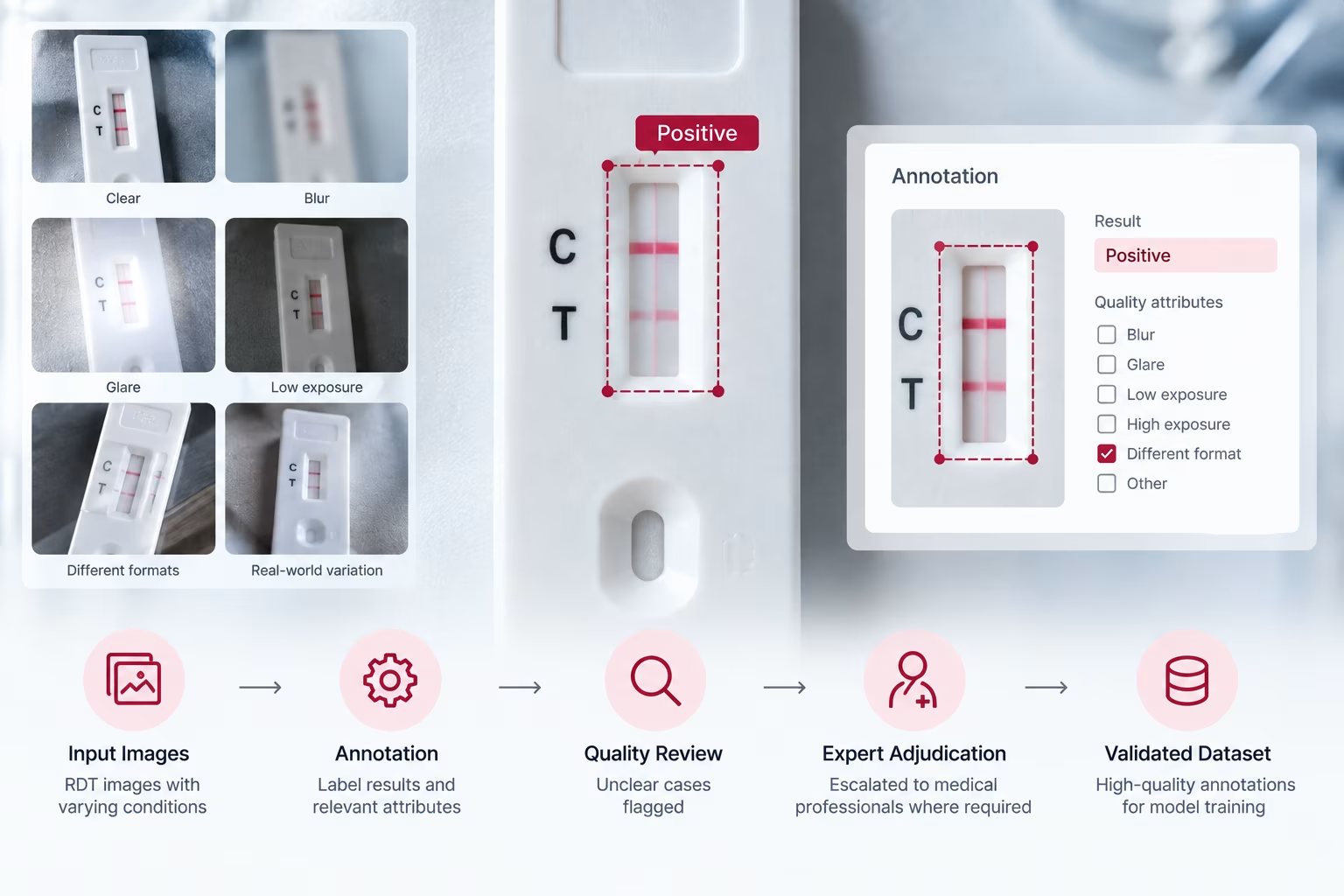
In an engagement with Audere, IndiVillage supported Rapid Diagnostic Test (RDT) image interpretation and annotation across visual conditions including blur, glare, exposure variation, and different cassette formats. Unclear cases were reviewed again and escalated to medical professionals where required. The published engagement included more than 185,000 annotations processed as part of a broader diagnostic-image workflow.
Healthcare annotation can require additional controls around ambiguity, Personally Identifiable Information (PII), specialist review, and data handling.
Agriculture
Agricultural computer vision may require object detection, classification, polygons, or segmentation across field, drone, satellite, and close-range imagery.
For FMC, IndiVillage performed bounding-box annotation and pest-species tagging according to an expert-defined biological taxonomy. The labeled data supported pest-identification workflows used within a precision-agriculture environment.
IndiVillage's published agriculture work also includes a program involving 4.5 million annotated images and more than 460 weed species, demonstrating image annotation at sustained production scale.
Autonomous and Robotic Vision
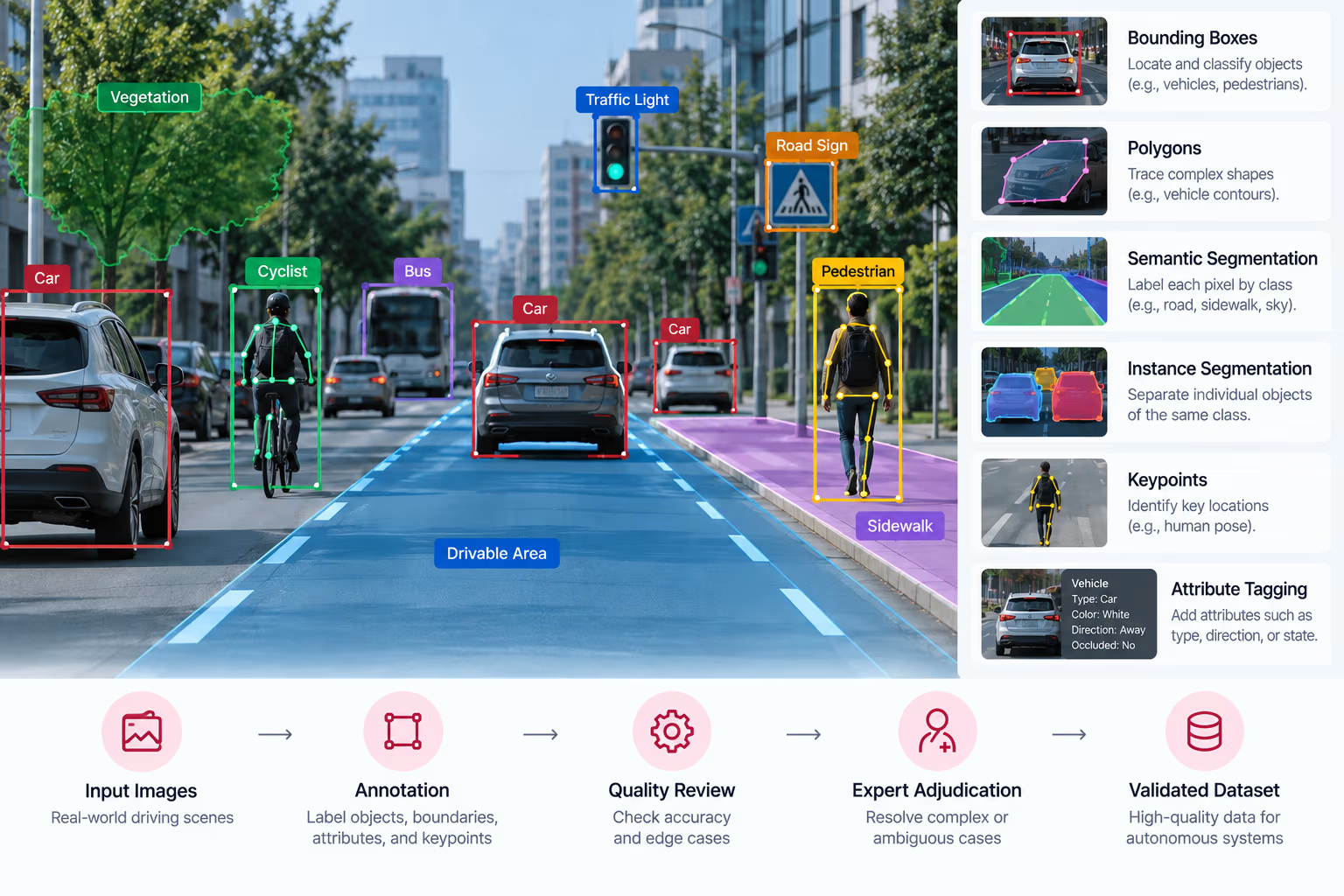
Camera-based perception systems require structured visual labels for detecting objects, understanding scenes, interpreting boundaries, and identifying relevant attributes.
Depending on the model objective, image annotation may include bounding boxes, polygons, semantic segmentation, instance segmentation, keypoints, and attribute tagging.
IndiVillage currently supports two-dimensional image labeling for autonomous vehicle perception across classes including vehicles, pedestrians, cyclists, road elements, obstacles, and drivable areas.
Robotics programs may require similar visual labels where systems need to recognize objects, understand interactions, or connect perception with physical actions.
Retail and Ecommerce
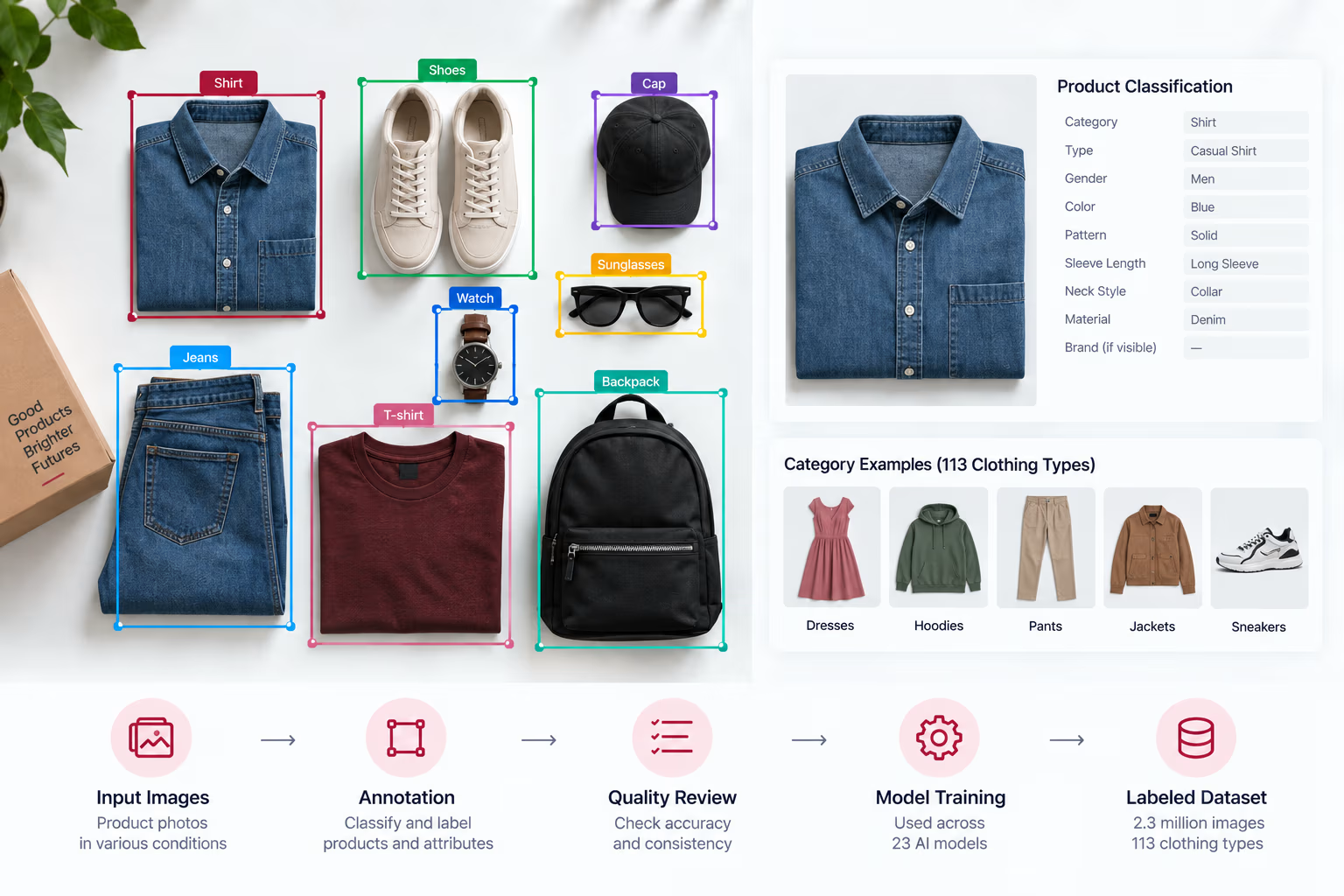
Computer vision in retail can use classification and object-level annotation to organize, recognize, or interpret visual product data.
Use cases may include:
product-category recognition
fashion attribute identification
visual similarity
object detection
product feature classification
IndiVillage's published ecommerce work includes 2.3 million images labeled and processed for training across 23 AI models detecting 113 clothing types.
Can We Work With Your Existing Ontology, Tools, and Output Format?
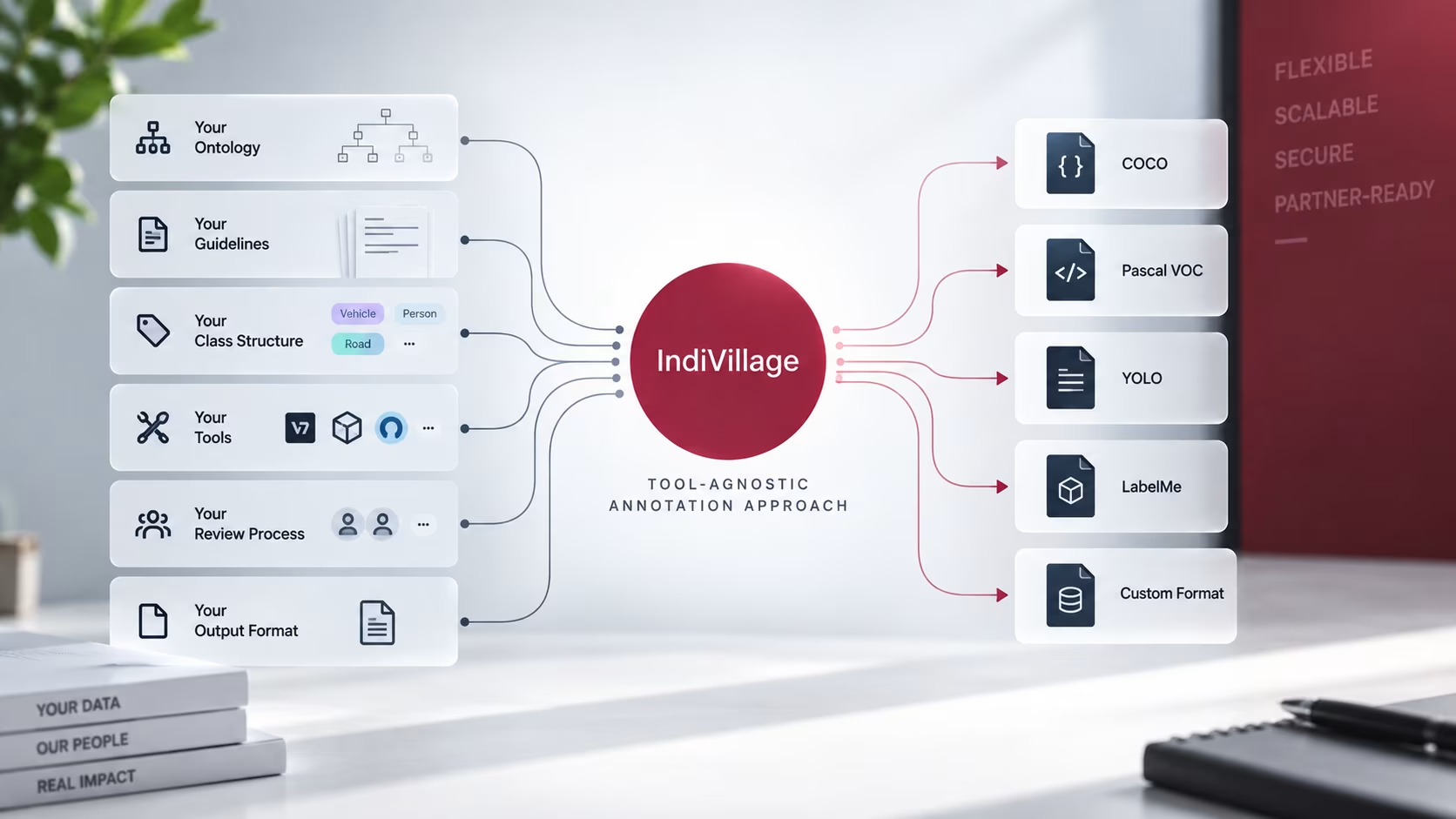
Image annotation delivery should fit the client's Machine Learning (ML) pipeline rather than require the pipeline to be redesigned around the annotation provider.
Where operationally feasible, IndiVillage can work with:
client-defined ontologies
existing annotation guidelines
project-specific class structures
custom attributes
proprietary annotation environments
existing review processes
required delivery schemas
IndiVillage's current autonomous vehicle offering, for example, follows a tool-agnostic approach and can work within client-defined annotation environments, ontologies, and workflows.
Output requirements should be confirmed during project scoping. Class identifiers, coordinate conventions, mask requirements, filenames, dataset versions, and any custom schema rules should be aligned before full-scale annotation begins.
This reduces downstream conversion work and helps ensure that validated labels can move into the client's existing training or evaluation pipeline without avoidable restructuring.
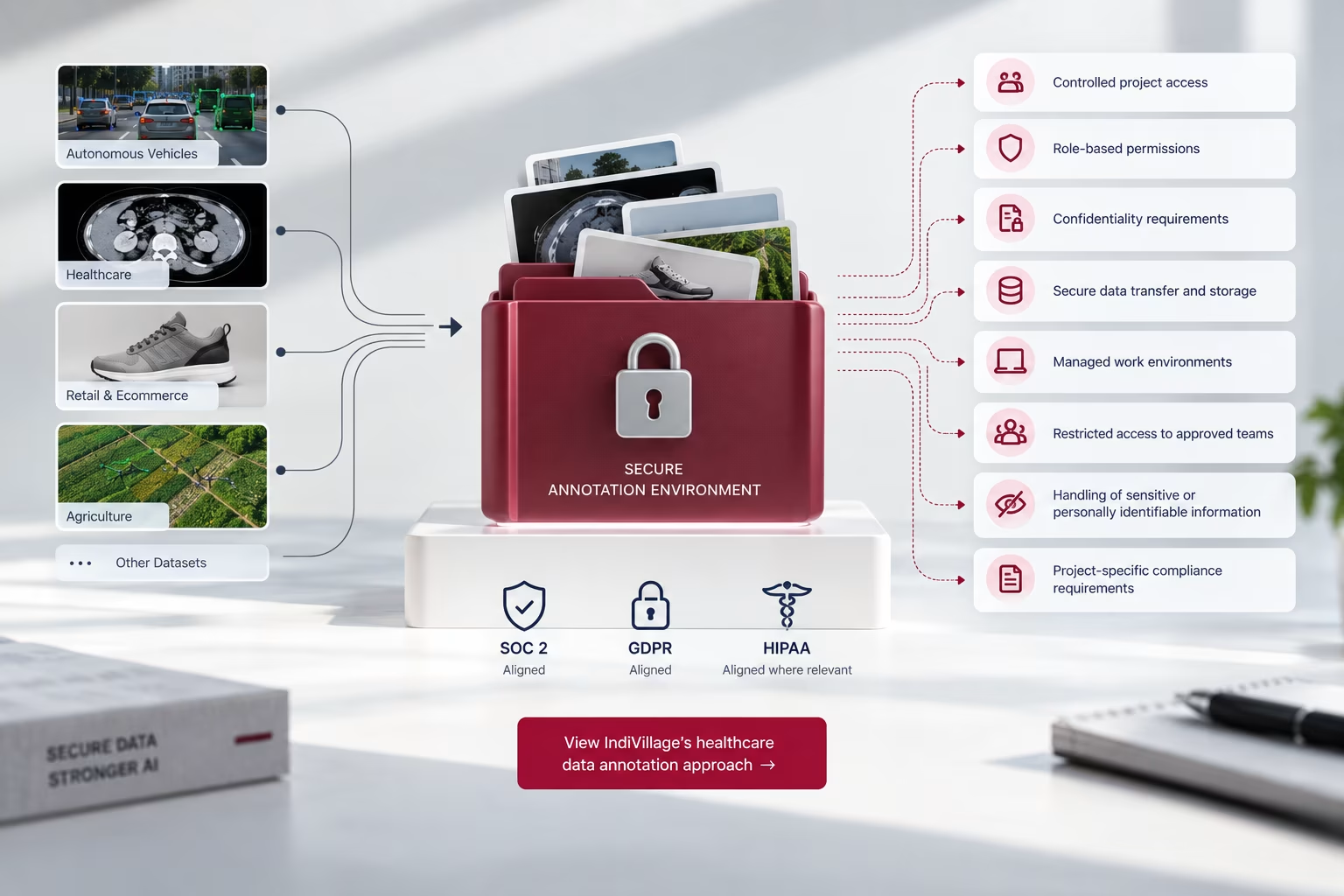
How Do We Keep Image Annotation Data Secure?
Image datasets can contain confidential business information, intellectual property, people, locations, proprietary products, or other sensitive content.
Data-security requirements should therefore be defined as part of the annotation workflow.
Depending on the engagement, relevant controls can include:
controlled project access
role-based permissions
confidentiality requirements
secure data transfer and storage
managed work environments
restriction of data access to approved teams
appropriate handling of sensitive or personally identifiable information
project-specific compliance requirements
IndiVillage's current published service pages state that annotation work is handled through secure, in-house environments aligned with SOC 2, General Data Protection Regulation (GDPR), and Health Insurance Portability and Accountability Act (HIPAA) requirements where relevant.
Security requirements can vary considerably between industries and datasets. They should be assessed during scoping rather than treated as a single universal configuration.
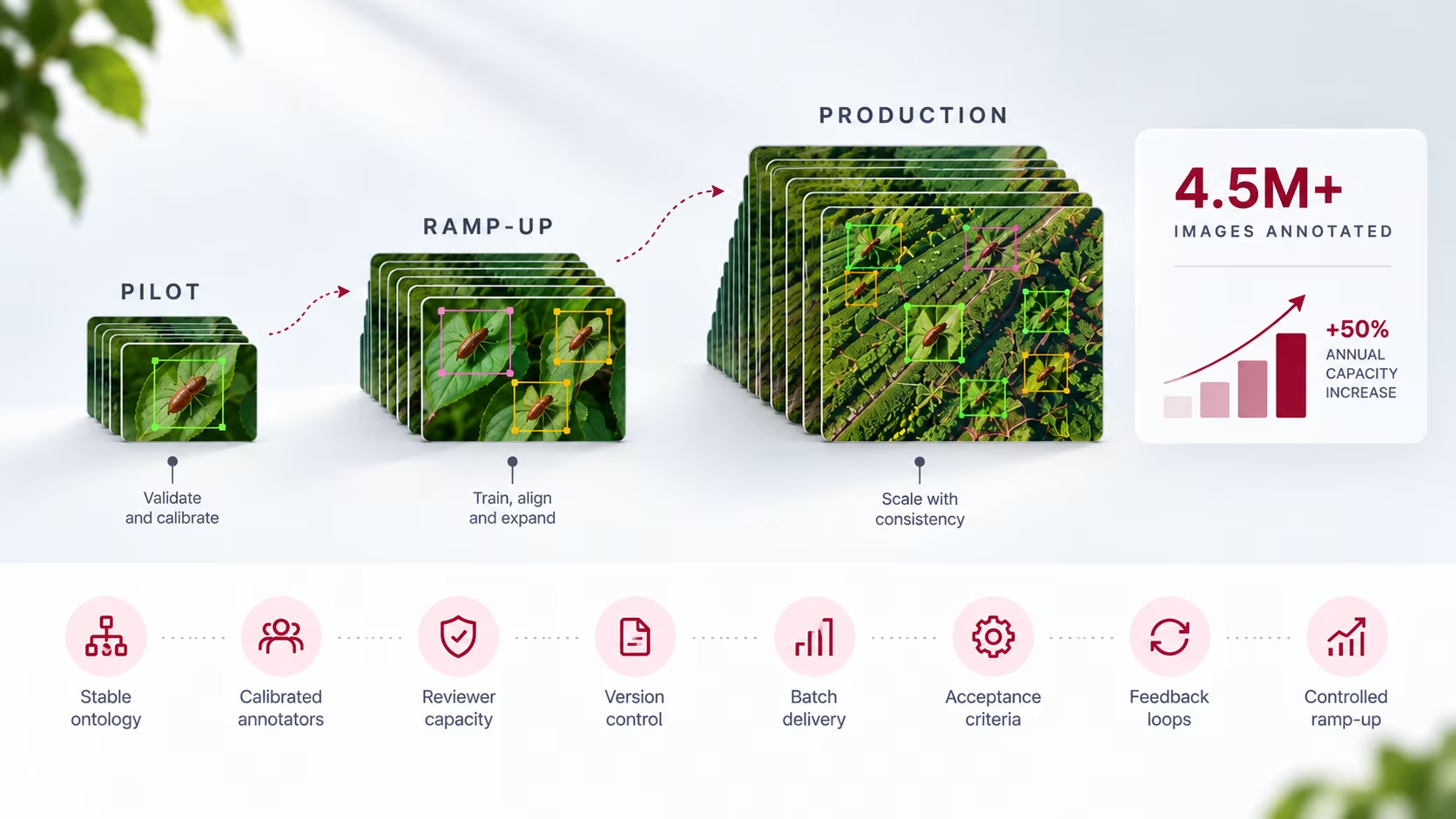
Can Image Annotation Scale From Pilot to Production?
Scaling annotation is not simply a matter of adding more annotators.
A project must preserve the same semantic interpretation as volume increases.
That requires:
a stable ontology
calibrated annotators
sufficient reviewer capacity
version-controlled guidelines
batch-based delivery
measurable acceptance criteria
structured QA sampling
documented edge-case decisions
client feedback loops
controlled team ramp-up
A pilot can establish whether the annotation specification works on representative data. Production scaling then extends that calibrated workflow while monitoring for semantic drift.
This is particularly important when new annotators join. Additional capacity should be trained and evaluated against the same guidelines and acceptance criteria rather than introduced directly into live production.
IndiVillage's agriculture portfolio demonstrates this type of sustained scale, including a published program involving 4.5 million annotated images and a 50% annual increase in annotation capacity.
The objective at scale is not simply higher throughput. It is higher throughput without changing what an accepted annotation means.
Image Annotation Case Studies
Production examples provide a clearer view of image annotation requirements than generic capability statements.
FMC: Bounding Boxes for Pest Detection
Client requirement: Support computer vision models designed to detect and classify agricultural pests.
Visual data: Pest imagery collected across agricultural environments.
Annotation method: Bounding boxes and species-level tagging based on an expert-defined taxonomy.
Quality requirement: Consistent biological classification and uniform labeling across the dataset, supported by manual annotation and AI-assisted review.
Verified result: FMC's published case study reports seven AI models and more than 96% precision in pest identification across a platform covering more than 300,000 hectares. The case study positions IndiVillage's contribution specifically around image tagging, workflow refinement, and validation rather than attributing the entire model result to annotation alone.
Audere: Diagnostic Image Annotation
Client requirement: Structure Rapid Diagnostic Test imagery for computer vision development.
Visual data: Diagnostic cassette images affected by glare, lighting variation, blur, different formats, and unclear result lines.
Annotation method: Image interpretation, classification, and standardized tagging.
Quality requirement: Uncertain examples were reviewed multiple times and escalated to medical professionals when necessary.
Verified result: More than 185,000 image annotations were processed as part of the engagement, with the broader workflow covering more than 631,000 interpretations.
Large-Scale Agricultural Image Annotation
Client requirement: Maintain structured image labels across a large and evolving agricultural dataset.
Visual data: Field imagery covering diverse weed species.
Annotation requirement: High-volume visual identification and labeling supported by domain familiarity.
Verified result: IndiVillage's current agriculture portfolio reports 4.5 million images annotated, more than 460 weed species tagged, and a 50% annual increase in annotation capacity for this engagement.
These examples illustrate why image annotation services need to account for more than volume. The annotation method, visual ambiguity, domain knowledge, quality controls, and model objective all influence the production design.
Why Choose IndiVillage for Image Annotation Services?
Image annotation programs need to produce ground truth that remains usable as datasets, taxonomies, and production volumes evolve.
IndiVillage's approach combines several elements required for production delivery.
Model-Aligned Annotation Design
Projects are structured around the intended computer vision task, with annotation methods, ontologies, attributes, and acceptance criteria aligned to the required model output.
Structured Quality Assurance
Quality is incorporated from calibration through production review, with guidelines, reviewer workflows, edge-case handling, and measurable acceptance criteria designed around the annotation type.
Human-in-the-Loop Execution
Human judgment remains central where imagery is ambiguous, model-generated labels require correction, or contextual interpretation is necessary.
Domain-Trained Teams
Annotation teams can be trained around the visual and semantic requirements of specific domains, including agriculture, healthcare, ecommerce, autonomous vehicles, and robotics.
Secure Delivery
Managed environments, controlled access, and project-specific data-handling practices support enterprise datasets requiring confidentiality and governance.
Scalable Managed Operations
Team calibration, batch-based production, reviewer capacity, and documented guidelines allow annotation programs to expand while controlling semantic drift.
Experience Across Production Image Workflows
IndiVillage's published work spans diagnostic imagery, agricultural computer vision, ecommerce visual data, and autonomous perception workflows. Its wider AI data operations portfolio includes more than 500 million data points annotated across client engagements.
IndiVillage's social-impact model adds another dimension to this delivery structure by creating skilled technology employment in underserved communities. The technical requirement, however, remains primary: reliable data operations must first meet the quality, security, and production requirements of the client's AI program.
Start Your Image Annotation Project
A useful image annotation engagement begins with the model requirement and a representative view of the dataset.
To scope a project, it helps to share:
the intended computer vision task
approximate dataset size
representative sample images
preferred annotation method, if already defined
number of classes and attributes
existing ontology or guidelines
expected output structure
quality and acceptance requirements
security constraints
required delivery schedule
If the annotation specification has not yet been finalized, the project can begin with a requirements and dataset review to identify the appropriate ground-truth structure.
Where appropriate, a scoped pilot can then be used to test guideline interpretation, annotation quality, workflow compatibility, and review criteria before production scales.
Frequently Asked Questions
1. How do you ensure image annotation accuracy and consistency?+
Accuracy and consistency begin with a clearly defined annotation specification.
Before production, annotators and reviewers are calibrated against representative examples and difficult cases. Quality criteria are then established according to the annotation type.
During production, review can include human inspection, automated validation, sampling, agreement checks, error measurement, and escalation of unresolved cases.
When a recurring issue is identified, the resolution should be incorporated into the guidelines so later annotations follow the same interpretation.
This approach is more meaningful than applying an unsupported universal accuracy percentage across different annotation methods and datasets.
2. Can you help create annotation guidelines for a new project?+
Yes. Model requirements can be translated into a structured ontology and annotation specification covering classes, attributes, boundaries, inclusion and exclusion rules, occlusion, truncation, and relevant edge cases.
A representative pilot can then be used to identify ambiguities and refine the specification before production.
Semantic decisions that depend on the client’s business rules or specialist domain knowledge should remain subject to client or domain-expert validation.
3. How do you decide which image annotation method a project needs?+
The annotation method should be selected based on what the computer vision model needs to predict.
Image classification may be suitable for category recognition. Bounding boxes can support object detection and localization. Polygons may be useful for irregular object boundaries. Segmentation is used when pixel-level precision is required. Keypoints are used for pose, structure, or landmark estimation.
The decision should also account for object size, overlap, image quality, acceptable localization error, annotation effort, and the way model performance will be evaluated.
4. Can AI-assisted annotation be used for our images?+
Yes, where the task and available model performance make it appropriate.
AI-assisted workflows can generate preliminary labels that reduce repetitive manual work. Human annotators then validate, correct, or reject those predictions according to the approved specification.
The amount of automation that is appropriate depends on factors including model confidence, class complexity, visual ambiguity, edge-case frequency, and the risk associated with incorrect ground truth.
Low-confidence, unusual, or ambiguous examples typically require greater human involvement.
5. How do you handle ambiguous images and edge cases?+
Annotators should not be required to guess when an image falls outside the established rules.
A structured edge-case process can follow: flag, review, adjudicate, document, and update the guidelines. Ambiguous examples may be escalated to senior reviewers, subject-matter experts, or the client when business or domain knowledge is required.
Once a decision is made, it should become a documented example so similar cases are handled consistently in future batches.
6. Can you work with our existing ontology, tools, and output format?+
Yes, where operationally feasible.
IndiVillage can work with client-defined ontologies, existing annotation guidelines, project-specific class structures, custom attributes, proprietary annotation environments, existing review processes, and required delivery schemas.
Output requirements should be confirmed during project scoping, including class identifiers, coordinate conventions, mask requirements, filenames, dataset versions, and custom schema rules.
7. Can you handle large image datasets?+
Yes. Large image-annotation programs can be supported through staged team ramp-up, calibrated staffing, stable guidelines, reviewer capacity, batch-based delivery, and structured QA.
Scaling should preserve the same ontology and acceptance criteria established during calibration. New capacity is therefore introduced through training and review rather than simply added to production.
The objective at scale is not simply higher throughput. It is higher throughput without changing what an accepted annotation means.
8. Which industries and computer vision use cases do you support?+
Image annotation requirements vary by use case and industry.
IndiVillage supports image annotation workflows across areas such as healthcare, agriculture, autonomous and robotic vision, retail, and ecommerce. Depending on the model objective, these projects may involve classification, bounding boxes, polygons, segmentation, keypoints, attribute tagging, or image interpretation.
9. How do you keep image annotation data secure?+
Image datasets may contain confidential business information, intellectual property, people, locations, proprietary products, or personally identifiable information.
Depending on the engagement, security controls can include controlled project access, role-based permissions, confidentiality requirements, secure data transfer and storage, managed work environments, restricted access for approved teams, and project-specific compliance requirements.
Security requirements should be assessed during scoping because they can vary by industry, dataset, and use case.
10. How much do image annotation services cost?+
Image annotation pricing depends on the work required to create and validate each unit of ground truth.
Key factors include the annotation technique, number of objects per image, object size and density, image complexity, number of classes and attributes, degree of occlusion or ambiguity, dataset volume, specialist or domain-expert requirements, depth of QA, annotation tooling, and delivery schedule.
A representative dataset review or scoped pilot can provide a more reliable estimate than a generic per-image rate.